

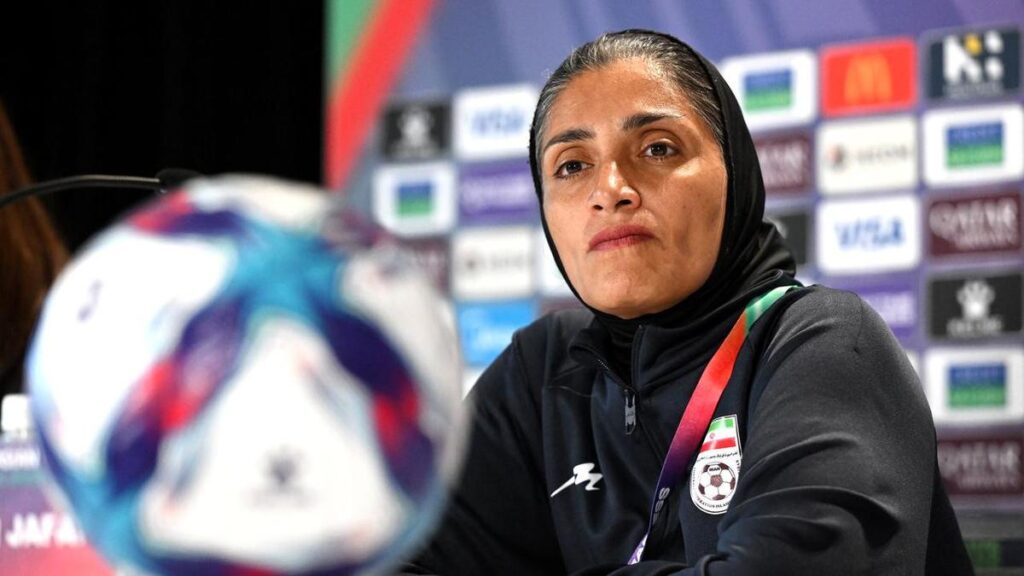
Comments made by a presenter on Iranian state television have been linked to psychological distress among players of the Iranian women’s national football team, prompting some to seek asylum in Australia. Coach Marziyeh Jafari revealed that the atmosphere surrounding the team during the Asian Cup significantly impacted their mental well-being.
The tournament commenced against a backdrop of escalating tensions, particularly following air strikes by the United States and Israel on Iran, which resulted in the death of Supreme Leader Ali Khamenei. During their first match against South Korea, the team chose to stand in silence during the national anthem, a move that led to them being labeled as “wartime traitors” by presenter Mohammad Reza Shahbazi on state television.
In a statement released by Iran’s football federation (FFIRI) on March 15, 2024, and later deleted, Jafari expressed concern over the psychological toll these comments had on the players. She stated, “Our girls were affected in the first match by the heavy atmosphere that had been created.”
Jafari emphasized the need for accountability, saying, “The greater mistake was made by those who, at home, failed to understand that atmosphere and sounded the call to arms against the daughters of this land.” She added that the federation should investigate how this situation affected the players, noting, “I am certain that if that atmosphere had not been created, not a single one of our players would have stayed in Australia.”
As the tournament progressed, five players were granted humanitarian visas by the Australian government after seeking asylum. On March 20, 2024, two additional team members were also granted asylum, while one player opted to return to Iran.
Jafari noted, “Australian police called the players in several stages and sat down with them one-on-one to persuade them to stay, influenced by the political atmosphere that had arisen.” Despite this, she reported that the majority of the team members decided against remaining in Australia. Even Mohaddeseh Zolfi, who initially expressed a desire to stay, later changed her mind and is expected to return to Iran with the team.
Regarding rumors surrounding players Golnoosh Khosravi and Afsaneh Chatrenoor, Jafari clarified that these claims were unfounded, stating they are currently with the team in Malaysia and will return to Iran soon.
The situation highlights the complex interplay between sports, politics, and personal choices, particularly within the Iranian context. As the Iranian women’s national team continues to navigate these challenges, the ramifications of external pressures on their mental health and future remain a pressing concern.