



Melbourne is experiencing significant housing reforms aimed at improving access for younger residents, marking what many describe as a transformational moment in the city’s housing policy. Over the past two years, the government of Victoria has implemented a series of changes designed to assist millennials in purchasing homes, surprising even advocates of these reforms.
According to Brendan Coates, director of the Grattan Institute’s housing and economic security program, “We’ve seen, in many respects, a planning policy revolution in Victoria.” He adds that few anticipated the extent to which the state government would act to support housing initiatives.
Historically, the housing conversation in Victoria has been dominated by “NIMBYs” (Not In My Back Yard), residents resistant to new developments in their communities. However, this trend has shifted, largely influenced by a Labor government eager to attract younger voters and the emergence of the “YIMBY” (Yes In My Back Yard) movement. Formed in February 2023, YIMBY Melbourne emerged from online discussions among individuals frustrated by the lack of affordable housing. Coates serves on its board, while the group’s lead organizer, Jonathan O’Brien, describes an evolution from grassroots efforts to a more impactful advocacy that has seen the government respond positively to their proposals.
O’Brien notes, “We have had a state government so willing to listen to the evidence… that we were able to make a lot more meaningful systemic change in two years than any other reform group.” The YIMBY movement’s first significant action came in April 2024 with a report advocating for enforceable housing targets for local government areas (LGAs) and the rezoning of amenity-rich suburbs to permit thousands of new homes.
Just two months later, the state government announced its own LGA targets. In July, Premier Jacinta Allan and Planning Minister Sonya Kilkenny revealed plans to rezone land around 50 train and tram stations, a decision that met resistance from some local residents. Earlier, ten “activity centres” had been identified as part of a trial for these changes.
These reforms extend beyond rezoning. The government has introduced a fast-tracked townhouse code, simplified the subdivision process for homeowners, eliminated parking requirements for new buildings, and revamped the state’s infrastructure contribution scheme to ensure developers contribute to local amenities. Recently, parliament approved the most significant overhaul of the Planning Act in decades, which could reduce approval times to as little as 10 days while limiting appeal rights primarily to neighboring residents.
Coates emphasizes that the reforms in Victoria are more ambitious than those in New South Wales during the same period. The Grattan Institute’s research indicates that changes to the townhouse code and the establishment of 60 activity zones could potentially increase Melbourne’s housing capacity by approximately 1 million homes, which equals about 70% of the city’s existing housing stock. In contrast, similar efforts in Sydney could result in up to 930,000 new homes, representing only 40% of its current housing supply.
The townhouse code allows for expedited planning processes for duplexes, townhouses, and low-rise apartments up to three stories, provided they meet specific criteria. Coates suggests that if Sydney adopted a comparable code, it could support over 1 million new commercially viable homes.
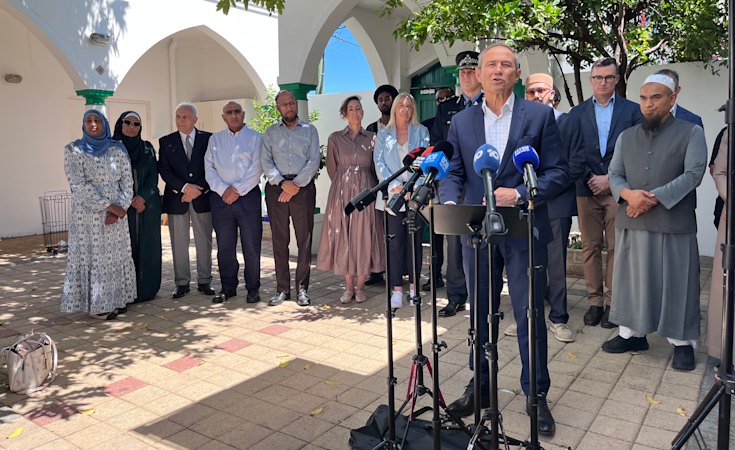
Despite these advancements, not all stakeholders are convinced of the government’s approach. Protests have erupted in affluent neighborhoods, such as Brighton, where plans allow for the construction of apartments up to 12 stories tall. In nearby Elsternwick, a rally against proposed housing towers was disrupted by YIMBY advocates promoting messages of inclusivity in housing.
Kat Smith, a senior policy officer at the Planning Institute Australia, acknowledges the government’s openness to new ideas but warns of “very limited engagement with the planning profession.” She highlights concerns regarding the coherence of the reforms, stating that while individual measures may hold merit, their collective impact lacks clarity in delivering increased housing.
Smith raises alarms about the blanket rezoning around transport stations, cautioning that it disregards local contexts and may overlook critical factors such as environmental hazards and access to public transportation. She asserts that fundamental planning principles regarding sustainability and community needs should remain paramount in discussions about development.
Coates expresses that Melbourne’s success in increasing housing stock has led to some unintended consequences. As prices have fallen relative to other capital cities, the financial viability of new developments has diminished. Rising construction costs, exacerbated by the state’s own infrastructure projects, pose additional challenges. “If the Victorian government had done what it’s done this term in its last term, an enormous amount of that extra capacity would have been profitable to build,” Coates states.
The latest Procore/Property Council industry sentiment survey reveals that confidence in Victoria’s property sector is the lowest in the nation, trailing 24 points behind the national average, marking an unprecedented gap. Concerns regarding government planning and growth management are similarly dismal, with a confidence score of minus 65 points. Many industry respondents attribute this pessimism to the state’s tax framework, particularly the foreign purchaser additional duty, which imposes an extra 8% in stamp duty on international buyers.
The Victorian government defends its policies by asserting that first-time buyers should not have to compete with wealthy foreign investors. Both Coates and O’Brien agree that the next critical reform should address heritage protections, as nearly 29% of residential land within 10 kilometers of the central business district is under a heritage overlay. O’Brien points out that many older homes in these areas are of low quality and could be better utilized for housing.
As the housing landscape in Melbourne continues to evolve, the balance between development, community needs, and urban integrity remains a central focus of ongoing discussions.