

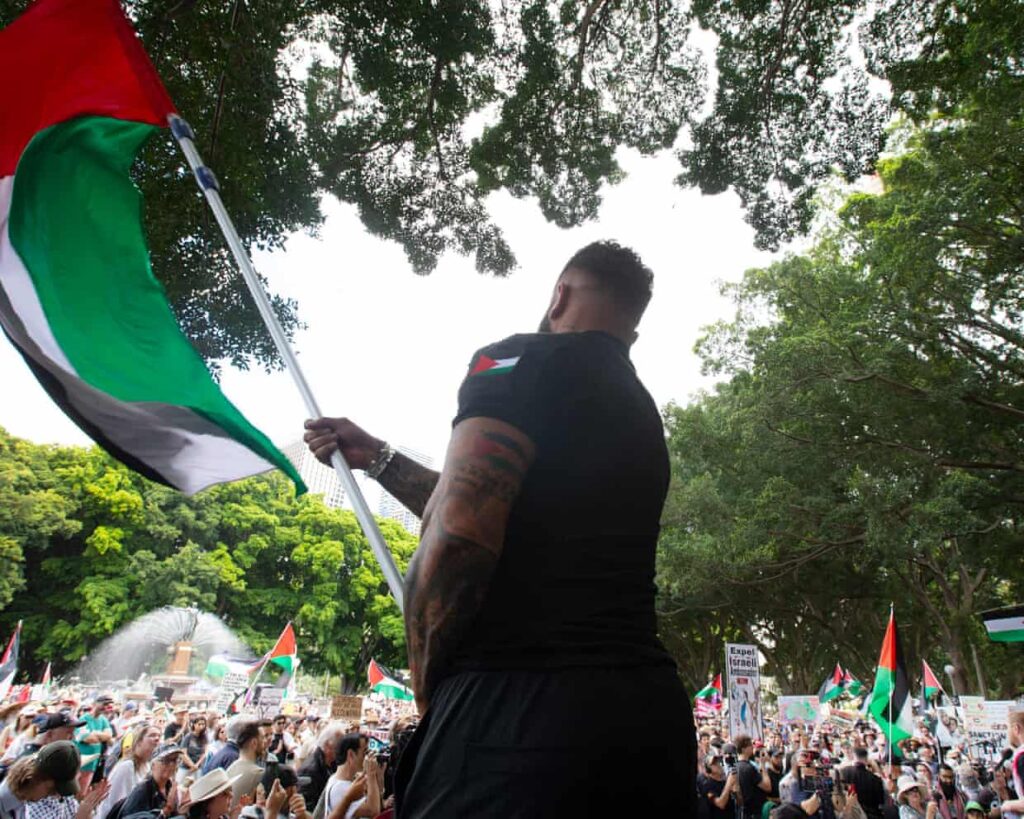
A parliamentary inquiry in New South Wales (NSW) has sparked a significant debate regarding the potential ban on the phrase “globalise the intifada.” Critics argue that such a measure could disproportionately impact Muslim Australians, particularly within Palestinian and Arab communities. The inquiry was initiated in response to the recent Bondi terror attack, aiming to explore mechanisms to prohibit slogans perceived to incite hatred.
The Australian National Imams Council (ANIC) presented a submission emphasizing that banning phrases like “globalise the intifada” risks importing repressive policies similar to those enacted in the United Kingdom, where police have threatened to arrest individuals using this phrase during protests. Activist group Palestine Action Group (PAG) echoed these sentiments, expressing concerns that the proposed ban may lead to the adoption of oppressive measures against free speech.
Premier Chris Minns has described the phrase as “hateful, violent rhetoric.” Following the Bondi attack, he indicated intentions to legislate against it. However, the government opted to refer the matter to a parliamentary committee for further examination before implementing any changes.
The inquiry closed to submissions on October 31, 2023, following weeks of heightened public discourse surrounding the impact of such a ban. The inquiry will not hold public hearings, and the committee is expected to deliver its final report to the government by January 31, 2024.
The NSW Jewish Board of Deputies (JBD) has previously supported the ban, viewing it as a pivotal moment in addressing hatred and incitement within the community. The Executive Council of Australian Jewry (ECAJ), which has been granted an extension for its submission due to the demands of supporting the Jewish community since the attack, emphasized that any hate speech legislation must be adaptable to evolving symbols and coded messages used by extremist groups.
The phrase “intifada,” which translates to uprising or “shaking off,” is associated with two Palestinian uprisings against Israel, occurring in 1987 and 2000. Many within the Jewish community link the term to acts of violence and terrorism. David Slucki, director of the Australian Centre for Jewish Civilisation, has labeled the phrase “offensive” and “threatening,” underscoring the need to consider its impact on community safety.
In its submission, ANIC highlighted that phrases like “from the river to the sea” and “globalise the intifada” lack a singular meaning and are utilized in various political and cultural contexts. The council warned that content-based bans could lead to arbitrary enforcement and disproportionately affect specific communities.
PAG clarified that it has not led the chant “globalise the intifada” at any rallies since October 2023, rejecting claims that it poses a threat. The group drew comparisons to recent developments in the UK, where human rights organizations criticized the Metropolitan and Greater Manchester police for announcing intentions to arrest individuals chanting the phrase.
Submissions to the inquiry also included perspectives from the NSW Council for Civil Liberties (NSWCCL), which cautioned that banning slogans could undermine social cohesion and the implied freedom of political communication. The council emphasized that the criminal law may not be the most effective tool to address community tensions, advocating for an approach centered on education and human rights.
Prof. Anne Twomey, a constitutional law expert, confirmed her participation in the inquiry but opted to allow the committee to release her submission. The ongoing inquiry reflects a broader conversation about balancing free speech with community safety in an increasingly polarized environment.