




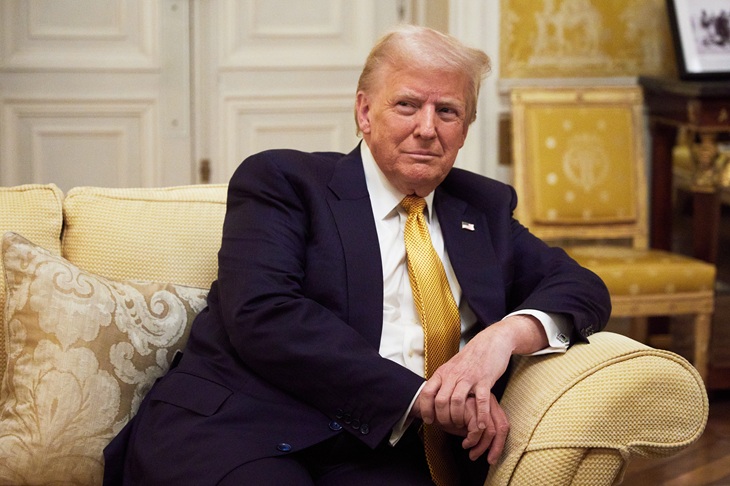
PARIS, FRANCE - DECEMBER 7: President-Elect Donald Trump reacts during his meeting with Prince William, Prince of Wales at the Embassy of the United Kingdom's Residence on December 7, 2024 in Paris, France. Donald Trump was among the wave of foreign dignitaries descending on Paris this weekend to attend a reopening ceremony at Notre-Dame Cathedral, more than five years after it was damaged in a major fire. (Photo by Oleg Nikishin/Getty Images)
The future of global stability faces significant challenges as political leaders grapple with the realities of national security and military preparedness. Recent comments by Chris Bowen, Australia’s Energy Minister, highlighted the urgency of the situation, revealing that Australia has only 36 days of petrol reserves, 34 days of diesel, and 32 days of jet fuel available. This precarious state has prompted calls for a reassessment of the country’s military and economic strategies, particularly in light of escalating tensions involving global powers such as the United States, China, and Iran.
Australia’s reliance on foreign energy supplies and its diminishing domestic manufacturing capabilities have raised alarms about its sovereignty and security. Bowen’s plea for Australians to refrain from panic-buying fuel came against the backdrop of a catastrophic fire at the world’s largest oil refinery, further straining supply chains. The situation illustrates a broader concern that successive governments have not adequately addressed the strategic needs of the nation, focusing instead on short-term political gains.
Global Geopolitical Landscape and Australian Vulnerability
Historically, leaders have been expected to engage in strategic military planning to safeguard national interests. Yet, there is a growing sentiment that current politicians have neglected this responsibility, leading to a significant reduction in Australia’s self-sufficiency. The country’s extensive natural resources should provide a foundation for energy independence, but the shift towards reliance on imports from the Middle East has left it vulnerable to international conflicts.
Australia’s geopolitical position has become increasingly precarious as its relationship with the United States and perceptions of its value to China dictate its security landscape. Analysts argue that the current political climate prioritizes domestic political capital over long-term strategic planning. The consequences of this approach could be severe, particularly if regional tensions escalate.
In recent years, China has expanded its military capabilities and strategic influence, particularly in the South China Sea and around Taiwan. Observers note that any shift in allegiance from nations like Iran, which could impact China’s ability to project power in the Pacific, could significantly alter the balance of power. Recent military purges in China, including the removal of key generals, reflect internal instability that could affect its external ambitions.
The Role of Leadership in Global Security
The notion that peace can be maintained through diplomacy alone has been challenged by historical precedents. Many experts assert that the actions of aggressive nations often determine the course of conflict, with leaders who fail to recognize this reality exposing their countries to danger. The lessons learned from the two world wars emphasize that military preparedness is critical to ensuring peace.
As nations like Iran pursue expansionist agendas, the implications for global security become increasingly alarming. The Iranian regime’s pursuit of nuclear capabilities is framed not as a deterrent but as part of a broader strategy aimed at undermining Western interests. This poses a direct threat to countries like Australia, which could find itself caught in the crossfire of larger geopolitical conflicts.
The situation is made more complex by the United States’ current military posture. With ongoing conflicts in Ukraine and the Middle East, the US faces challenges in managing multiple fronts. The implications of these conflicts extend beyond Europe, as allies like Australia may find themselves unprepared for the fallout.
Strategic military alliances and proactive policies are essential to mitigate these risks. Leaders must prioritize national security and ensure that their countries are equipped to respond effectively to potential threats. The call for a reassessment of military capabilities and energy independence is not merely a political stance but a necessity for safeguarding future generations.
As the landscape of international relations continues to evolve, the importance of strong leadership that acknowledges the realities of global conflicts cannot be overstated. The choices made by today’s leaders will shape the security landscape for years to come, and the imperative for action is clear: nations must prepare for the possibility of conflict, ensuring that they are not caught off guard in an increasingly volatile world.