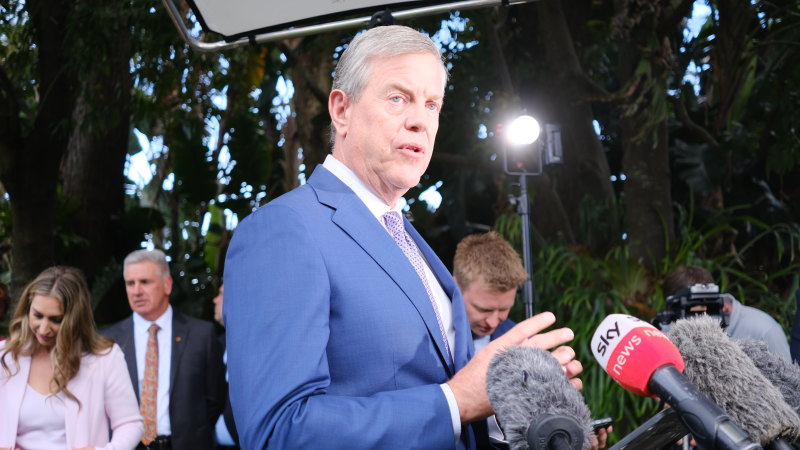
The Queensland government has moved to expand its authority over public hospital boards, raising concerns about potential cronyism and the erosion of independent oversight. On March 5, 2024, parliament passed legislation granting Health Minister Tim Nicholls the power to reshape the governing bodies of 16 public hospitals at the cabinet’s discretion. This change allows for broader ministerial control over appointments and removals.
Clancy Moore, chief executive of Transparency International Australia, expressed apprehension over the implications of these new powers. He indicated that such moves might “entrench ministerial power” and create an environment conducive to favoritism in government-appointed roles. Moore emphasized the importance of keeping boards independent, stating, “The ability for members to be ‘sacked arbitrarily’ harms independence.”
The governing boards of hospitals play a critical role, overseeing chief executives, managing substantial budgets, and ensuring performance standards. Members typically receive annual remuneration of at least $44,000, with chairs earning upwards of $85,000. Under previous legislation, board members could only be dismissed under specific conditions, such as criminal convictions or insolvency. The recent legislative change broadens the scope for dismissal, allowing the cabinet to make decisions without stated cause.
An investigation revealed that since the Crisafulli government took office in October 2023, there have been significant changes across 115 of the state’s 320 boards, with nearly two dozen appointments linked to the Liberal National Party (LNP). In contrast, only five health service board appointments have occurred since the election. This raises concerns about the politicization of these positions, particularly with some members being removed from boards without clear justification.
About half of the current terms for health service board members are set to expire in March 2024, while others will not conclude until 2028. These new powers will also extend to the chief executives of the Queensland Pharmacy Business Ownership Council and Health and Wellbeing Queensland.
Opposition members from the Labor Party, alongside organizations such as the Queensland Law Society and the nurses’ union, have voiced their concerns regarding the potential negative impact on public trust. During parliamentary discussions, the Law Society highlighted that “opaque processes” could dissuade qualified candidates from accepting board positions.
In response to the criticism, Nicholls defended the legislation, asserting that the powers are essential for maintaining accountability in the health sector. He noted that he had only dismissed one board member, who had been convicted of a criminal offense, and emphasized that he had adhered to principles of natural justice. “I remain unapologetic for setting out these powers in a clear and precise way that both the boards and our community know, understand, and can have faith in,” he stated.
Additionally, a separate bill currently before parliament seeks to eliminate no-cause dismissals for members of the Stadiums Queensland board, aligning with fundamental legislative principles.
The ongoing debate highlights the tension between the need for effective governance in public health and the vital role of independent oversight, ensuring that public trust is preserved in Queensland’s health services.