




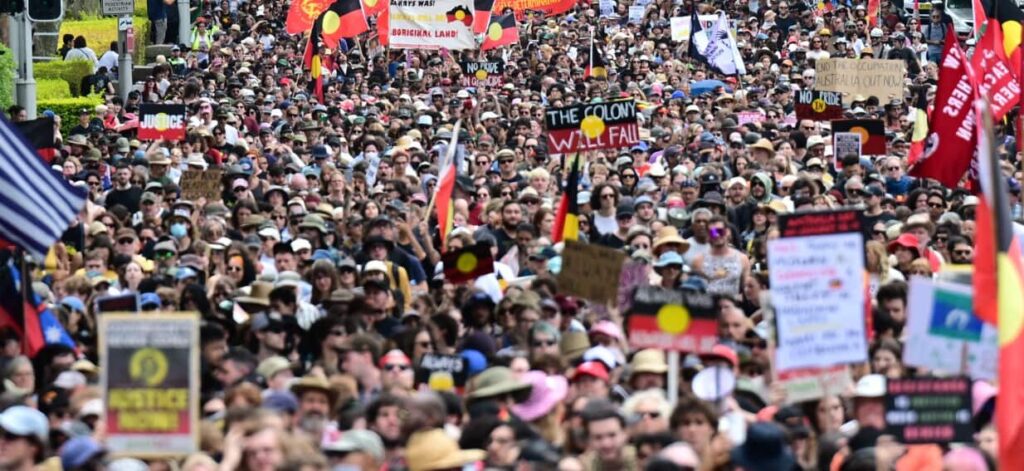
On January 26, 2024, approximately 18,000 individuals officially became Australians during a nationwide citizenship ceremony. This significant event coincided with Invasion Day rallies across the country, where thousands gathered to express their views on Indigenous rights and immigration policies. While many celebrated their new status, others participated in anti-immigration protests, highlighting the nation’s ongoing debates surrounding citizenship and belonging.
Across major cities, including Melbourne, Sydney, Brisbane, and Perth, the atmosphere was charged with a mix of joy and dissent. The citizenship ceremonies, which took place in various local councils, were attended by families and friends who cheered as their loved ones took the pledge of allegiance. For many, this moment marked a new chapter in their lives, as they embraced the rights and responsibilities that come with being an Australian citizen.
In contrast, the Invasion Day rallies drew significant crowds advocating for Indigenous rights. Demonstrators articulated their perspectives on Australia Day, which they view as a day of mourning rather than celebration. Protesters emphasized the historical injustices faced by Indigenous Australians and called for recognition and reparations. The presence of thousands at these rallies underscores the deep divisions in public sentiment regarding Australia’s national identity and its treatment of Indigenous populations.
Anti-immigration protests also took place in various locations, with smaller groups voicing their opposition to current immigration policies. These gatherings, while less attended than the rallies, reflect ongoing tensions surrounding immigration and national security. Participants articulated concerns over the perceived impact of immigration on Australian society, adding another layer to the complex discussion surrounding citizenship and cultural identity.
The Australian government has been actively promoting citizenship as a means of fostering national unity. Citizenship Minister Andrew Giles emphasized the importance of inclusivity in his remarks during one of the ceremonies. He stated, “Every new citizen adds to the rich tapestry of our nation.” This statement reflects the government’s commitment to encouraging a diverse society while navigating the challenges posed by differing viewpoints on immigration.
The dual nature of the day’s events serves as a reminder of the multifaceted identity of Australia. As the nation celebrates the contributions of new citizens, it must also confront the historical and contemporary issues that shape its society. The voices heard during the Invasion Day rallies and anti-immigration protests represent a significant aspect of the national conversation, highlighting the need for ongoing dialogue about Australia’s future.
As Australia moves forward, the integration of new citizens will play a critical role in defining the nation’s character. The events of January 26 serve not only as a celebration but also as a call to reflect on the shared history and the path ahead. The ongoing discussions surrounding citizenship, immigration, and Indigenous rights will undoubtedly shape the nation’s landscape in the years to come.