
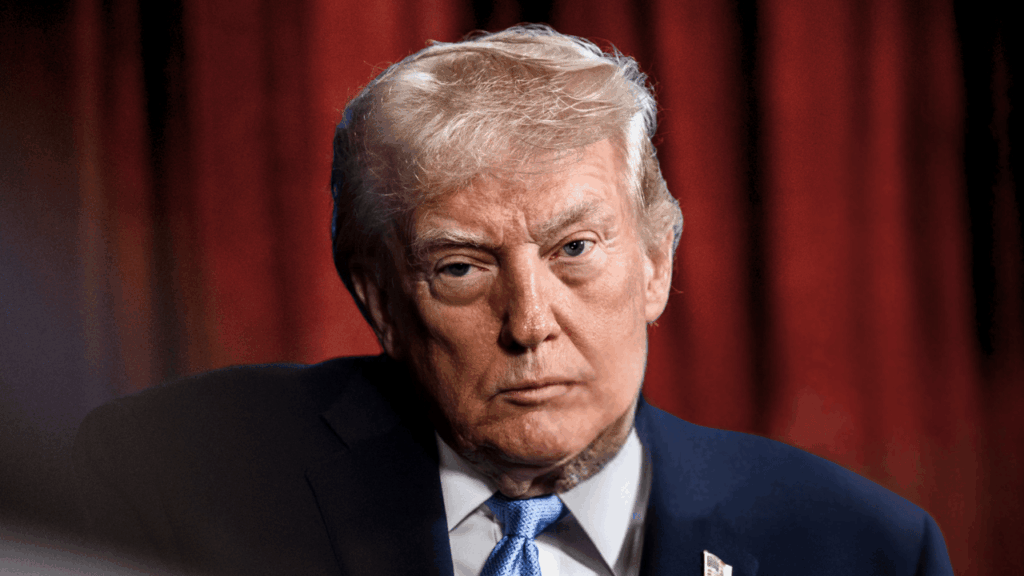
Donald Trump has clarified his position regarding military shootings, stating that while such actions represent a grave violation of human rights, they can be justified in specific contexts. During a media conference held today, Trump asserted that incidents involving military force against civilians in Minnesota are seen as a necessary upholding of “law and order,” contrasting this with similar actions occurring in Iran, which he labeled as war crimes.
“It’s very simple geography. Everybody knows this,” Trump asserted. He elaborated that when military force is used in Minnesota, it reflects a stance of strength, whereas in Iran, it signifies oppression against protestors opposing a dictatorial regime. This distinction seems to place significant emphasis on location as a determining factor in the moral interpretation of military actions.
The President’s comments arose in the context of ongoing tensions in Iran, where widespread protests have erupted against the government. These demonstrations have drawn international scrutiny, particularly regarding the treatment of protestors by security forces. According to various reports, the Iranian regime has faced allegations of excessive force in suppressing dissent.
In response to Trump’s remarks, a spokesperson from the White House reinforced the notion that the two situations are fundamentally different. “In Iran, they are protesting against the rule of a dictator, whereas in Minnesota, they’re protesting against… well, ok, bad example, but it’s just different, okay?” This statement attempts to navigate the complexities of interpreting military actions based on geographical and political contexts.
Trump’s comments have sparked debate about the broader implications of his stance on human rights and military interventions. Critics argue that such a viewpoint could undermine international norms regarding the treatment of civilians, while supporters may view it as a pragmatic approach to law enforcement within the United States.
As discussions surrounding these issues continue, the contrast drawn by the President highlights a significant aspect of his administration’s approach to both domestic and foreign policy. The topic remains a contentious point in political discourse, reflecting the divergent views on the role of military force in addressing civil unrest.