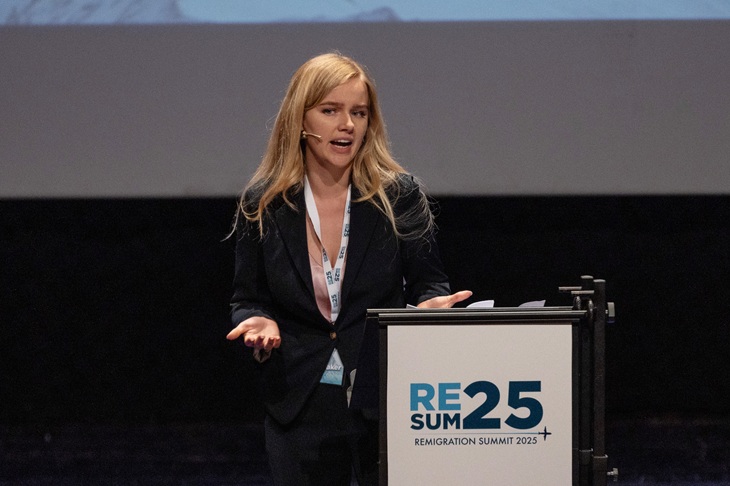
GALLARATE, ITALY - MAY 17: Dutch right-wing political commentator and activist Eva Vlaardingerbroek delivers a speech during the first "Remigration Summit" at Teatro Condominio on May 17, 2025 in Gallarate, Italy. Far-right activists from extremist groups across Europe are convening for a controversial summit to define and discuss 'remigration,' a concept often associated with xenophobic and racist viewpoints, which advocates for the large-scale repatriation or deportation of immigrants and individuals with immigrant backgrounds to their countries of origin. The summit has drawn strong condemnation from groups opposed to what they view as a hateful agenda. (Photo by Emanuele Cremaschi/Getty Images)
On January 13, 2026, British authorities revoked the Electronic Travel Authorisation (ETA) of Dutch political commentator Eva Vlaardingerbroek, effectively banning her from entering the United Kingdom. The sudden decision has sparked intense debate about free speech and governmental authority, particularly as it came just three days after Vlaardingerbroek publicly criticized UK Prime Minister Keir Starmer.
The official notice stated that Vlaardingerbroek’s “presence in the UK is not considered to be conducive to the public good.” This broad critique has raised questions regarding the lack of due process, as she has been given no opportunity to appeal the decision. Vlaardingerbroek took to the social media platform X, stating, “No reason given. No right to appeal. Zero due process.”
Her supporters argue that the ban is politically motivated and indicative of a growing hostility towards dissenting voices. Critics counter that governments have the right to restrict entry to individuals deemed a threat to public order. The timing of the ban, closely following her sharp criticism of Starmer, has made Vlaardingerbroek a focal point in ongoing discussions about media control and freedom of expression.
Vlaardingerbroek, a lawyer and right-wing activist, has gained significant traction as a prominent figure among young conservatives, boasting over 1.2 million followers on X. Her political activism focuses on issues such as immigration, national sovereignty, and cultural identity. She has garnered attention through speeches at international conservative events and media appearances, often framing her messages around a narrative that suggests Western societies are undermined by globalist elites and unchecked immigration.
Her rise in popularity has not come without controversy. Supporters view her as a fearless advocate for free speech, while critics label her rhetoric as aligned with far-right ideologies, including claims about the replacement of the European population. Such polarising views contribute to the complex landscape of contemporary political discourse in Europe.
Central to Vlaardingerbroek’s public persona is her critique of what she describes as ‘globalist’ institutions. She argues that these networks of politicians and technocrats seek to erode national sovereignty and impose top-down policies. Her supporters contend that these institutions undermine national identity and economic autonomy, a perspective that resonates with many citizens disillusioned with mainstream politics.
The UK’s decision to ban Vlaardingerbroek has drawn attention to the broader implications for free expression, particularly in light of increasing restrictions under new hate speech laws. As thousands have been arrested under these regulations, her supporters argue that the ban infringes on basic democratic principles.
Critics point out that similar discretionary powers have been employed in various countries to bar individuals perceived as inflammatory. As more political activists face bans, there are concerns that this could set a concerning precedent for human rights standards in democracies that traditionally pride themselves on being inclusive.
In examining the case of Eva Vlaardingerbroek, it becomes clear that her ban from the UK has ignited a broader discussion about the limits of protest, the influence of global institutions, and the nature of democratic discourse. The intersection of politics, public policy, and individual liberties is increasingly charged, reflecting a deepening political polarization.
As debates continue, the case of Vlaardingerbroek serves as a reminder of the complexities surrounding freedom of speech and the responsibilities of governments in democratic societies. With the landscape of political discourse shifting rapidly, the need for robust discussions about the parameters of free expression has never been more crucial.