



In March 2025, a French scientist faced denial of entry into the United States after US border agents searched his phone. French authorities alleged that the search was politically motivated, stemming from messages related to former President Donald Trump’s policies. US officials denied these claims, raising an important question for many travelers: Are such searches legal? The answer is unequivocally yes.
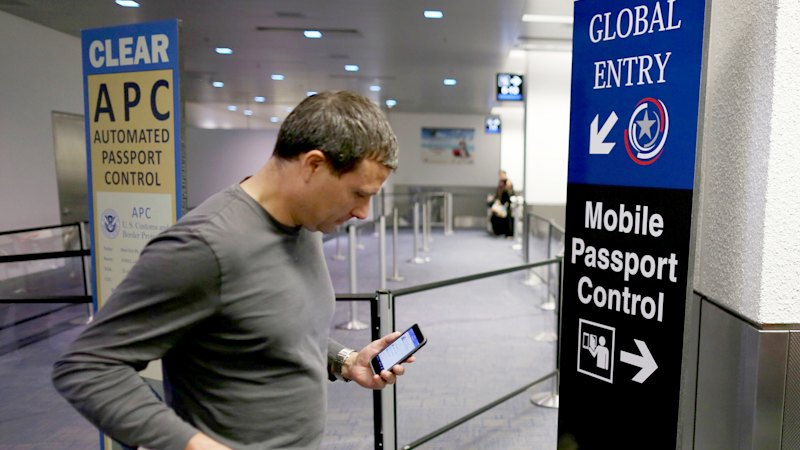
US Customs and Border Protection (CBP) agents hold significant authority to inspect electronic devices, including phones and laptops, without a warrant, owing to an exception under the Fourth Amendment. The agency reported conducting 55,318 searches of electronic devices at ports of entry during the fiscal year 2025. Although this figure is on the rise from previous years, it represents only about 0.01% of the nearly 420 million travelers who entered or exited the country by air, land, and sea in the same period.
CBP spokesperson Jessica Turner stated, “These searches are conducted to detect digital contraband, terrorism-related content and information relevant to visitor admissibility, all of which play a critical role in national security.” Yet, increasing reports from travelers indicate that they are often questioned about their legally protected online speech at border crossings.
Determining the extent of digital privacy rights at immigration checkpoints can be complex. The rights vary based on citizenship status and the specific entry point into the United States. Notably, a majority of devices searched by CBP over the last three years belonged to noncitizens, although the share of devices belonging to US citizens has risen to approximately 25% from 21%.
Understanding Device Searches at the Border
Travelers often wonder whether they must unlock their devices for inspection. Border agents can mandate access to any traveler’s electronics at a port of entry for various reasons. US citizens and lawful permanent residents, such as green card holders, may refuse to unlock their devices but may face device seizure. According to Kabbas Azhar, an Equal Justice Works fellow at the Electronic Privacy Information Center, agents can hold the device for five days, or longer at a supervisor’s discretion.
Individuals must weigh the implications of unlocking their devices. Nate Wessler, deputy director of the Speech, Privacy and Technology Project at the American Civil Liberties Union (ACLU), highlighted that the decision is “a very personal” one. For instance, a doctor with patient information or a journalist with confidential sources might hesitate to provide access.
Basic searches involve manual inspection by an officer, while forensic searches, which are less common, entail copying a device’s contents for further analysis. Forensic searches can even recover deleted files, according to Wessler. The calculus changes for foreign tourists and those without permanent status, who lack a legal right to enter the United States. Azhar advises that in such cases, sharing the information may be the best option to avoid being turned away.
The last significant updates to the rules governing electronic device searches occurred in 2018, during the first Trump administration. CBP’s authority extends to searches conducted both upon entry and exit from the United States, though the majority occur during arrival. Jake Laperruque, deputy director of the Security and Surveillance Project at the Center for Democracy and Technology, noted that officers often look for evidence of criminal activity, including narcotics or child pornography, but they might also uncover legal activities that raise questions.
Rights and Protections Vary by State
Travelers should be aware that their rights regarding forensic searches vary across the United States. Federal courts have established a complex framework for these searches. In 18 states, including California and Virginia, CBP agents must have reasonable suspicion to conduct forensic searches. Meanwhile, in 10 states, including Florida and Georgia, no such requirement exists.
New York City airports present an especially complicated legal landscape due to conflicting federal court rulings, with the 2nd US Circuit Court of Appeals currently deliberating a unified rule. To streamline enforcement, CBP requires reasonable suspicion for forensic searches, although exceptions for national security concerns may be interpreted broadly by agents.
Steps to Protect Your Privacy
Travelers can take several measures to safeguard their privacy when crossing immigration checkpoints. It is advisable to carry hard copies of necessary documentation, as turning off a device or disconnecting it from the internet may prevent access to digital boarding passes or travel itineraries.
If an agent seizes your device, request a receipt. CBP commits to providing a document detailing the contact person at the agency who will handle the case. Once the device is returned, it is prudent to change your passcode to enhance security.
Understanding the potential implications of electronic device searches is essential for travelers to the United States. By being informed and prepared, individuals can better navigate the complexities of border inspections and protect their personal information.