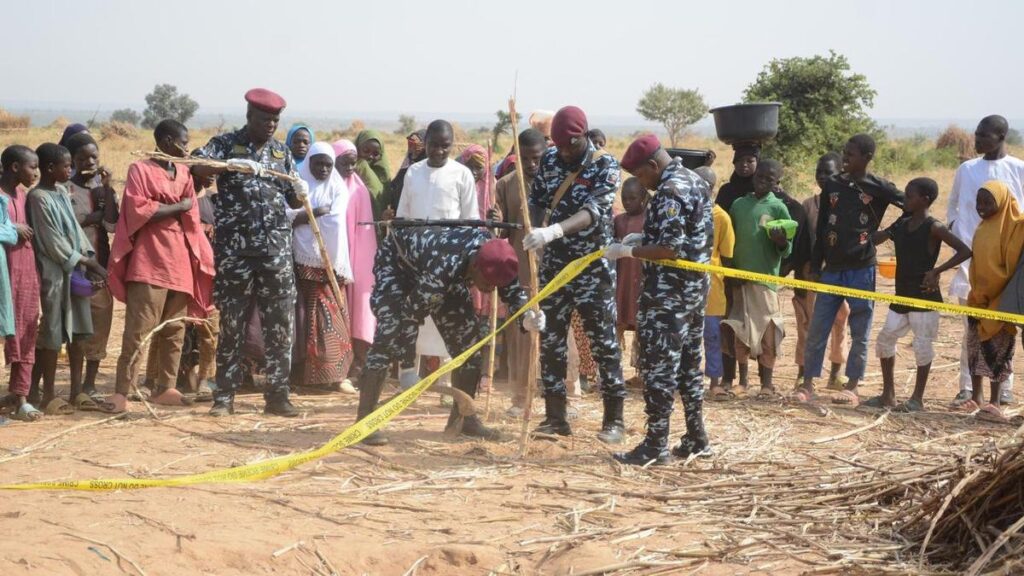
The United States conducted an air strike against Islamic State militants in northwest Nigeria on December 25, 2023, following a request from Nigeria’s government. This operation, described by President Donald Trump as “powerful and deadly,” aimed to combat the ongoing threat posed by Islamist groups in the region. Local reports indicated loud explosions in the village of Jabo during the strike, though details on casualties remain unconfirmed.
In a statement shared on Truth Social, Trump noted that the strike was initially planned for December 24 but was postponed to coincide with Christmas. He claimed that the militants, who have targeted Christians in the area, were caught off guard. “They didn’t think that was coming, but we hit them hard. Every camp got decimated,” Trump told Politico.
According to a US defense official, the operation involved approximately a dozen Tomahawk missiles launched from a US Navy warship stationed in the Gulf of Guinea. The Nigerian government confirmed its approval of the strike, with Yusuf Tuggar, Nigeria’s Foreign Minister, stating that the operation was a joint effort. He emphasized Nigeria’s commitment to fighting terrorism while noting that no specific religious group had been the target of the strike. “Nigeria is a multi-religious country, and we’re working with partners like the US to fight terrorism and protect lives and property,” Tuggar explained in an interview with Channels Television.
Context of the Attack
The air strike comes amid increasing violence in northwestern Nigeria, attributed mainly to the Lakurawa sect, a militant group that has aligned itself with the Islamic State. Formed as a vigilante organization, this group has transformed into a jihadist movement enforcing strict Islamist rule across numerous villages. Earlier this year, Nigeria officially designated the Lakurawa sect as a terrorist organization.
Analysts express skepticism regarding the effectiveness of such air strikes in the long term. “It’s not realistic to think that a few cruise missiles are going to change much in the short term,” said Cameron Hudson, a former US official focusing on African issues. He emphasized that a sustained commitment from the Trump administration would be necessary to make a significant impact on the militancy affecting the region.
Despite the immediate military actions, analysts point out that the challenges posed by the Lakurawa sect extend beyond direct attacks. The group has been linked to widespread cattle theft, with stolen livestock often finding their way to markets along the Nigeria-Niger border.
Future Implications
Following the strike, US Defence Secretary Pete Hegseth suggested that further military action could be anticipated, although no immediate follow-up strikes appeared imminent. The operation was partly symbolic, aimed at demonstrating the US’s readiness to engage militarily in support of its partners.
As Nigeria grapples with its complex security landscape, the collaboration with the United States may provide a temporary reprieve from violence, but experts caution that lasting solutions will require a multifaceted approach addressing the root causes of extremism. With a population of over 230 million, Nigeria’s diverse society includes significant Christian and Muslim communities, making the situation even more intricate.
The recent air strike signifies a crucial moment in the ongoing battle against Islamist militancy in Nigeria, yet it remains to be seen how effective these measures will be in fostering long-term stability in the region.