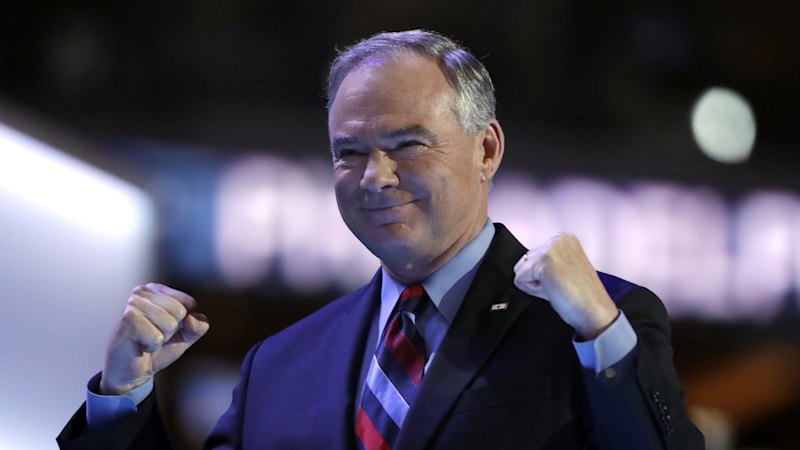
A prominent United States senator has expressed unwavering confidence that a future US administration will fulfil its commitment to provide Australia with nuclear-powered submarines under the AUKUS agreement. Tim Kaine, a Democratic senator and member of the Senate Armed Services Committee, emphasized the necessity of this partnership during his visit to Australia, highlighting the potential geopolitical consequences of a failure to deliver on these promises.
Kaine’s remarks come as discussions around a new AUKUS visa gain traction, aimed at accelerating the implementation of the trilateral security pact between the US, Australia, and the United Kingdom. He stated that any collapse of the AUKUS framework would benefit China, which he described as eager to exploit such an opportunity.
In a meeting last October, then-President Donald Trump assured Australian Prime Minister Anthony Albanese that AUKUS was “full steam ahead.” Despite this, skepticism persists among some former leaders, including former Prime Minister Malcolm Turnbull, who question whether the US can deliver the promised three to five Virginia-class submarines due to existing production challenges.
Kaine articulated his belief with conviction: “I believe 100 per cent we will provide them because I don’t think we have any other choice. I think the security demands make this a necessity.” He underscored the bipartisan support AUKUS enjoys in Congress, stating that such broad backing is rare for any initiative.
During his visit, Kaine noted Australia’s commitment to enhancing its defense capabilities, including a $3.9 billion investment announced over the weekend for a new submarine construction yard in Adelaide. This follows a previous $12 billion pledge to establish a shipyard in Perth. He pointed out that Australia’s decision to allocate $3 billion to improve the US industrial base underscores the importance of the US meeting its commitments, particularly the transfer of Virginia-class submarines starting in 2032.
“China would love for [AUKUS] to fall short,” Kaine warned, stressing the need for the US and its allies to uphold their commitments to maintain credibility in future negotiations and partnerships.
While Kaine acknowledged the complexities surrounding AUKUS, describing it as a “big and hard” project, he remains optimistic about the future of Virginia-class submarine production. He revealed that production rates are currently at approximately 1.13 submarines per year, and efforts are underway to increase this output.
On the proposal for a new AUKUS visa to address skills shortages, Kaine expressed strong support, indicating that creative solutions are necessary to ensure the success of the initiative. The Australian Parliament’s foreign affairs and defence committee has also indicated a favorable view of the AUKUS visa, aligning with previous suggestions made by former US ambassador Caroline Kennedy.
Kaine disclosed that senior Pentagon official Elbridge Colby is conducting a review focused on AUKUS pillar II, which includes collaboration on advanced technologies like hypersonic weapons. While specifics of the submarine program remain classified, Kaine mentioned that the review identifies the need for increased production rates and infrastructure enhancements in Australia to support regular visits of US nuclear-powered submarines from 2027.
He and Republican Senator Pete Ricketts have urged Trump to convene a summit with leaders of the Quad nations—comprising the US, Australia, Japan, and India—prior to a planned meeting with Chinese President Xi Jinping in April. They argue that such a summit would send a strong message of unity against China’s growing influence in the Indo-Pacific region.
Kaine, who also serves on the Senate Foreign Relations Committee, acknowledged concerns among traditional US allies regarding Trump’s foreign policy shifts, particularly concerning tariffs imposed on countries like Canada and Australia. While he respects the views expressed by Canadian Prime Minister Mark Carney regarding the global rules-based order, he maintains that the framework remains vital and should not be abandoned.
As geopolitical tensions continue to rise, Kaine’s emphasis on the US commitment to AUKUS and the need for collaborative strategies reflects a broader recognition of the challenges posed by China. The stakes are high, and the outcomes of these diplomatic efforts will shape the future of international relations in the region.