



Western Australia is confronting a troubling trend as smart technology, including cars and smartphones, is increasingly being exploited to threaten and control women. This alarming issue has prompted state authorities to take action as part of new coercive control laws aimed at curbing domestic violence. With the Australian eSafety Commission reporting 400 calls for assistance and 20,000 requests for information related to smart car abuse over the past year, awareness is growing, but advocates argue that more must be done.
Funding Initiatives and Legislative Changes
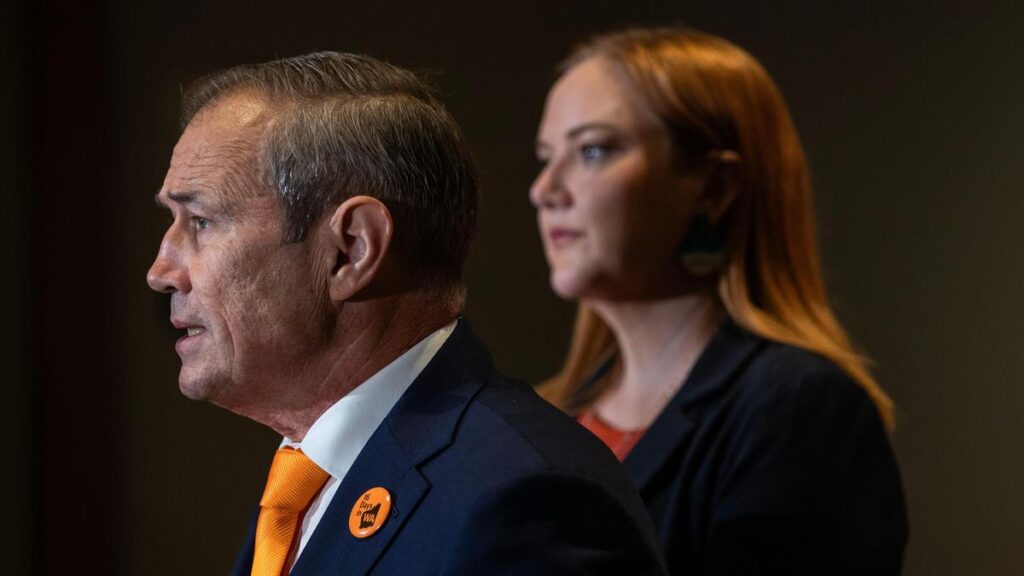
On November 27, 2023, the Cook Government announced a significant funding boost of $109.9 million during the 16 Days in WA Seven West Business Breakfast event. Premier Roger Cook emphasized the ongoing need for community education regarding the various forms of abuse, stating, “We still have work to do.” He expressed concern that despite nearly a decade of awareness campaigns, many in the community remain uninformed about the insidious nature of coercive control.
During the event, eSafety Commissioner Julie Inman Grant highlighted the risks posed by smart cars, describing them as “computers on wheels.” She noted that features such as GPS tracking and remote control capabilities can be misused to harm individuals. “We don’t want them to become weapons on wheels,” she said, underscoring the importance of manufacturers implementing safety features in their products.
Jessica Stojkovski, the Minister for Prevention of Family Violence, indicated that consumer protection measures could be integrated into the new coercive control legislation initially proposed in 2023. She noted that major corporations are beginning to recognize their role in combating domestic violence, with companies like Telstra taking steps to address issues related to perpetrators using their services.
Voices of Advocacy and Calls for Action
Anti-violence advocate Tarang Chawla, who founded the Not One More Niki campaign following the tragic death of his sister, shared a personal account at the breakfast event. He emphasized that technological abuse often precedes physical violence, citing his sister’s experience of being tracked through her phone. “Coercive control diminishes a person’s sense of self and wears them down over time,” he explained, calling for a collective effort to address the issue.
“Victim survivors will often say, ‘I healed from the bruises, the cuts, but it was the mental torture that stayed with me,’” Chawla added.
Chawla also pointed out the alarming rise in domestic violence statistics, noting that incidents of domestic partner homicides have reached a ten-year high. He urged that awareness alone is insufficient, calling for real behavioral change among men. “Most violence is perpetrated by men,” he stated, advocating for men and boys to become part of the solution. He suggested that cultural shifts, including challenging toxic masculinity, can begin with small, everyday actions.
In response to the crisis, Premier Cook affirmed the government’s commitment to tackling family and domestic violence through a comprehensive approach. He rejected comparisons to the Labor government’s $217 million investment in the Perth Park amphitheatre and racetrack, asserting that addressing domestic violence is a priority. “We believe that family and domestic violence can be beaten in WA, but we need to have a whole range of issues come to bear,” he said.
The Greens party has appointed WA Leader Brad Pettit as their spokesperson for addressing men’s violence and is calling for an urgent additional investment of $400 million to improve crisis services and reform existing systems. “Men’s violence against women and children is an emergency,” Pettit declared, urging immediate action from the government.
As the conversation continues, Stojkovski nominated Premier Cook for the responsibility of addressing men’s behavior, a role that has been formalized in other jurisdictions. Cook acknowledged the importance of shared responsibility, stating, “We all have to play our part.” The ongoing dialogue highlights the critical need for both community awareness and legislative action to combat domestic violence in all its forms.