The concept of runaway black holes, once confined to theoretical discussions, has gained traction among astronomers, following significant new evidence. Recent studies reveal that these massive cosmic entities, moving at high velocities through galaxies, are not only possible but may already exist. This conclusion is based on observations of supermassive black holes, with implications that smaller black holes may also be roaming the cosmos undetected.
Theoretical Foundations of Runaway Black Holes
The theoretical groundwork for runaway black holes traces back to the 1960s. New Zealand mathematician Roy Kerr developed a solution to Einstein’s equations of general relativity, describing spinning black holes. This work led to two critical insights: the “no-hair theorem,” which posits that black holes can be characterized solely by their mass, spin, and electric charge, and the understanding that a significant portion of a black hole’s mass can be in the form of rotational energy.
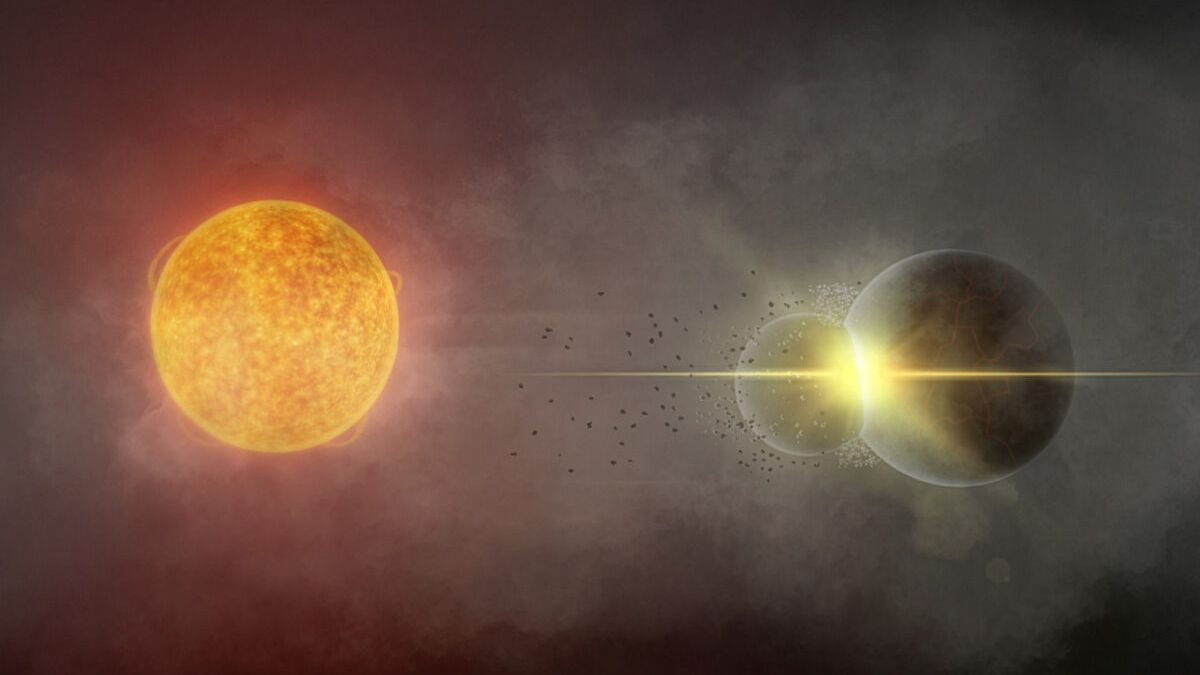
In 1971, English physicist Roger Penrose proposed that this rotational energy could be extracted. A spinning black hole, akin to a massive battery, can release vast amounts of energy, far exceeding that of a star of equivalent mass. When two black holes collide and merge, a significant amount of this energy is unleashed in a matter of seconds, potentially propelling the resulting black hole at speeds reaching thousands of kilometres per second.
Evidence from Gravitational Wave Observations
The theoretical predictions began to materialize with the advent of gravitational wave observatories like LIGO and Virgo, which started detecting gravitational waves from colliding black holes in 2015. These observations revealed “ringdowns,” a characteristic ringing of newly formed black holes that provides insights into their spin. As more data became available, it became apparent that some pairs of black holes possessed randomly oriented spin axes and considerable spin energy, suggesting the potential for runaway black holes.
As these black holes travel at approximately 1% of the speed of light, their paths through space would differ from the curved orbits typical of stars within galaxies, resembling almost straight trajectories.
Direct Observations of Runaway Black Holes
The challenge of identifying smaller runaway black holes remains, but supermassive black holes, with masses of a million to a billion solar masses, can create significant disturbances in their surroundings. They are theorized to leave trails of stars and gas as they traverse galaxies, similar to the contrails of an aircraft.
In 2025, several research papers showcased images of linear streaks of stars within galaxies, offering compelling evidence for runaway black holes. One notable study, led by Pieter van Dokkum from Yale University, detailed a distant galaxy imaged by the James Webb Space Telescope, which exhibited a remarkably bright contrail extending approximately 200,000 light-years. This contrail’s features suggested the influence of a black hole with a mass of around 10 million solar masses, moving at nearly 1,000 km/s.
Another study highlighted a straight contrail in the galaxy NGC3627, likely caused by a black hole with a mass of about 2 million times that of the Sun, traveling at 300 km/s and leaving a trail of roughly 25,000 light-years.
The existence of massive runaway black holes raises the possibility that smaller black holes could also be traversing the universe. Gravitational wave observations imply that some black holes merge with the configurations necessary to produce significant kicks, facilitating their movement between galaxies.
The discoveries of runaway black holes introduce a new and intriguing element to our understanding of the universe. While the prospect of such a black hole entering our Solar System raises concerns, the likelihood of such an event remains exceedingly low.
As David Blair, Emeritus Professor at the ARC Centre of Excellence for Gravitational Wave Discovery at the University of Western Australia, notes, this finding enriches our narrative of the cosmos, revealing that the universe is even more complex and captivating than previously thought.