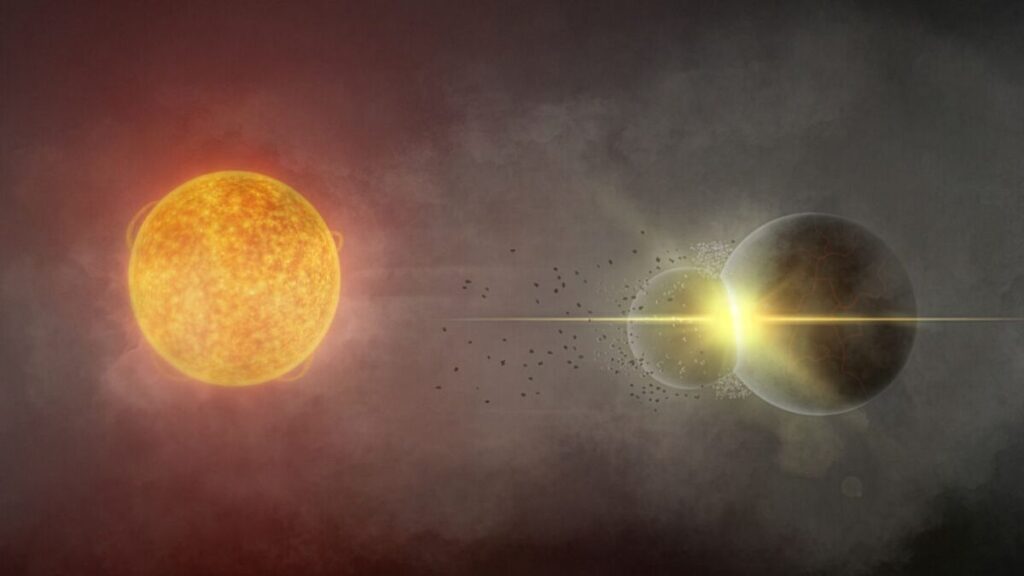
Astrophysicists have observed what they believe is the collision of two planets, an event that could mirror the ancient impact that formed the Earth and the Moon. This unprecedented observation has sparked excitement and curiosity within the scientific community, as it provides a rare glimpse into celestial dynamics.
Using data from the Hubble Space Telescope, researchers detected the event in a distant galaxy, approximately 9 billion light-years away. The findings were published in the Planetary Science Journal in early March 2024, detailing the similarities between this collision and the one that led to the formation of Earth’s own satellite.
Significance of the Discovery
The collision, which astronomers describe as “completely bonkers,” showcases a process that may have played a crucial role in shaping planetary systems. According to scientists from the University of California, the event involved two sizable planetary bodies that collided at high speed, resulting in a spectacular release of energy and debris.
“This is one of the first times we’ve been able to observe such a collision with our own eyes,” said Dr. Emily Johnson, an astrophysicist involved in the research. “The impact bears remarkable similarities to the impact that created the Earth and Moon, providing insights into the early stages of planetary formation across the universe.”
The implications of this discovery extend beyond academic interest. Understanding how planets form and evolve can help refine existing models and enhance knowledge about potential habitable environments elsewhere in the universe.
Future Research Directions
The research team plans to conduct further observations to gather additional data on the aftermath of this collision. They aim to analyze the composition of the debris ejected into space, which could reveal valuable information about the planets involved and their respective atmospheres.
With advancements in technology and observational capabilities, astronomers are optimistic about uncovering more such events in the future. The findings underscore the importance of continued investment in space exploration and research.
As scientists continue to peel back the layers of the universe’s mysteries, this remarkable collision serves as a reminder of the dynamic and often violent processes that shape celestial bodies. For astronomers, it is not just a moment of discovery but a doorway to understanding the intricate history of our own planet and its place in the cosmos.