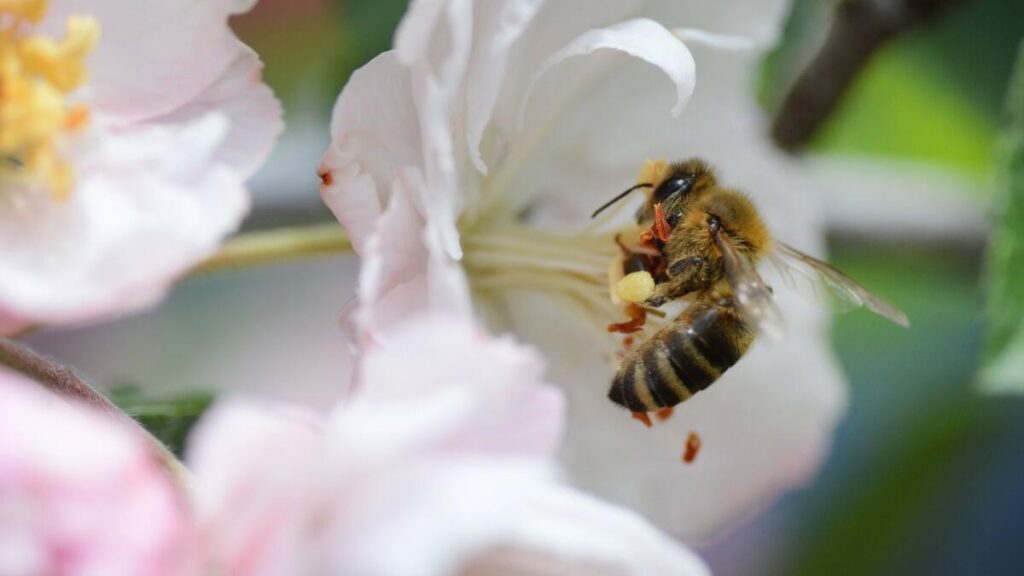
Australia has initiated its first comprehensive honey bee genetic improvement program, known as **Plan Bee**, aimed at enhancing the resilience and productivity of the nation’s beekeeping industry. This initiative is crucial, as pollination supports more than **$12 billion** in agricultural production annually, benefiting over **60** crops, including almonds, canola, and zucchini.
Plan Bee is funded by the **Federal Government’s Rural R&D for Profit Program** and is a collaborative effort involving the **NSW Department of Primary Industries**, the **University of Sydney**, and the **University of New England’s Animal Genetics and Breeding Unit** (AGBU). The program also incorporates insights from the bee industry and seed producers, ensuring a comprehensive approach to genetic improvement.
Advancing Bee Breeding Techniques
The project has successfully produced genetic tools that will enable beekeepers to breed honey bees capable of adapting to emerging challenges, such as environmental threats like drought and bushfires, as well as diseases, notably the **varroa mite**. According to Elizabeth Frost, one of the lead researchers from the **NSW DPIRD**, the program has taken inspiration from livestock breeding practices. “Estimated breeding values are used by livestock production sectors—such as sheep, pigs, dairy, and beef cattle—to identify important traits which can be selected for in breeding programs to accelerate genetic improvement,” she explained.
During its five-year duration, the initiative established a national reference population comprising **50 breeder queens** and **200 production colonies** linked genetically to commercial queen breeders across six states. These resources were pivotal in developing and validating methods for genetic testing, establishing a robust genetic evaluation system.
The survey conducted among queen bee breeders and honey producers revealed that the key traits they wished to select for included honey production, temperament, colony strength, pollination efficiency, and disease resistance. By quantifying the genetic merit of queens based on these criteria, beekeepers can identify the best-performing hives and queens, ultimately enhancing the production traits of future generations.
Modernizing Bee Breeding Practices
The genetic data collected by AGBU includes information from about **5,500** colonies, with evaluations for various traits such as colony strength, aggression, and disease resistance. The reproductive process of bees is notably different from other livestock; queen bees mate with multiple drones before selectively fertilizing eggs. Traditionally, Australian bee breeding relied on mass selection, but the tools developed through **Plan Bee** allow for more sophisticated breeding techniques that can target the best queens for preferred traits.
“Bee breeders now have the tools to transition from classic mass selection to more controlled mating, leading to more efficient and accurate genetic improvement,” Frost stated. This advancement means that beekeepers can produce thousands of genetically improved queen bees, benefiting the entire industry.
As a result of this initiative, beekeepers are expected to have more viable and resilient colonies, honey producers will see greater hive productivity, and farmers who depend on pollination services can enjoy enhanced security.
Plan Bee began in **2020**, prior to the discovery of the varroa mite in Australia. The research has yielded critical insights into breeding for pest and disease resistance in bees, reinforcing the need for selective breeding practices. “We are ultimately striving for healthy, happy bees,” Frost emphasized. “This project has highlighted the importance of selective breeding for pest and disease traits, standardizing record-keeping, and utilizing unique hive and queen identifiers.”
The program capitalizes on Australia’s diverse starting bee population, which serves as an excellent foundation for selecting traits that help bees combat challenges effectively. For more detailed information, visit agrifutures.com.au/plan-bee.