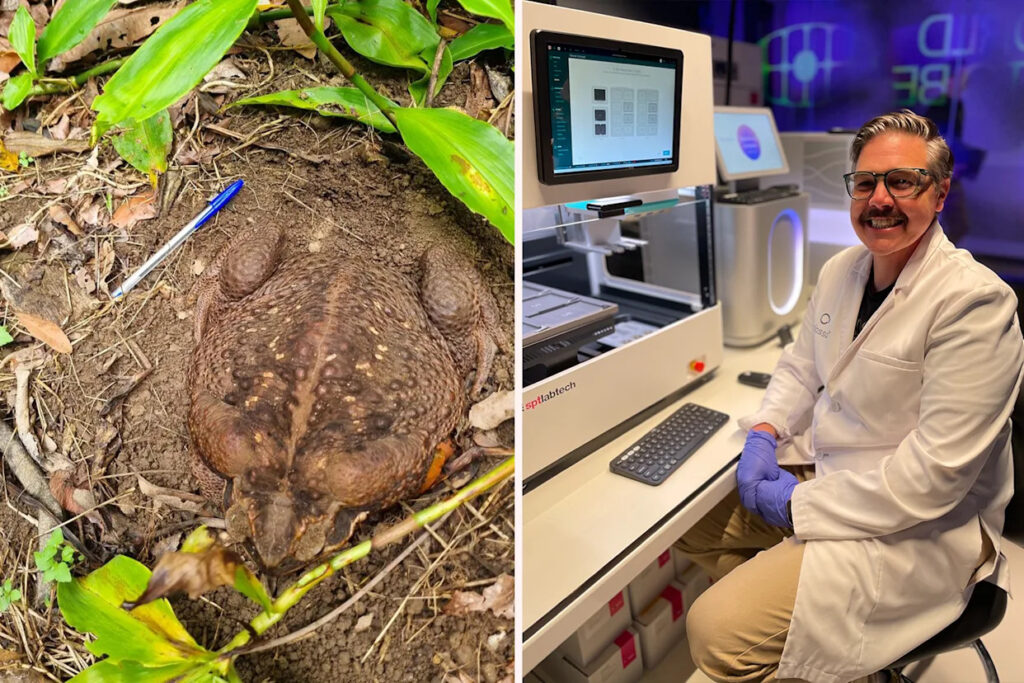
Gene-technology company Colossal Biosciences is accelerating efforts to genetically engineer the northern quoll, a marsupial facing extinction due to the invasive spread of cane toads in Australia. Following significant advancements in their research, scientists have outlined a concrete pathway to create a northern quoll that can resist the toxic effects of cane toads. This initiative is urgent, as the invasive species continues to expand its territory, threatening the quoll’s survival.
Professor Andrew Pask, Chief Biology Officer at Colossal, emphasized the critical nature of the project. “The quicker we can get there, the better,” he stated in an interview. “This isn’t a 10-year plan; in 2, 3, or 4 years, we should see the birth of a cane toad-resistant quoll.” Experts predict that without intervention, the northern quoll could face extinction in the wild within the next decade as cane toads continue to invade new areas.
Australia’s native wildlife has long struggled against the deadly effects of cane toads, which were introduced from Central America in the 1930s. The local fauna evolved in isolation, making them ill-equipped to handle the invasive species. The cane toad’s poison, released through its glands, can cause rapid death in animals that attempt to consume it. With no natural immunity to this threat, native populations have seen dramatic declines.
Colossal’s approach focuses on “speeding up evolution” rather than completely altering the northern quoll. The goal is to introduce genetic changes that would enhance the quoll’s ability to survive against the cane toad’s poison. “It’s something that exists in nature that would evolve over time,” explained Professor Pask.
Innovative Techniques to Combat Invasive Species
Colossal Biosciences has developed advanced techniques for gene editing using quoll stem cells, paving the way to create embryos that are resistant to cane toad venom. The company has successfully introduced poison resistance genes into the fat-tailed dunnart, which could be adapted for the northern quoll. “We’ve developed tools to really efficiently gene edit marsupials, and a lot of the pipelines that we need to turn those cells back into a full living animal,” noted Professor Pask.
The ideal scenario would see the northern quoll evolve into a “super-predator,” capable of controlling cane toad populations and protecting other vulnerable species within the ecosystem. Colossal aims to extend this genetic technology to other threatened species as well.
Should the project succeed, it would mark a pioneering achievement in conservation genetics—the first instance of genetic engineering aimed specifically at conservation efforts. Original northern quolls will be kept in captivity to ensure that they remain unaltered, as these populations are not currently threatened by cane toads. The gene-edited quolls are expected to thrive in the wild and propagate their resistance to future generations.
Before releasing the modified quolls into their natural habitat, Colossal plans to engage in discussions with First Nations people and government officials. Professor Pask expressed confidence in reaching an agreement, stating that the modifications are minimal and should not present significant concerns.
Future Aspirations for Australia’s Ecosystem
Ultimately, Professor Pask envisions a future where cane toads are eradicated from Australia. “At some point in the future, all cane toads could be gone from Australia,” he remarked. “Then the [mutation] would revert back naturally, because there’s no need to retain it.”
The implications of this undertaking extend beyond just the northern quoll; it represents a potential turning point in conservation strategies for Australia’s unique and diverse wildlife, showcasing how technology can play a pivotal role in addressing ecological challenges. As the race against time continues, the success of Colossal Biosciences may redefine conservation efforts and provide a blueprint for similar initiatives around the world.