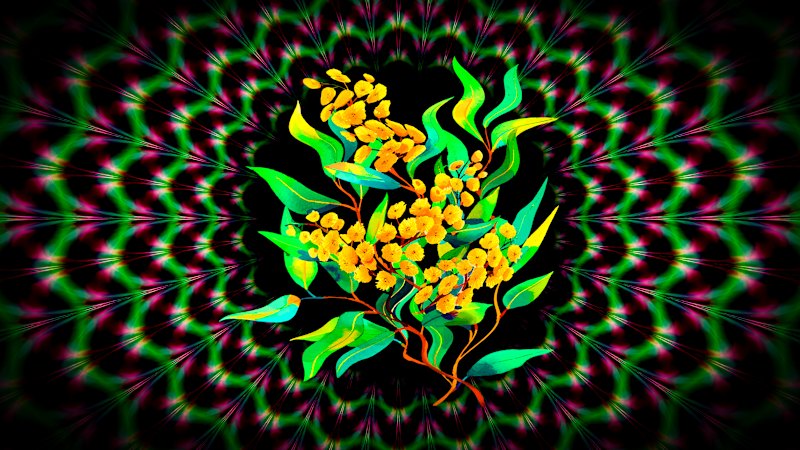
Australian researchers are investigating the potential of wattle, the country’s floral emblem, as a source for new psychedelic compounds that could address challenging mental health conditions. In a laboratory located in Western Sydney, scientists have set up experiments using samples from various species of acacia, which may hold unknown therapeutic properties.
Unlocking the Potential of Wattle
Dr. Mitchell Low from the NICM Health Research Institute at Western Sydney University is leading a comprehensive study focusing on 855 species of Australian wattle. This research aims to identify psychedelic compounds such as DMT, which have shown promise in psychiatric therapies. The project is expected to span five years, highlighting the need for innovative treatments for mental health disorders.
Historically, acacia shrubs and trees have been associated with psychedelic properties. Some scholars even suggest that the biblical account of Moses and the burning bush may have been influenced by hallucinogenic experiences linked to DMT present in acacia plants. With over 1,000 species of acacia native to Australia, only a fraction have been studied for their chemical compositions. “Most of them haven’t been tested,” Low noted, emphasizing the vast potential still to be explored.
Early findings from Low’s research indicate that the DMT concentration in certain wattle samples is more potent than that found in traditional Amazonian plants used to create ayahuasca. “We’re looking as broadly as possible,” Low explained, aiming to find a variety of compounds that might serve as next-generation psychedelic drugs.
Addressing Mental Health Challenges
More than 2.2 million Australians live with long-term mental illnesses, and while antidepressants are beneficial for some, they do not work for everyone. There is a growing urgency for alternative therapeutic options. In collaboration with researchers from the University of Melbourne and CSIRO, Low developed a DMT-based formulation derived from wattle. This innovative formulation was tested in a controlled study published in Scientific Reports in November 2025.
Lead author Dr. Daniel Perkins, head of the Psychedelics Research and Therapeutics Unit at the University of Melbourne, reported that participants experienced effects that surpassed previous findings associated with psilocybin and LSD. “We found strong associations between the intensity of that acute experience and persisting psychological benefits, including improved wellbeing and positive behavioral changes,” Perkins stated.
The next phase will involve a randomized controlled trial that includes participants suffering from major depressive disorder and alcohol use disorder. This progression reflects the increasing interest in psychedelic-assisted therapies, particularly following the mainstream acceptance of such treatments after the release of Michael Pollan’s Netflix series, How to Change Your Mind, in 2022.
Psychiatrist Dr. Nigel Strauss, based in Melbourne, expressed optimism about the potential of these therapies when prescribed judiciously. “There’s much more quality of life,” he said, recognizing the significant impact that appropriate treatments can have on patients.
The potential for DMT as a faster-acting alternative to psilocybin, which may take longer to exhibit effects, is particularly appealing. Current psychedelic-assisted therapy can be expensive, costing up to $25,000 and primarily subsidized by select private health insurance and the Department of Veterans Affairs for veterans.
Dr. Low emphasized the cost-effectiveness of DMT treatments, arguing that if patients can achieve significant improvements in just a few sessions, it could be less expensive than ongoing traditional therapies. He highlighted that the average mental injury claim now stands at $288,542, with mental health services costing $13.2 billion annually in Australia.
As research progresses, it is clear that the work being conducted at the NICM is vital. Perkins remarked, “Australian flora contain a remarkable diversity of bioactive compounds that are largely unexplored… The fact that Australian Acacia species contain DMT is well established, but there’s likely much more to discover.” The exploration of wattle as a source of new psychedelic therapies represents an exciting frontier in mental health treatment.