



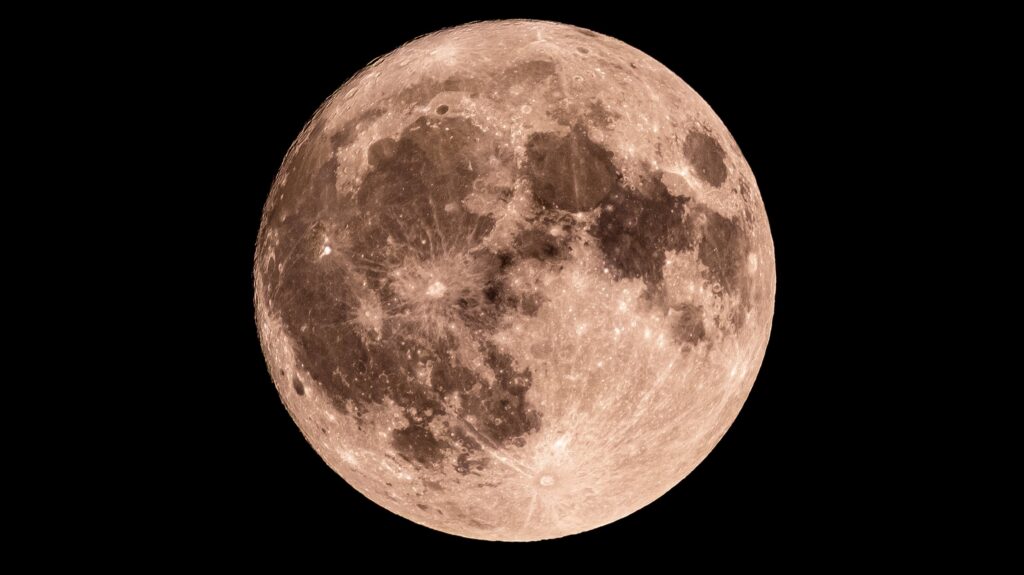
The Moon reaches its First Quarter phase tonight, February 24, 2024, with approximately 48% of its surface illuminated. This phase signifies the halfway point between the New Moon and Full Moon, meaning the lunar body will grow increasingly bright in the coming nights. Skywatchers can expect a stunning view as the Moon continues to wax, leading up to the Full Moon on March 3.
As the Moon rises in the night sky, three prominent lunar plains, known as Mare, will be easily visible to the naked eye: Mare Fecunditatis, Mare Tranquillitatis, and Mare Serenitatis. For those equipped with binoculars, additional features such as the Endymion Crater, Mare Nectaris, and the Posidonius Crater become accessible. Utilizing a telescope can enhance the experience even further, offering views of the Apollo 16 and Apollo 17 landing sites, as well as the Rupes Altai.
Understanding Lunar Phases
The Moon progresses through eight distinct phases approximately every 29.5 days as it orbits Earth. Each phase reflects the varying sunlight that illuminates its surface, creating different appearances from our vantage point. Here’s a brief overview of the lunar phases:
– **New Moon**: The Moon lies between Earth and the Sun, rendering it invisible from our perspective.
– **Waxing Crescent**: A small sliver of light starts to become visible on the right.
– **First Quarter**: Half of the Moon is illuminated on the right side, appearing as a half-Moon.
– **Waxing Gibbous**: More than half is lit, approaching fullness.
– **Full Moon**: The entire face of the Moon is illuminated and fully visible.
– **Waning Gibbous**: The illumination begins to decrease on the right side.
– **Third Quarter**: Another half-Moon, but this time the left side is lit.
– **Waning Crescent**: A thin sliver of light remains on the left before the cycle begins anew.
This cycle offers not only a chance for stargazers to enjoy the night sky but also serves as a reminder of the Moon’s fascinating dynamics. According to NASA, understanding these phases can enhance our appreciation of lunar observations and their implications for both science and culture.
As you look up tonight, take a moment to appreciate the beauty of the Moon and the intricate dance it performs in our skies.


