




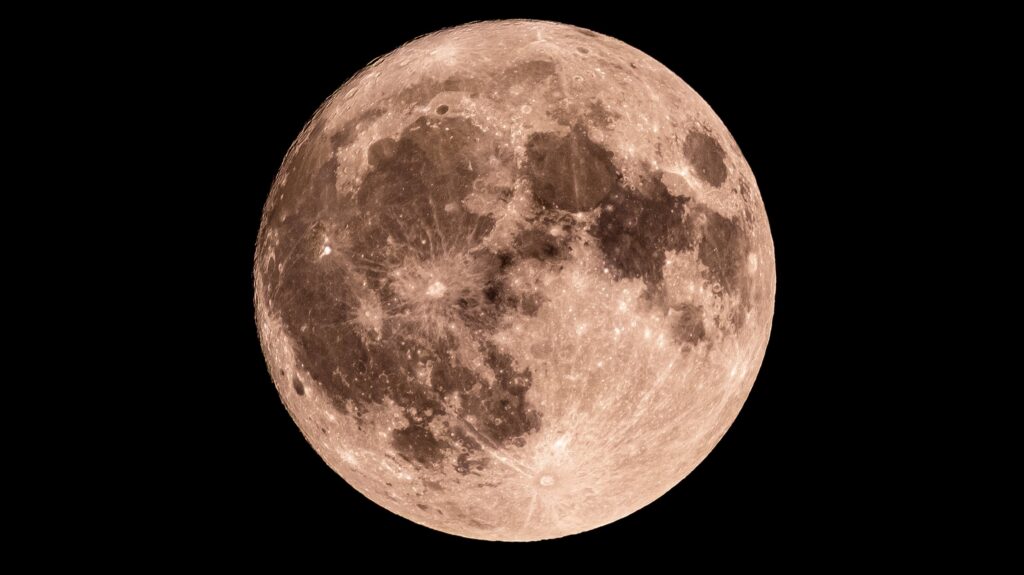
January 11 marks the transition to a Waning Crescent Moon, indicating the final phase before the upcoming New Moon. This lunar cycle, which spans approximately 29.5 days, sees the Moon completing its orbit around Earth, passing through all eight distinct phases.
As of this evening, 42% of the Moon’s surface will be illuminated, according to the NASA Daily Moon Guide. Skywatchers can expect to observe notable features on the Moon’s surface without any visual aids. With the naked eye, it will be possible to see the Aristarchus Plateau, Kepler Crater, and Tycho Crater. Those equipped with binoculars will have the advantage of spotting additional features, including the Grimaldi Basin, Clavius Crater, and the Mare Humorum. For the most detailed views, a telescope will reveal sites such as the Apollo 12 landing location and the Schiller Crater.
Understanding Lunar Phases
The Moon’s phases are a result of its position relative to Earth and the Sun. As it orbits Earth, the sunlight that reflects off its surface changes, leading to varying appearances. The eight primary phases of the lunar cycle include:
– **New Moon**: The Moon is positioned between Earth and the Sun, rendering it invisible from our perspective.
– **Waxing Crescent**: A small crescent of light appears on the right side, becoming more visible.
– **First Quarter**: Half of the Moon is illuminated on the right side, resembling a half-Moon.
– **Waxing Gibbous**: More than half of the Moon is illuminated but not completely full.
– **Full Moon**: The entire face of the Moon is illuminated and fully visible.
– **Waning Gibbous**: The Moon begins to lose light on the right side.
– **Third Quarter (or Last Quarter)**: Another half-Moon phase appears, but now the left side is lit.
– **Waning Crescent**: A thin sliver of light remains on the left side before the Moon goes dark again.
The next Full Moon will occur on February 1, 2024, following the last Full Moon on January 3.
Observing the Moon during its various phases offers a captivating glimpse into our celestial neighbor’s dynamic nature as it journeys through the night sky. Whether you are an experienced astronomer or a casual observer, the Waning Crescent Moon presents an opportunity to appreciate the beauty and complexity of lunar observation.