



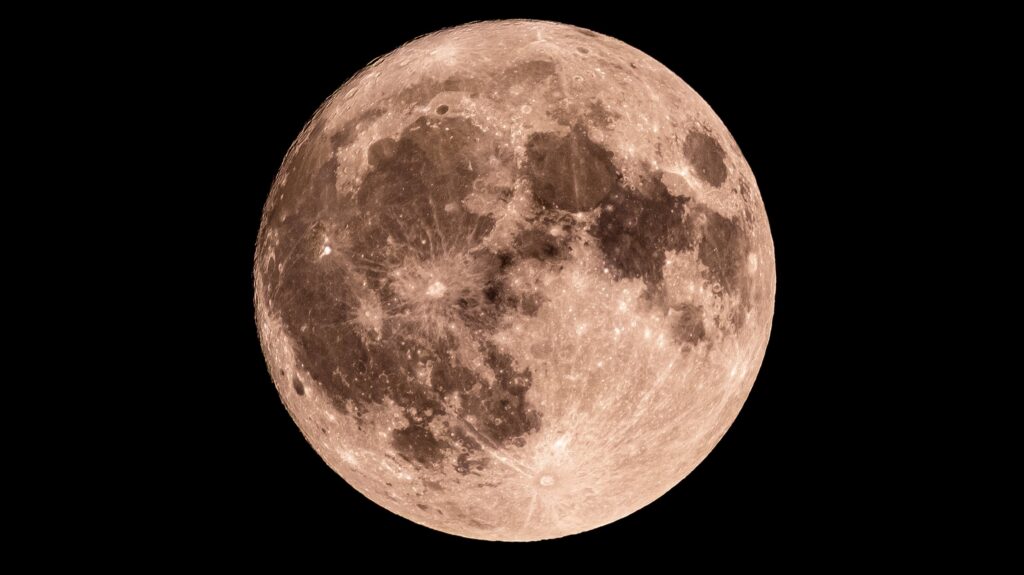
Tonight, January 3, 2024, the sky will showcase a stunning Full Moon, marking the fourth consecutive supermoon of the year. This event is known as the **Wolf Moon**, traditionally named for its association with the howling of wolves during winter. According to **The Sky Live**, the moon will be fully illuminated, presenting a spectacular view for stargazers and night sky enthusiasts alike.
Understanding Moon Phases
The Moon undergoes a complete cycle approximately every **29.5 days**, a journey known as the lunar cycle. During this time, it transitions through various phases as it orbits around the Earth. While one side of the Moon consistently faces our planet, the amount of sunlight that illuminates its surface changes, resulting in the different appearances we observe.
NASA explains that the lunar cycle is divided into eight distinct phases, each characterized by the Moon’s visibility:
– **New Moon**: The Moon is positioned between the Earth and the Sun, rendering it invisible to observers on Earth.
– **Waxing Crescent**: A small sliver of light appears on the right side of the Moon.
– **First Quarter**: Half of the Moon is illuminated on the right side, resembling a half-moon.
– **Waxing Gibbous**: More than half of the Moon is lit, yet it has not reached its full form.
– **Full Moon**: The entire face of the Moon is illuminated, creating a bright spectacle in the night sky.
– **Waning Gibbous**: The Moon begins to lose light on the right side.
– **Third Quarter (or Last Quarter)**: The left side of the Moon is now illuminated, presenting another half-moon.
– **Waning Crescent**: A thin sliver of light remains on the left side before the Moon returns to darkness.
Looking Ahead to February
For those who miss tonight’s Full Moon, the next opportunity to witness a Full Moon will be on **February 1, 2024**. As the lunar cycle continues, each phase offers a unique perspective of this celestial body, inviting both casual observers and avid astronomers to engage with the night sky.
As the **Wolf Moon** captivates viewers tonight, it serves as a reminder of the intricate patterns of nature and the beauty of our solar system. Whether gazing through a telescope or simply enjoying the view from your backyard, the Full Moon offers an enchanting experience for all.


