Recent scientific developments have made headlines this week, revealing intriguing insights into health, astronomy, and cancer research. Key findings include the impact of beverage choices on bone health, the closest approach of the interstellar comet 3I/ATLAS, and the confirmation of a runaway supermassive black hole by the James Webb Space Telescope.
Impact of Beverage Choices on Bone Health
A study conducted by researchers at Flinders University highlights a potential link between beverage consumption and osteoporosis risk in older women. The findings indicate that moderate tea consumption may enhance bone strength, while high coffee intake could have detrimental effects.
Enwu Liu, an epidemiologist involved in the research, noted, “Our results don’t mean you need to give up coffee or start drinking tea by the gallon. But they do suggest that moderate tea consumption could be one simple way to support bone health, and that very high coffee intake might not be ideal.” This research underscores the importance of dietary choices in maintaining health as individuals age.
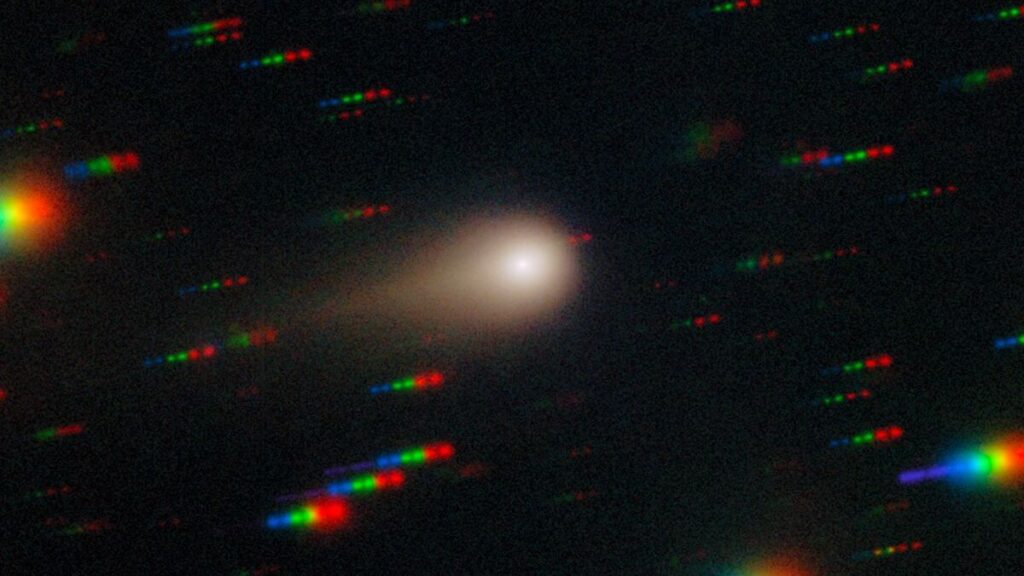
3I/ATLAS Comet Passes Closest to Earth
The interstellar comet 3I/ATLAS made its closest approach to Earth on December 19, 2023, reaching a distance of approximately 270 million kilometers (168 million miles). Although this distance is nearly twice that of the Sun’s average distance from Earth, astronomers seized the opportunity to conduct significant observations.
The comet’s visit offers a unique chance for scientists to study its composition and trajectory before it exits the Solar System, enhancing understanding of such celestial bodies.
Breakthroughs in Cancer Research
In a separate study, researchers have identified a combination of two supplements—resveratrol and copper—as potentially beneficial in combating a particularly aggressive form of brain cancer. The study suggests that these supplements help eliminate cell-free chromatin particles that inflame surviving cancer cells, thus reducing the cancer’s aggressiveness.
Indraneel Mittra, a cancer surgeon and public health researcher, explained, “If you eliminate the cell-free chromatin, which is what the resveratrol-copper tablets do, the cancer is subdued.” This discovery may pave the way for new treatment strategies in the fight against brain cancer.
Link Between Depression Symptoms and Dementia Risk
A study from the UK has identified six specific symptoms of depression in middle-aged individuals that correlate with a heightened risk of developing dementia. According to Philipp Frank, an epidemiological psychologist involved in the research, “Our findings show that dementia risk is linked to a handful of depressive symptoms rather than depression as a whole.”
This nuanced approach could provide a clearer understanding of who is at greater risk for dementia, potentially allowing for early interventions and support.
Runaway Supermassive Black Hole Confirmed
In a remarkable discovery, the James Webb Space Telescope (JWST) has confirmed the existence of the first known runaway supermassive black hole, moving through space at an astonishing speed of 954 km/s (593 miles per second). The gravitational forces required to propel a black hole of this mass at such velocity raise fundamental questions about the dynamics of black holes and their environments.
Advancements in Aging Research
Researchers in Japan have made strides in understanding the aging process by focusing on a protein called COX7RP. Their study found that increasing the levels of this protein in male mice resulted in a significant increase in average lifespan by 6.6 percent. Moreover, these mice exhibited signs of an extended healthspan, suggesting that they could maintain better health for longer periods.
These findings not only provide insight into potential anti-aging strategies but also open avenues for further research on mitochondrial function and longevity.
These recent developments collectively contribute to our understanding of health, the cosmos, and the complexities of scientific inquiry. The implications of these studies are vast, touching on everyday choices, astronomical phenomena, and the future of medical treatments.