


A groundbreaking laboratory-based feeding system for bush ticks has been developed by researchers at the University of Melbourne. This innovative platform is the first of its kind and significantly enhances the study of ticks and the diseases they transmit, enabling more ethical and reproducible research.
Ticks are crucial vectors for infectious diseases, responsible for spreading a variety of viruses, bacteria, and protozoa to both animals and humans. As global factors like climate change, land use, and trade continue to alter tick distribution and the prevalence of tick-borne diseases, the need for effective research methods has become increasingly urgent.
Revolutionizing Tick Research
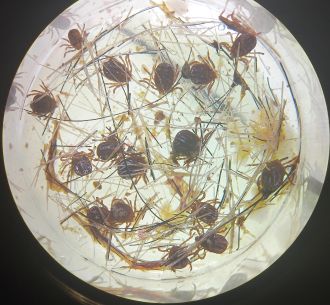
The research team, led by Dr. Abdul Ghafar and Professor Abdul Jabbar of the Melbourne Veterinary School, alongside Professor Ard Nijhof from Freie Universität Berlin, presented their findings in The Veterinary Journal. Their study revealed that the new feeding platform can support the feeding and complete reproduction of the Asian longhorned tick (Haemaphysalis longicornis) without relying on animal hosts.
This tick species is particularly significant in Australia, where it is a primary transmitter of the parasite Theileria orientalis, which causes considerable production losses in cattle. Emerging research indicates that bites from H. longicornis may also contribute to alpha-gal syndrome in humans, a red-meat allergy associated with a carbohydrate found in tick saliva.
Traditionally, tick research has relied heavily on live animals, which poses ethical and logistical challenges. As Professor Nijhof noted, such methods are labor-intensive and can introduce variability due to host immune responses and other individual differences.
Ethical and Practical Advancements
The newly developed platform eliminates the necessity for animal hosts. It employs a thin silicone membrane and cattle blood stripped of the clotting protein fibrin, effectively mimicking the essential characteristics of natural feeding. As Professor Jabbar explained, this advancement allows for controlled studies of tick physiology, microbiome dynamics, and pathogen transmission under standardized laboratory conditions.
The system also facilitates high-throughput screening for new pesticides and anti-tick vaccines, addressing the increasing need for effective control measures against tick-borne diseases.
According to Dr. Ghafar, the team optimized membrane thickness and feeding conditions to overcome the anatomical challenges posed by H. longicornis, which has short mouthparts and limited mobility. This innovation is timely, as climate change and shifts in land use continue to reshape the distribution of ticks in Australia.
“This host-free feeding system can support integrated research on disease-carrying animals like ticks, which are vital to both animal and human health,” Dr. Ghafar stated.
The research was supported by the Melbourne Postdoctoral Fellowship at the University of Melbourne, highlighting a commitment to advancing veterinary science and public health. As researchers continue to explore the implications of tick-borne diseases, this innovative platform offers a promising avenue for future studies.