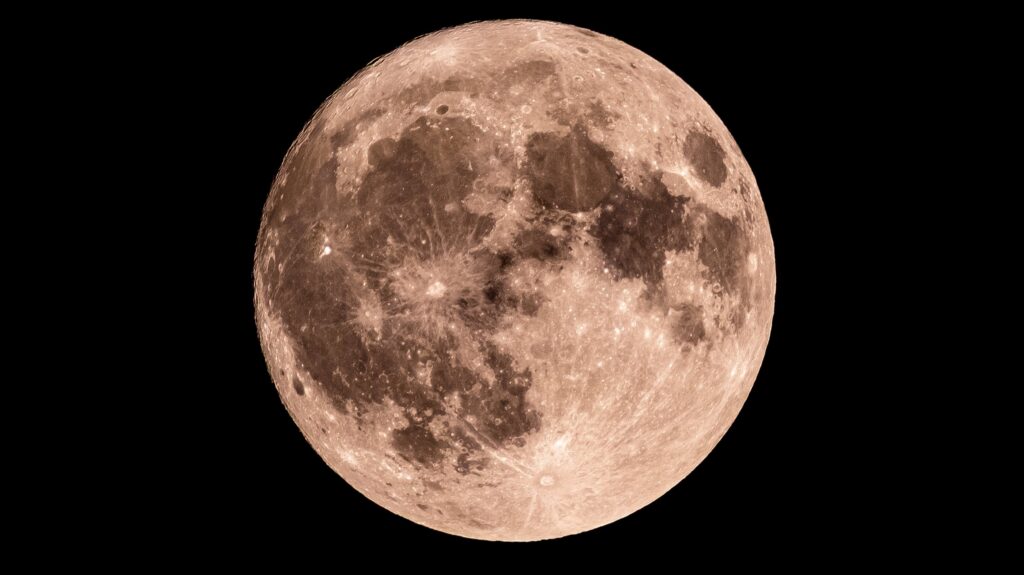
The Moon is currently in its Waning Crescent phase, with only a small portion illuminated as we approach the New Moon on **March 15, 2024**. Tonight, **16%** of the Moon’s surface will be lit, making it challenging for skywatchers to observe any significant details without visual aids.
For those eager to catch a glimpse of the Moon’s features, binoculars or a telescope may reveal the Grimaldi Basin, a prominent lunar impact crater. However, for casual observers, the naked eye will provide limited visibility tonight.
Understanding Moon Phases
The Moon’s cycle takes approximately **29.5 days** to complete, transitioning through eight distinct phases. As it orbits the Earth, the illuminated portion changes, creating varying appearances from full to nearly invisible.
According to **NASA**, the eight lunar phases include:
– **New Moon**: The Moon is positioned between the Earth and the Sun, resulting in a dark sky.
– **Waxing Crescent**: A small light appears on the right side of the Moon.
– **First Quarter**: Half of the Moon is illuminated on the right side, resembling a half-Moon.
– **Waxing Gibbous**: More than half is lit, yet it is not fully illuminated.
– **Full Moon**: The entire face of the Moon is visible.
– **Waning Gibbous**: The right side begins to lose light.
– **Third Quarter (or Last Quarter)**: The left side is now illuminated, appearing as another half-Moon.
– **Waning Crescent**: A thin sliver of light remains on the left side before the cycle begins anew.
Looking Ahead
Skywatchers in North America can anticipate the next Full Moon on **April 1, 2024**. This upcoming event will offer a more spectacular view of the Moon, allowing for a greater appreciation of its surface features.
As the Moon continues its journey through these phases, enthusiasts will find each stage provides a unique opportunity to engage with our celestial neighbor. Whether through telescopes or simply gazing up at the night sky, understanding the Moon’s cycle enhances the experience of lunar observation.