



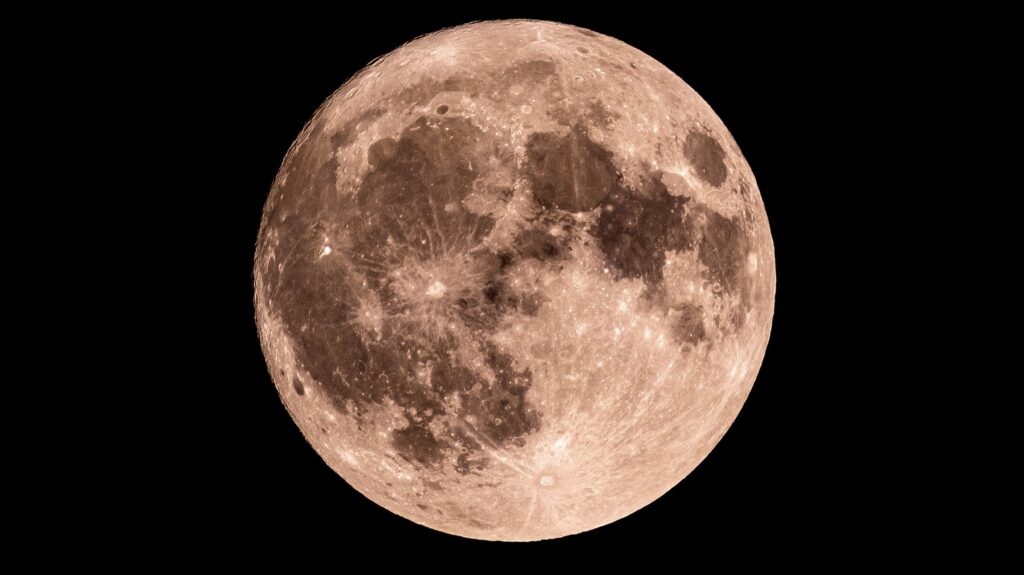
The Moon is currently in the waning gibbous phase, illuminating the night sky with approximately 98.6% of its surface lit as of January 4, 2024. Following the recent full moon, which occurred on December 31, 2023, the Moon will gradually decrease in brightness as it approaches the next new moon phase.
Understanding Moon Phases
Moon phases are a natural result of the Moon’s orbit around the Earth, which takes about 29.5 days to complete a full cycle. During this lunar cycle, the appearance of the Moon changes as varying portions of its surface are illuminated by sunlight. This phenomenon is why the Moon can appear fully lit, partially illuminated, or completely dark.
According to NASA, the lunar cycle consists of eight primary phases:
– **New Moon**: The Moon is positioned between the Earth and the Sun, rendering it invisible from our viewpoint.
– **Waxing Crescent**: A small crescent of light appears on the right side of the Moon for observers in the Northern Hemisphere.
– **First Quarter**: Half of the Moon is illuminated, creating the familiar half-moon shape.
– **Waxing Gibbous**: More than half of the Moon is lit, yet it has not reached full illumination.
– **Full Moon**: The entire face of the Moon is fully illuminated and easily visible.
– **Waning Gibbous**: The Moon begins to lose light, with illumination decreasing from the right side.
– **Third Quarter (or Last Quarter)**: Another half-moon phase, but now the left side is illuminated.
– **Waning Crescent**: A thin crescent of light remains on the left side before the Moon becomes dark again.
Upcoming Lunar Events
The next significant event in the lunar calendar will be the full moon, which is set to occur on February 1, 2024. As the Moon transitions through its phases, skywatchers can anticipate varying visual displays that offer opportunities for observation and appreciation of this celestial body.
With its constant movement and changing appearance, the Moon not only captivates astronomers but also arouses the curiosity of casual observers. Understanding its phases enriches the experience of watching the night sky and connects individuals to the rhythms of nature.


