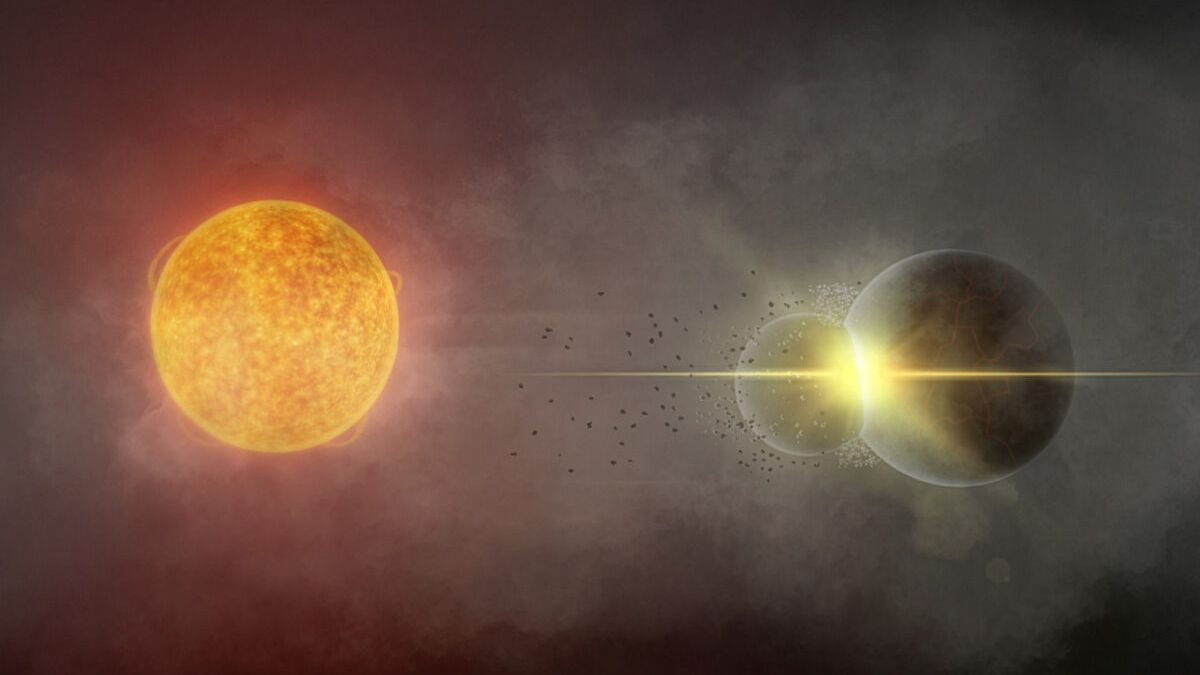
A recent study from Chalmers University of Technology in Sweden has prompted a reevaluation of how the essential atoms for life are distributed throughout our galaxy. Researchers focused on the red giant star R Doradus, revealing that the mechanisms behind the transport of these vital building blocks are not solely driven by starlight and stardust, as previously thought.
The findings challenge established theories about the spread of life’s fundamental components. Traditionally, scientists believed that the intense winds generated by massive stars were primarily responsible for dispersing these atoms. However, the new research suggests that this view may be overly simplistic and that different processes may play a significant role in this cosmic distribution.
In their study, the team utilized advanced observational techniques to analyze the behavior of R Doradus, one of the largest known red giants. The researchers discovered that the winds produced by such stars are not as effective in transporting life’s essential atoms as long assumed. Instead, they propose that other factors, possibly including the star’s mass loss and surrounding environmental conditions, may significantly influence the dispersal processes.
The implications of this research extend beyond astronomy. Understanding how the atoms necessary for life travel through space is crucial for grasping the origins of life on Earth and potentially on other planets. The study’s lead author highlighted the importance of these findings, stating, “This research opens new avenues for understanding the cosmic cycle of matter that contributes to the formation of life.”
The results were published in the journal Astronomy & Astrophysics, emphasizing the need for further investigation into the mechanisms that govern the movement of atoms across the universe. The research team plans to conduct additional observations, aiming to refine their models and clarify the role of red giants in the cosmic distribution of life’s building blocks.
As scientists continue to explore the vastness of space, studies like this one underscore the dynamic and complex nature of the universe, challenging established notions and paving the way for new discoveries.