




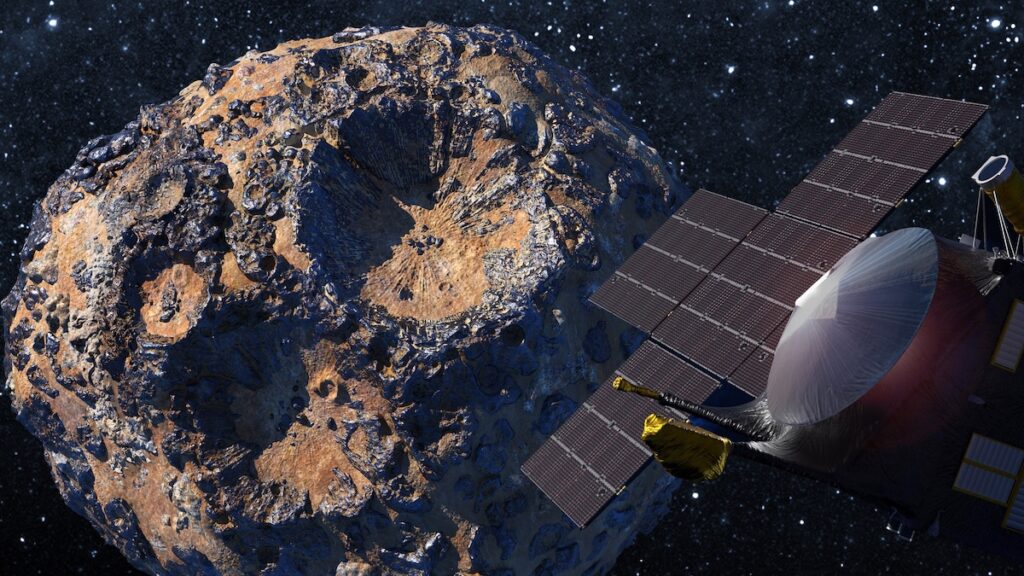
Interest in asteroid mining has resurfaced as a new study sheds light on the potential for resource extraction from Near Earth Asteroids (NEAs). Conducted by researchers from the Institute of Space Sciences (ICE-CSIC) in Barcelona, the study investigates the chemical composition of carbonaceous asteroids, which make up approximately 75% of known asteroids. The findings suggest that these bodies could be significant sources of raw materials, supporting the long-held dream of mining in space.
Led by Dr. Josep M. Trigo-Rodríguez, a theoretical physicist, the research team comprised experts from various institutions, including the University of Castilla-La Mancha and the University of Helsinki. Their work will be published in the Monthly Notices of the Royal Astronomical Society on January 2, 2024. The study highlights the need for further infrastructure and technological development to make asteroid mining viable.
Despite the initial buzz surrounding asteroid mining a few years ago, many ventures have faced challenges, causing a slowdown in progress. The research team emphasizes that understanding the chemical makeup of asteroids is crucial, as they are highly heterogeneous and can be categorized into distinct types, primarily C-type (carbonaceous), M-type (metallic), and S-type (silicaceous).
In this study, the team analyzed samples of carbonaceous chondrites, a type of meteorite that frequently reaches Earth but is rarely retained for scientific examination. These samples, primarily found in desert areas like the Sahara and Antarctica, provide insights into the origins of asteroids and their potential for resource extraction.
Using mass spectrometry, the researchers identified the chemical composition of six common classes of C chondrites. Dr. Trigo-Rodríguez remarked, “The scientific interest in each of these meteorites is that they sample small, undifferentiated asteroids, providing valuable information on their chemical composition and evolutionary history.”
The researchers discovered that while mining undifferentiated asteroids may not be practical, certain types of asteroids, particularly those rich in olivine and spinel bands, could be prime targets for future mining operations. Additionally, asteroids with high concentrations of water-bearing minerals present significant opportunities, as water could serve as a vital resource for deep-space missions.
While the study offers optimism, it also underscores the need for additional sample-return missions to confirm the identities of the progenitor bodies before mining becomes a reality. Dr. Trigo-Rodríguez stated, “Companies capable of making decisive advancements in the technological development necessary to extract resources in low-gravity conditions are essential.”
The potential benefits of asteroid mining are extensive. Beyond precious metals, asteroids can provide resources like water ice, crucial for sustaining human life during long-term space missions. This would reduce reliance on Earth for supplies, facilitating greater self-sufficiency for robotic and crewed missions.
As interest in asteroid mining has waned over the past decade, current research efforts continue to progress. Space agencies such as NASA and JAXA have undertaken sample-return missions, yielding valuable insights about the material wealth of asteroids. Upcoming missions, including China’s Tianwen-2, aim to further explore NEAs and their potential.
While it may be decades before asteroid mining transforms into a functional industry, the groundwork laid by studies like this one indicates a promising future for space-based resource extraction. The journey to unlock the riches of the cosmos continues, with researchers and companies poised to lead the charge in this new frontier.


