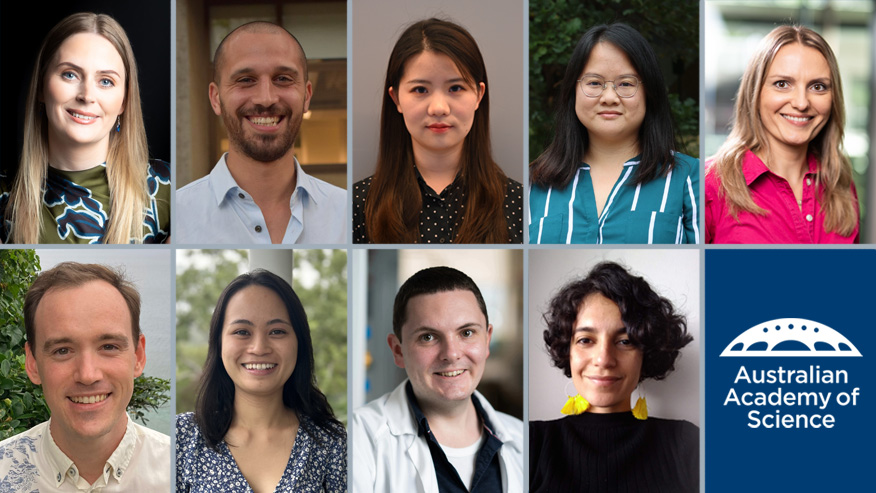
Nine early- and mid-career researchers (EMCRs) have been awarded the prestigious 2026 Thomas Davies Research Grant for their innovative projects in marine, soil, and plant biology. This annual grant provides up to $20,000 to support research aimed at addressing significant environmental challenges.
Focus on Climate Resilience and Environmental Health
One of the pressing issues faced by Australian forests is the accelerating dieback of Eucalyptus trees, which threatens both biodiversity and wildlife habitats. Dr. Ashley Jones plans to leverage genomic sequencing to identify resilient Eucalyptus seeds capable of adapting to future climate conditions. “We can use genomics to guide climate-resilient forest restoration across Australia,” Dr. Jones stated. By collaborating with industry and Landcare partners, this research aims to preserve Australia’s iconic forests for generations to come.
In another significant project, Dr. Ben Clifton is investigating the interactions between marine microalgae and bacteria. This research seeks to enhance our understanding of ocean health and productivity. Dr. Clifton aims to develop methods to decode chemical signals in marine ecosystems and predict algal blooms. “I hope to discover new naturally occurring chemicals that can promote the growth of beneficial algae and prevent harmful algal growth,” he expressed.
Additionally, Dr. Elena Eremeeva is tackling the pervasive issue of pollution caused by PFAS, often referred to as “forever chemicals.” These substances are notorious for their slow degradation in the environment. Dr. Eremeeva views the grant as an opportunity to translate laboratory discoveries into practical environmental solutions. “This is a step toward developing deployable sensors for rapid environmental monitoring and cleanup of persistent PFAS pollutants,” she noted.
Addressing Microplastics and Fungal Threats
Another critical concern is the impact of microplastics in agriculture. Dr. Huan Liu is investigating how biosolids—often used to improve soil fertility—are contaminated with harmful microplastics. Approximately 80% of biosolids applied in Australian agriculture contain these pollutants. “The environmental impacts of microplastics in plants is a topic of increasing global concern,” Dr. Liu commented. Her research aims to explore how these microplastics enter crop plants and affect their growth and health.
The challenges posed by climate change also extend to Australia’s native plants. Dr. Ilaine Silveira Matos is studying how endangered Australian species cope with climate-induced stressors such as heat, drought, and fire. She aims to develop a framework to predict plant tolerance to these challenges. “We want to address this critical knowledge gap to guide conservation efforts amid climate change,” Dr. Silveira Matos explained.
In the realm of evolutionary biology, Dr. Sally Lau will analyse the DNA of Antarctic octopuses to understand the historical changes of the East Antarctic Ice Sheet over the past million years. This research is vital for predicting future sea level changes. “This will help us understand the ice sheet’s stability in the past, which is critical for informing future global sea level rise projections,” Dr. Lau stated.
Dr. Timothy Ghaly is employing machine learning to explore how beneficial microorganisms can enhance crop health, offering a sustainable alternative to chemical fertilisers and pesticides. His work focuses on developing synthetic microbial communities (SynComs) that can integrate into the plant microbiome. “This would offer a chemical-free strategy for sustainable agriculture and improved crop productivity,” he added.
Lastly, Dr. Valeriya Komyakova aims to enhance coastal marine restoration efforts by examining the habitats necessary for the survival of juvenile fish. As she returns to her primary field of research, Dr. Komyakova expressed her enthusiasm: “This work seeks to understand our marine environments and contribute knowledge that can help strengthen conservation and restoration efforts.”
Conclusion
The Thomas Davies Research Grant serves as a significant catalyst for innovation in environmental research. By funding these diverse projects, it supports a new generation of researchers dedicated to addressing critical environmental issues. The outcomes of their work have the potential to make a meaningful impact on ecosystems both in Australia and globally.