
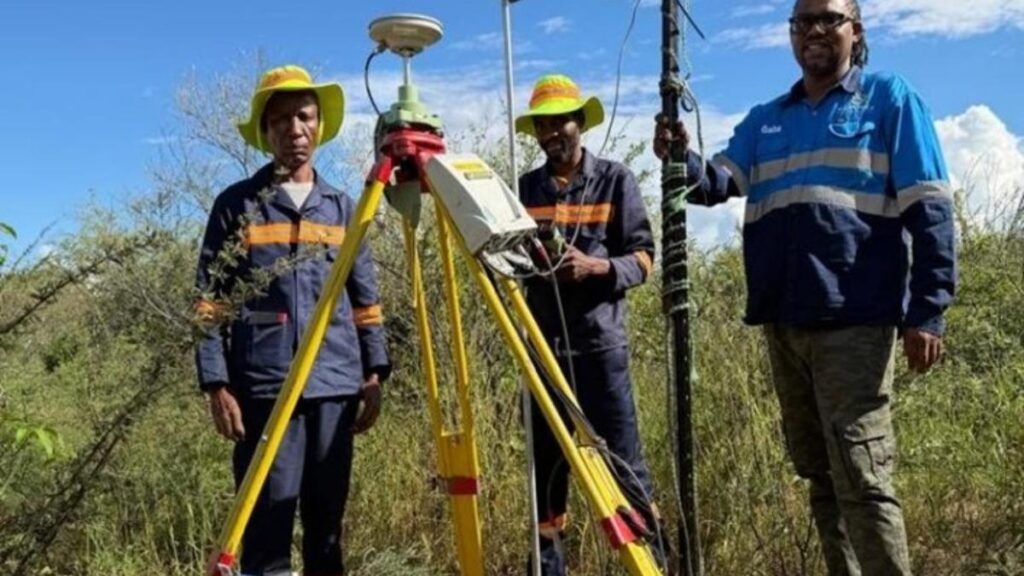
Noronex has initiated a ground gravity survey in the northern region of its Cgae Cgae copper-silver project in Botswana. This follows the completion of its initial drilling campaigns in the southern part of the project. The gravity survey aims to investigate the stratigraphy and structures of the Kalahari Copper Belt, seeking to identify significant, low-grade copper potential within the geological framework of the basin.
By mapping density contrasts and hidden structures, the survey is expected to enhance geological models and refine the next drilling targets throughout this expansive project. Recently, Noronex concluded a scout reverse circulation (RC) program in the south, which involved drilling 35 holes over a total depth of 2,655 metres. This initial phase focused on logging lithology, structure, alteration, and background geochemistry in the basement rocks, rather than providing a definitive assessment of economic mineralisation. Assay results from this program are currently pending, with updates promised once all data have been processed and interpreted.
Many areas of the Cgae Cgae licences are covered by Kalahari sediments, which complicate surface mapping efforts. As a result, the application of geophysical techniques, including gravity surveys, is crucial for visualizing subsurface features. According to Noronex, this forthcoming gravity survey is part of a systematic approach that will encompass both northern and southern licence blocks, in a region that has experienced limited modern exploration compared to other parts of the productive belt.
Funding for these initiatives is provided under the Cgae Cgae earn-in agreement with the mining giant South32. Under the terms of the deal, South32 can acquire a 60 percent interest in the extensive projects across Botswana and Namibia by investing $4 million annually in exploration for a minimum of five years. Noronex will retain its role as the project operator.
This exploration effort aligns with South32-funded drilling activities at the Humpback-Damara project located in Namibia. The planned drilling will investigate the same structural corridors that host major projects in Northern Botswana’s Kalahari Copper Belt. Notable examples include China Minmetals’ Khoemacau copper-silver mine, which contains three million tonnes of copper and 130 million ounces of silver, as well as the Motheo project operated by Sandfire Resources, which holds approximately 600,000 tonnes of copper.
In a related development, Noronex has also commenced its first drilling program for uranium at its Etango North uranium project in Namibia. Situated about 32 kilometres east-northeast of Swakopmund, Etango North is strategically located on the same geological corridor as Bannerman Resources’ notable 207-million-pound Etango project. The area is recognized as a uranium hotspot, also home to the Rössing and Husab uranium mines, which are situated a further 36 kilometres to the northeast. The Rössing project is one of the largest open-pit uranium mines globally, having produced over 140,000 tonnes of yellowcake since its establishment in 1976.
As Noronex rolls out gravity stations across its northern blocks in Botswana, with initial assays from the southern scout holes still pending, the company is gradually unveiling the potential beneath the Kalahari sediments. In a region that already hosts some of the world’s largest copper mining operations, the search continues for the next significant copper-silver system hidden from view, deep within the structural formations of this promising area.