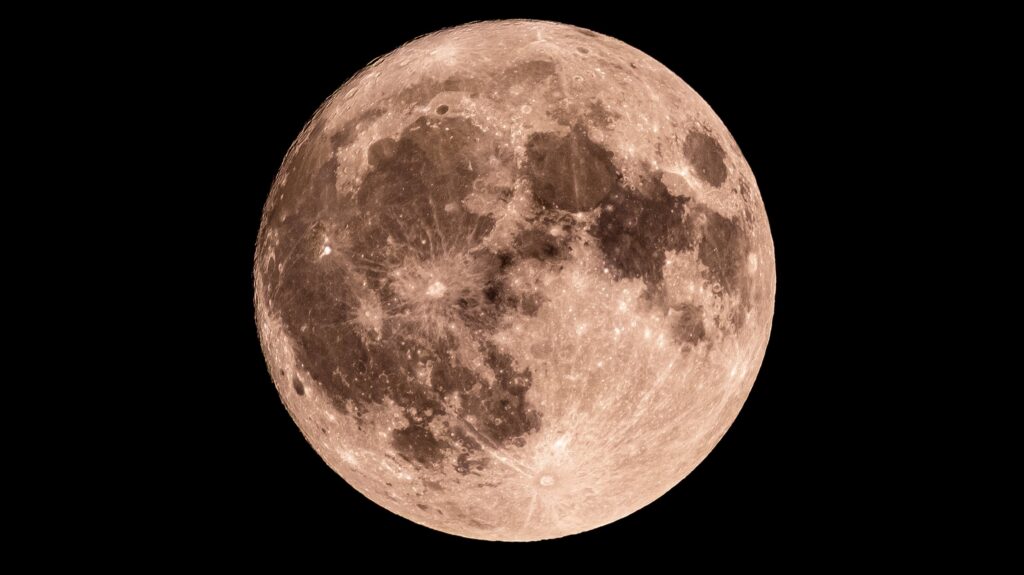
The Moon is currently in its Waning Gibbous phase, gradually losing illumination as it approaches the Third Quarter. On February 7, 2024, approximately 71% of the lunar surface will be visible, providing an excellent opportunity for stargazers and astronomy enthusiasts alike.
Visibility and Features of the Moon
Tonight, observers can expect to see notable lunar features with the naked eye, including the Mares Vaporum and Imbrium, as well as the Aristarchus Plateau. Those equipped with binoculars can enhance their view, revealing the Clavius, Gassendi, and Archimedes Craters. For those with telescopes, the experience becomes even more rewarding; it is possible to spot the landing sites of Apollo 11 and Apollo 12, along with the Linne Crater.
Understanding Lunar Phases
The lunar cycle, which lasts about 29.5 days, consists of eight distinct phases, as outlined by NASA. During this cycle, the visible portion of the Moon changes due to its orbit around Earth. The phases include:
– **New Moon**: The Moon is positioned between Earth and the sun, rendering it invisible.
– **Waxing Crescent**: A small sliver of light becomes visible on the right side.
– **First Quarter**: Half of the Moon is illuminated, appearing as a half-Moon.
– **Waxing Gibbous**: More than half is lit, approaching full illumination.
– **Full Moon**: The entire face of the Moon is visible.
– **Waning Gibbous**: The light begins to diminish on the right side.
– **Third Quarter**: Another half-Moon appears, but now the left side is illuminated.
– **Waning Crescent**: A thin sliver of light remains on the left side before the Moon becomes dark again.
Understanding these phases can enhance the appreciation of our closest celestial neighbor. For those wondering about future lunar events, the next Full Moon will occur on March 3, 2024.
As the Moon continues its journey through the night sky, tonight presents a unique opportunity to engage with its beauty and complexity. Whether through a telescope or simply by gazing upward, there is much to discover.