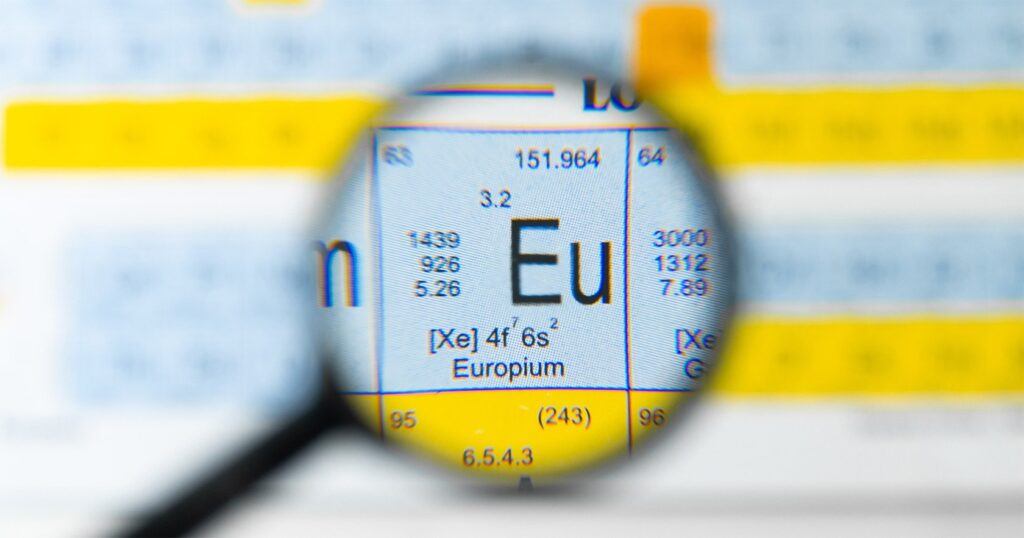
Groundbreaking research from Tohoku University has identified the rare-earth element Europium (Eu) as a pivotal factor in improving the conversion of carbon dioxide (CO2) into usable fuels. The study reveals how the incorporation of atomic Eu into copper oxide (Cu2O) can significantly influence the selectivity of the electrochemical reduction reaction, enabling more precise control over the production of valuable hydrocarbons.
The electrochemical CO2 reduction reaction transforms harmful pollutants into valuable products, but achieving specific outcomes efficiently has proven challenging. As Hao Li, Distinguished Professor at the Advanced Institute for Materials Research (WPI-AIMR), notes, “We want to be able to tailor this reaction so we can accurately predict what the result will be each time – and to control what that result is.”
Researchers focused on how different concentrations of Eu affect the reaction pathways, leading to either C1 or C2+ products. Their findings indicate that the level of Eu doping in Cu2O can shift the dominant product produced in the reaction. For instance, low concentrations of Eu result in a Faradaic efficiency of nearly 80% for C2+ products, while higher levels redirect the conversion towards C1 products such as methane (CH4).
Mechanisms Behind Europium’s Influence
The team’s theoretical calculations and experimental observations suggest that the mechanism by which Eu operates is linked to its ability to facilitate different reactions based on its concentration. At lower concentrations of Eu, specific bonds weaken, promoting C-C coupling and allowing for the production of C2+ hydrocarbons through a process known as frustrated deep hydrogenation of *CHO. Conversely, when Eu concentrations are elevated, certain bonds strengthen, favoring the deep hydrogenation of *CHO to CH4 via the C1 pathway.
This research provides a comprehensive understanding of the intrinsic mechanisms that enable the selective production of either C1 or C2+ products in electrochemical CO2 reduction. By utilizing the reversible Eu3+/Eu2+ redox couple and its effects on the *CHO intermediate, the study highlights how subtle adjustments in electronic structure can direct the reaction outcome.
Implications for Sustainable Chemical Production
The implications of this work extend beyond academic curiosity. By developing a design concept that allows for the selective “dialing in” of desired carbon products from CO2 using Cu-based catalysts and rare-earth promoters, this research paves the way for more efficient CO2-to-fuel conversion methods. Such advancements contribute to the potential for carbon-neutral chemical manufacturing, improved utilization of renewable electricity, and the reduction of greenhouse gas emissions.
The findings were published in the Journal of the American Chemical Society on December 1, 2025, and mark a significant step forward in the quest for sustainable energy solutions. This research not only highlights the importance of rare-earth elements in modern chemistry but also underscores the critical need for innovative approaches to tackling climate change through advanced materials science.
With the world increasingly focused on reducing carbon footprints, the ability to convert CO2 into valuable fuels represents a crucial advancement in the fight against global warming and its associated impacts.