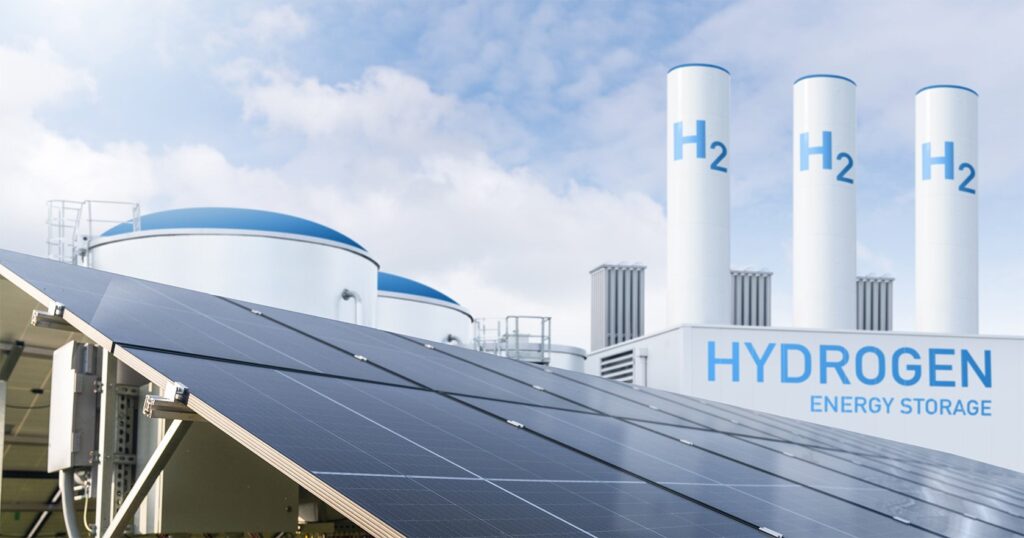
Hydrogen’s potential as a clean energy source hinges on the development of efficient and safe storage methods. A recent study led by Distinguished Professor Hao Li from Tohoku University has made significant strides in addressing this challenge. The research team has discovered that manipulating the magnetic properties of hydrogen-storage alloys can enhance their stability and capacity. This groundbreaking work, published in the journal Chemistry of Materials, opens new avenues for the design of materials that can store hydrogen more effectively.
The research focuses on solid-state hydrogen storage, where hydrogen is absorbed into metals. This method presents a viable alternative to traditional high-pressure tanks. However, many existing hydrogen-storage alloys encounter a fundamental trade-off between their storage capacity and material stability. The Tohoku team identified magnetism as a critical factor influencing this balance.
In their study, the researchers examined AB3-type intermetallic alloys, which are known for their rapid hydrogen absorption and good reversibility. They employed advanced first-principles calculations in conjunction with Monte Carlo simulations to analyze alloys composed of calcium, yttrium, and magnesium at the A-site, with cobalt or nickel at the B-site. The findings revealed a direct relationship between the strength of magnetism in these alloys and their stability.
The analysis highlighted that strong magnetism in cobalt-based alloys significantly increases the formation energy, rendering the material thermodynamically unstable. While adding lightweight elements like magnesium can enhance hydrogen storage capacity, it simultaneously increases magnetic interactions, limiting performance. To mitigate this issue, the researchers proposed substituting cobalt with nickel. Nickel-based alloys exhibit much weaker magnetism, which stabilizes the alloy composition, especially in magnesium-rich variants that offer considerable hydrogen storage capacity.
Professor Li explained, “By replacing cobalt with nickel, we found that the alloys become much more stable, even when they contain large amounts of magnesium.” This adjustment allows for the design of materials that combine high hydrogen capacity with robust thermodynamic stability, essential for practical applications.
The research confirmed the excellent performance of the well-known hydrogen-storage alloy CaMg2Ni9 and predicted that unexplored magnesium-rich nickel-based alloys could achieve hydrogen capacities of approximately 3.4 weight percent while maintaining thermodynamic stability. This finding indicates a promising new family of materials that can be synthesized and tested experimentally.
Beyond identifying high-performance alloys, the study establishes magnetism as a vital design parameter for hydrogen storage materials. The results show that magnetic interactions should not be regarded as secondary properties; rather, they can significantly influence both alloy stability and hydrogen capacity.
The implications of this research extend beyond hydrogen energy. Similar magnetic and electronic effects are critical in the fields of batteries, catalysis, and other functional materials. By demonstrating how magnetism can be intentionally tuned to improve material performance, this study provides a fresh framework for developing advanced materials applicable across a wide range of energy-related sectors.
In conclusion, the work led by Professor Li and his team represents an important leap forward in the quest for effective hydrogen storage solutions, showcasing the untapped potential of magnetism in material science.