


Victoria’s firefighting efforts have reached a significant milestone with the introduction of a new foam-based crew protection system for ultra-light tankers. This advancement ensures that the majority of active bushfire-fighting vehicles across the state are now equipped with enhanced safety features, a development championed by Justin Leonard, the Bushfire Adaptation Research Leader at CSIRO.
The Country Fire Authority (CFA) announced that these ultra-light tankers are the final vehicles in their fleet to receive this critical safety upgrade. Leonard has collaborated with the CFA for over 24 years to improve the safety of firefighting vehicles. He previously demonstrated this burnover protection system during a visit by King Charles to the National Bushfire Behaviour Research Laboratory in Canberra.
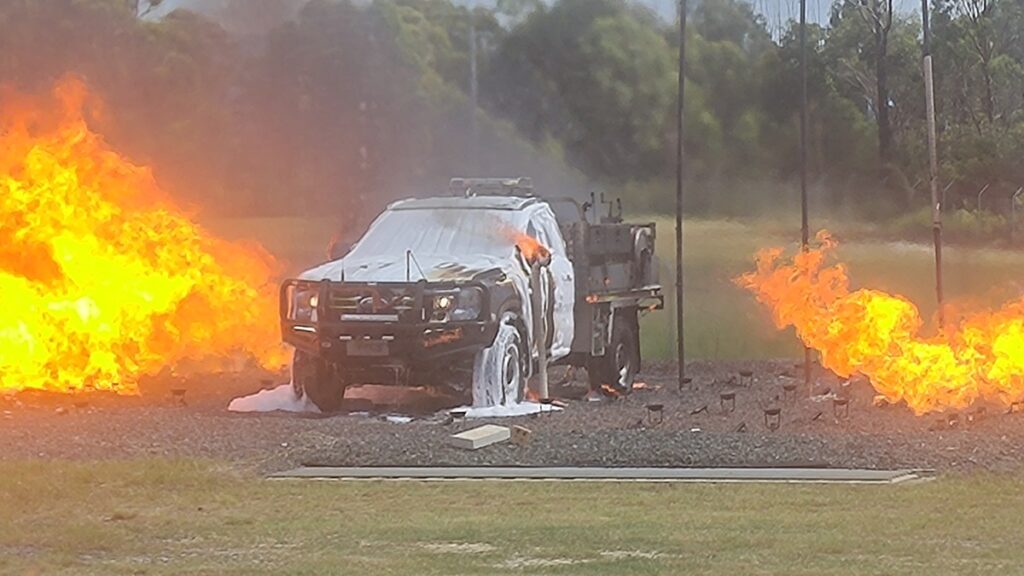
Traditional water spray systems used in larger tankers are not feasible for the smaller ultra-light vehicles due to operational constraints. Instead, the new foam system utilizes the tanker’s onboard water supply and adds only approximately 60 kilograms to the vehicle’s weight. This innovation offers a more practical solution for protecting firefighting crews during operations.
The effectiveness of such protection systems was notably highlighted during the devastating Black Saturday fires in 2009, when eight fire trucks were engulfed by flames, yet all crews emerged unharmed. This success story has been replicated in subsequent fire seasons, including the 2019–2020 bushfires, demonstrating the ongoing importance of these protective measures.
The development of the foam bushfire protection system for ultra-light tankers has been a decade-long project. CSIRO carried out six test burns at the New South Wales Rural Fire Service site in Mogo to ensure the system could withstand extreme conditions while prioritizing crew safety.
A training video has been produced for CFA firefighters to familiarize them with the new system. Leonard mentioned that burnover protection systems for larger tankers have been implemented in nearly every state and territory across Australia. Moreover, the CFA and his team are sharing their findings with fire agencies in France and the United States.
During the King’s visit in November, Leonard stated, “Protecting lives and the environment as we deal with more severe and frequent bushfires is an important process for us to get right under climate change.”
As the summer of 2025 approaches, the AFAC, the National Council for Fire and Emergency Services, released its Seasonal Bushfire Outlook. The report indicates an increased risk of fires in parts of Victoria, western and southern Western Australia, and central northern New South Wales. Long-term rainfall deficiencies persist in southern South Australia, Victoria, Tasmania, and parts of Western Australia, while abundant surface fuels are evident across various regions.
As the summer progresses, vegetation that has thrived during recent rains will dry out quickly under prolonged hot spells, heightening the risk of bushfires. In Victoria, current green grass growth is expected to become highly flammable by January. The Seasonal Bushfire Outlook combines expert analysis of bushfire fuels, historical rainfall data, temperature trends, and climate forecasts from Australian fire agencies, prepared by the Bureau of Meteorology.
While increased fire danger days are anticipated this season, it is important to remember that bushfires require specific weather conditions and ignition sources to ignite. CSIRO has been working for over 70 years to provide science and technology aimed at mitigating the impact of fires on Australia’s population, environment, infrastructure, and economy.
It is crucial to note that CSIRO is not an operational fire agency. Residents seeking emergency advice during bushfire outbreaks, including evacuation information and updates on fire statuses, should consult their relevant state fire agency for guidance.