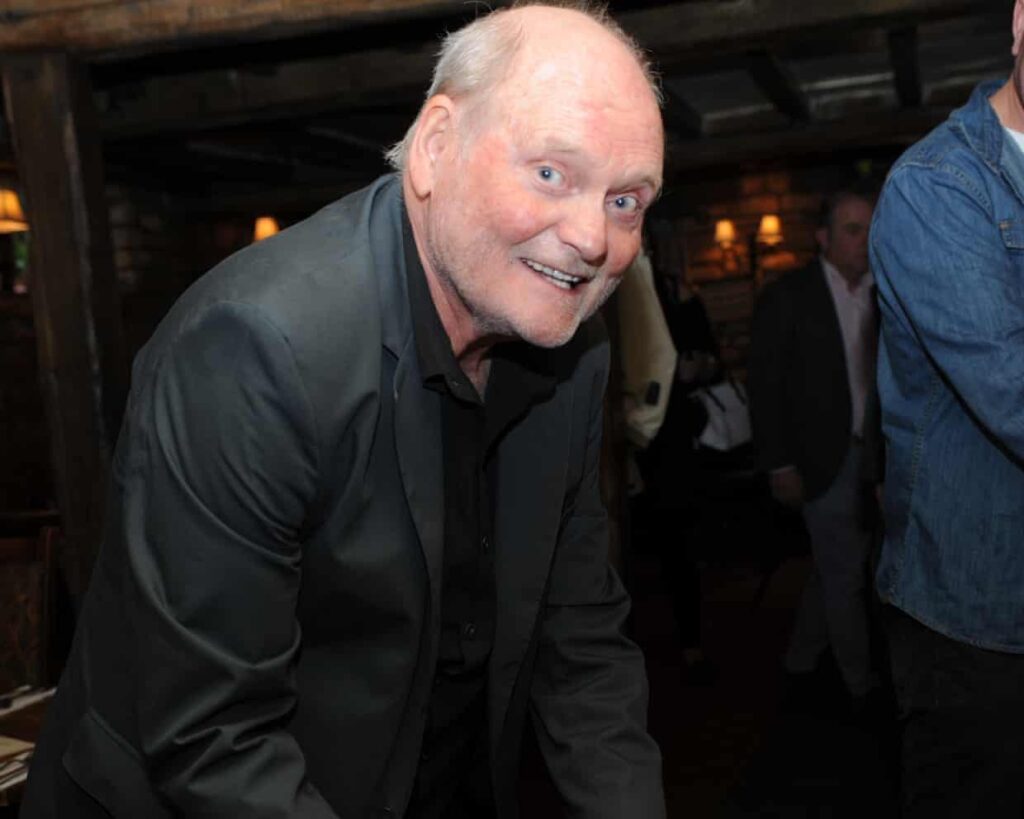
Canadian journalist and broadcaster Gerald Donaldson passed away on December 14, 2025, at the age of 87. Renowned for his insightful coverage of Formula One racing, Donaldson left an indelible mark on the sport and was particularly known for his rapport with racetrack legends, including the late Brazilian driver Ayrton Senna.
Donaldson’s career spanned several decades, during which he became a respected figure in motorsport journalism. His ability to engage with drivers on a personal level set him apart. Senna once chose Donaldson to share his thoughts about the exhilarating experience of driving, revealing the thrill and complexity of the sport. “I suddenly realised that I was no longer driving the car consciously,” Senna recounted, reflecting on a transcendent moment during the 1988 Monaco Grand Prix.
From Adventure to Journalism
Born in Almonte, Ontario, on July 18, 1938, Donaldson’s journey into journalism was anything but conventional. He left high school at 16 to embrace a life of exploration, hitchhiking across Canada and engaging in various jobs. This adventurous spirit led him to the Ontario College of Art, where he eventually transitioned into writing.
His career took off in the realm of advertising, where he founded his own agency while nurturing his passion for writing. Encouraged by Canadian publisher Anna Porter, he shifted his focus to nonfiction, eventually becoming a full-time journalist in the early 1980s. His work during this period included covering the success of Canada’s alpine skiing team, the Crazy Canucks, and ghostwriting the autobiography of World Cup downhill champion Steve Podborski.
A Legacy in Formula One
Donaldson’s interest in motorsport was ignited in 1961 at Mosport Park, Ontario, where he witnessed legendary driver Stirling Moss claim victory. This experience laid the groundwork for his later work as a Formula One journalist. In the 1990s, he wrote for prominent publications such as the Globe and Mail and the Toronto Star, while also making appearances on Canadian television networks like CBC and CTV.
His book, Grand Prix People, published in 1990, featured interviews with over 100 personalities from the racing world, providing a comprehensive view of the sport and serving as a guide for newcomers. Donaldson’s writing was characterized by a blend of admiration and keen observation, capturing the essence of the drivers he portrayed, including his biographies of Gilles Villeneuve, James Hunt, and Juan Manuel Fangio.
Throughout his career, Donaldson maintained a low-key presence in the press room, known for his congenial demeanor and willingness to share his extensive knowledge with peers and newcomers alike. He was respected for his ability to foster discussions, often accompanied by a touch of humor.
Beyond his professional achievements, Donaldson found solace in nature, building a cabin in the Pakenham mountains of Ontario, where he would retreat to connect with the wilderness. He cherished a love for literature and art, which remained a significant part of his life.
After the passing of his first wife, Betty Stewart, in 2008, Donaldson married Diane Fine, a Toronto artist. Together, they spent summers in the Cotswolds, further enriching his life with shared interests.
Gerald Donaldson’s contribution to motorsport journalism and his ability to connect with the human experiences of racing will be remembered by both colleagues and fans alike. He is survived by his wife, Diane, and his brother, Gordon Donaldson.