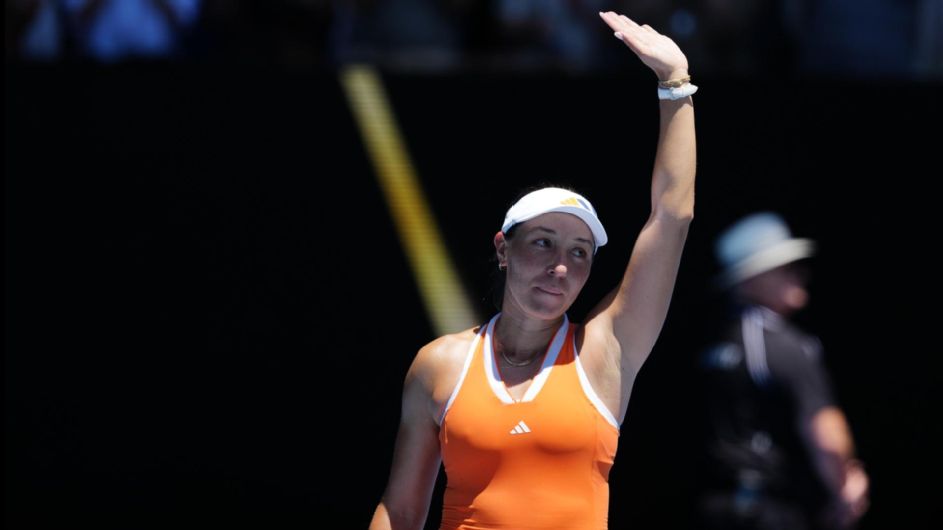
MELBOURNE, Australia — In a commanding display of skill and strategy, Jessica Pegula defeated defending champion Madison Keys 6-3, 6-4 on January 22, 2024, at the Australian Open, securing her place in the quarterfinals without dropping a single set in the tournament. This victory not only marked a significant milestone for Pegula, currently the world No. 6, but also showcased her ability to dismantle an opponent’s game plan with precision and intelligence.
The match, held at the renowned Rod Laver Arena, was poised to be a thrilling encounter, pitting Keys’ powerful shot-making against Pegula’s tactical efficiency. From the outset, Pegula demonstrated her aggressive intent, breaking Keys early and maintaining pressure throughout the match. Her service games were characterized by impeccable placement, forcing Keys to move constantly and limiting her opportunities to dominate with aggressive returns.
Pegula’s diverse shot selection proved crucial. She effectively used wide serves, angled groundstrokes, and looping forehands to disrupt Keys’ rhythm. While Keys delivered moments of brilliance, including stunning backhand winners, her inconsistency ultimately hindered her performance. By the end of the match, Keys had recorded an alarming 28 unforced errors compared to Pegula’s 13, highlighting the contrast between Pegula’s strategic play and Keys’ high-risk approach.
In the first set, Pegula quickly established a commanding lead, capitalizing on Keys’ errors while executing her game plan with remarkable discipline. Despite Keys’ early aggression, Pegula’s steady play allowed her to take control of the match. According to Pegula, her focus on serving well during key moments was instrumental. “I have been seeing, hitting, moving very well this whole tournament,” she stated after the match, acknowledging the challenge of facing a skilled opponent like Keys.
The second set mirrored the first, as Pegula maintained her slight lead, demonstrating both physical and psychological resilience. She effectively absorbed Keys’ powerful serves and consistently forced her opponent into making errors. Pegula’s ability to avoid double faults, registering only one compared to Keys’ six, further underscored her advantage in high-pressure situations.
This match carried additional significance, as Pegula and Keys co-host “The Player’s Box” podcast and share a close friendship. It was also the first Australian Open match featuring top 10-seeded American women since the final between Serena Williams and Lindsay Davenport in 2005. Pegula’s triumph sets her up for a quarterfinal clash against No. 4 seed Amanda Anisimova, a player she has previously defeated three times but will face for the first time in a Grand Slam setting.
Pegula’s consistent performances throughout the tournament have prompted discussions about her potential breakthrough at a Grand Slam. While critics have often labeled her as a “quarterfinal regular,” her recent victories suggest she may be ready to challenge that narrative. “I felt like if I’m making quarters of a Slam, that’s pretty good,” Pegula reflected, emphasizing her determination to focus on her game rather than external pressures.
As she prepares for the next round, Pegula’s impressive form and strategic approach position her as a formidable contender for the title. With a flawless record thus far, she is poised to continue her pursuit of a major championship. The upcoming match against Anisimova promises to be another test of her composure and skill as she aims to secure her place in the semifinals of the Australian Open.