A recent poll conducted by the Rugby League Players’ Association (RLPA) has uncovered troubling statistics regarding concussion management among players in the National Rugby League (NRL). The survey revealed that approximately 60 percent of players continued to train after experiencing suspected concussions. This striking figure highlights a critical issue as attention shifts to head injuries sustained outside of actual games.
The RLPA surveyed a total of 853 players, comprising 552 men and 301 women. Among the notable findings was the revelation that players of Pacific nations heritage now represent the majority of the playing group for the first time, accounting for 51 percent of the total participants.
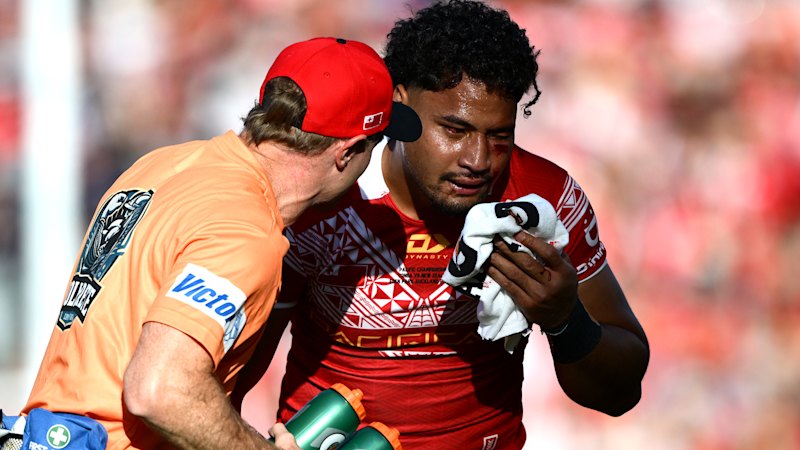
The data brings to light significant concerns regarding player health. Alarmingly, one in three male players failed to report concussion symptoms experienced during training. Moreover, two-thirds of male players admitted to continuing training despite suspected concussions. These revelations come at a critical time, particularly in light of the future of Eli Katoa, a Melbourne Storm star, who recently suffered three concussions within a single game representing Tonga. Following these incidents, Katoa underwent emergency surgery for a brain bleed and has been ruled out for the entire 2026 season.
Although 95 percent of both male and female players expressed confidence in the established procedures for handling formal concussion identifications, the poll indicates a troubling disconnect when it comes to training environments. The data revealed that one in three NRL players—a 24 percent increase from the previous year—and one in eight NRLW players—a 100 percent increase—did not report any concussion symptoms experienced during training sessions.
Clint Newton, the RLPA chief executive, underscored the gravity of the findings. “The concussion data from our players is incredibly concerning, particularly because it has worsened year on year,” he stated. Newton emphasized the need for the league to enhance player empowerment regarding health and safety, stating, “As a game, we need to do more to ensure we are creating professional, high-performance environments that can improve the detection of concussions at training.”
The findings indicate that 38 percent of male players and 28 percent of female players felt pressured to continue training despite experiencing symptoms of a suspected concussion. Furthermore, about 40 percent of male players and 37 percent of female players reported returning to training prior to receiving medical clearance.
Newton cautioned that without significant improvements in concussion management, the safety of players remains at risk. “It will remain a damaging blind spot for the safety of our players and the game more broadly if we don’t make necessary improvements,” he said.
As the NRL continues to invest heavily in the Pacific region, exemplified by plans to introduce a Papua New Guinea team in 2028, the cultural significance of players from Pacific nations grows. Newton remarked, “We are incredibly proud of the rich tapestry of cultures that play our game and how strongly our players connect to their families and communities.”
Despite this cultural shift, issues of racism and targeted abuse persist within the league. Approximately 13 percent of male players reported experiencing targeted abuse, including 7 percent who faced racism, translating to around six players per club. Most incidents occur online, with 87 percent of players choosing not to report these abuses.
Financially, while top NRL stars can earn close to $1.5 million per season, the average salary hovers around $400,000. Notably, 51 percent of players earn less than the average male salary in other professions, with only 18 percent playing over 100 matches in their careers. Although 96 percent of players have engaged an agent, more than half indicated that their agent has never secured a sponsorship deal for them.
Newton highlighted the discrepancies in player earnings, stating, “In a salary-capped league, where player earnings are limited, the commercial and sponsorship endorsements must significantly improve.” He noted that many fans may assume all players are supplementing their salaries with endorsements, but the reality is that most players either manage these efforts independently or do not pursue them at all.
The survey also revealed shifting priorities among players when it comes to job changes. While 80 percent of the general population cite financial motivation as the primary reason for switching jobs, only 21 percent of NRL players reported the same, with 11 percent of NRLW players indicating financial reasons for moving clubs. Notably, 21 percent of NRL players shifted clubs due to informal approaches from other teams.
As the NRLW evolves towards greater professionalism, the survey indicated that 89 percent of female players continue to seek external income during the off-season, and 87 percent engage in work or study commitments while playing in-season. With these findings, the time has come for the NRL to confront the pressing issues of player safety and support in order to foster a healthier environment for all involved in the sport.