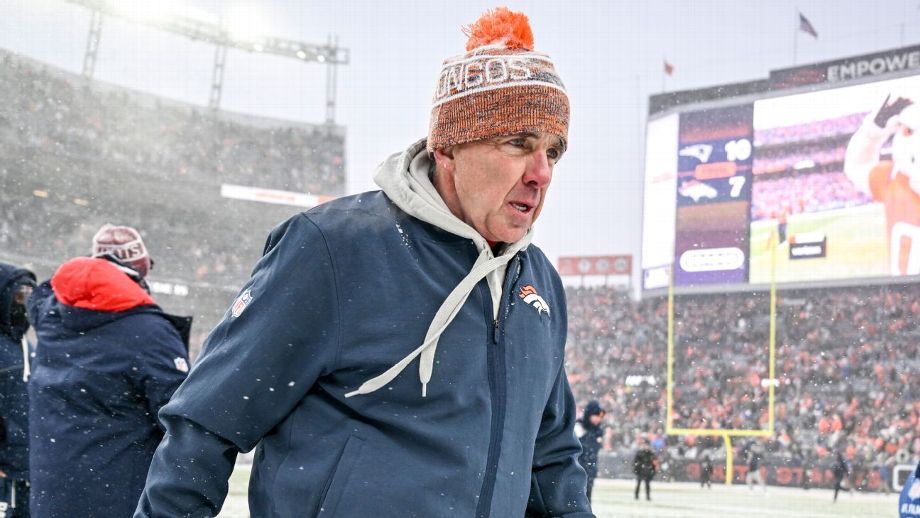
Last Sunday, the Denver Broncos faced a critical moment in their AFC Championship game against the New England Patriots. Head Coach Sean Payton made a controversial decision on a fourth-and-one situation that ultimately contributed to the team’s defeat. Despite a promising start, the Broncos lost 24-7, marking a significant disappointment for a franchise aiming for a Super Bowl appearance.
As the game unfolded, Payton reflected on pivotal decisions, including one that occurred in the second quarter when the Broncos were leading 7-0. After a strong drive into Patriots territory, quarterback Jarrett Stidham found himself in a familiar scenario: fourth-and-one at the New England 14-yard line. Instead of opting for a field goal, which would have added three points, Payton chose to go for it.
The decision was heavily influenced by the circumstances surrounding the game. Stidham was making his first start of the season after star quarterback Bo Nix suffered a fractured ankle. The Broncos’ defense had also struggled against top teams in recent weeks, raising the stakes for every scoring opportunity. Payton wanted to capitalize on the momentum and push the lead to 14-0.
On the play, Payton called for a pass rather than a run, a choice that would come under scrutiny. The Broncos lined up with 11 personnel, but the Patriots’ defense surprised them with a zone coverage that effectively thwarted the play. Stidham’s pass was incomplete, resulting in a missed chance for easy points.
After the game, Payton expressed regret over the decision, saying, “I wish I’d stayed with the initial play call.” He acknowledged that the defense’s alignment during the game differed from what they had prepared for during the week.
Payton’s approach to fourth downs has evolved significantly over his coaching career. Historically, kicking for points was the norm, but since the early 2000s, analytics have shifted that perspective. The work of economist David Romer in 2002 highlighted the benefits of a more aggressive approach on fourth downs, suggesting that the probabilities of converting are often in favor of going for it rather than settling for a field goal.
In recent years, many coaches have embraced this philosophy, making fourth-down decisions a hot topic among fans and analysts. The Broncos’ director of game management, Evan Rothstein, a former assistant under Bill Belichick, provides data-driven insights to Payton, but ultimately, the final decision rests with the head coach.
The Broncos’ loss was not solely due to this single fourth-down call. Throughout the game, the team struggled with missed opportunities, including two failed field goals and a fumble by Stidham that led to New England’s only touchdown. While the defense performed admirably, they failed to create turnovers, a critical aspect of their game plan against Patriots quarterback Drake Maye.
As the Broncos faced elimination, the weight of Payton’s decision loomed large. Reflecting on the game’s outcome, he entered his office after the final whistle, visibly shaken. “I can’t believe we lost,” he said, contemplating the implications of his fourth-down choice. In the unpredictable world of football, such decisions can resonate far beyond the final score, shaping the narrative of a season and a coach’s legacy.
In the aftermath of the AFC Championship game, the conversation surrounding fourth-down strategies is likely to continue. Coaches will evaluate their decisions, weighing the risks and rewards of aggression in critical moments. For Payton and the Broncos, the lessons learned from this experience will be pivotal as they prepare for the next season.