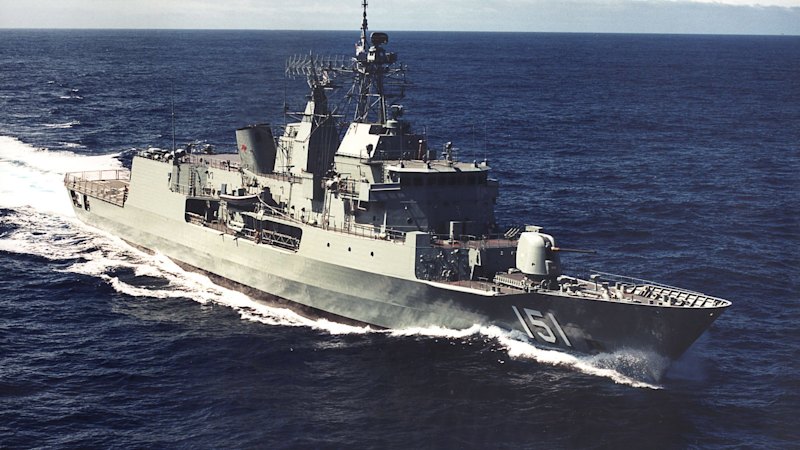
Australia has confirmed it will not send a warship to the Middle East, despite a request from US President Donald Trump for countries to join a naval coalition aimed at ensuring the safe passage of oil tankers through the Strait of Hormuz. The Australian government’s decision highlights the challenges faced by its navy, which is projected to have only nine surface combatants by the end of 2026, a decrease from eleven just two years prior.
The announcement comes as Transport Minister Catherine King stated that Australia had not received a formal request from the United States regarding the deployment of naval assets to the strategic waterway, where approximately 20 percent of the world’s oil trade transits. King emphasized that Australia’s current contribution involves providing aircraft to assist with defense operations in the region, particularly for the safety of Australians present there.
Challenges Facing the Royal Australian Navy
The looming retirement of the HMAS Arunta, the oldest of Australia’s remaining seven Anzac-class frigates, further complicates the situation. The frigate is set to be decommissioned this year, with no immediate replacement planned until the introduction of a new Mogami-class frigate from Japan in 2029. With two-thirds of naval vessels typically undergoing maintenance or preparations, the navy may only have two operational frigates available at any time.
Defence experts have expressed concern over Australia’s capability to support allies in the Middle East. Jennifer Parker, an adjunct fellow in naval studies at the University of New South Wales, stated, “Ideally, we should be able to support our allies on such a mission, but we simply don’t have enough ships.”
Trump’s call for a naval coalition has not generated enthusiastic responses from other nations. He has urged countries including China, France, Japan, South Korea, and the United Kingdom to contribute warships to protect oil tankers in the Strait of Hormuz. His remarks come in light of increased tensions following the recent escalation of conflict between the US and Iran, which has disrupted transit through the strait and contributed to rising global oil prices.
Global Response to Increased Tensions
Speaking to reporters aboard Air Force One, Trump specifically called on the UK to contribute to the coalition, indicating potential repercussions for countries that do not comply. He stated, “We will remember,” if the UK fails to take action.
In response to Trump’s request, Japanese Prime Minister Sanae Takaichi informed parliament that Japan has not made any decisions regarding the dispatch of escort ships, emphasizing the need to consider legal frameworks and what Japan can do independently.
While the UK is reviewing Trump’s request, other nations, including China, have yet to respond. The lack of a unified response underscores the complexities of international relations in the face of rising geopolitical tensions.
The Australian government has faced criticism from the opposition for its previous decision not to send a warship to the Red Sea in 2023 to safeguard shipping routes from attacks by Houthi rebels in Yemen. James Paterson, the opposition defence spokesman, stated that any formal request from the US would be evaluated against Australia’s national interests, particularly concerning operational safety in highly contested areas.
As Australia remains focused on its strategic interests in the Indo-Pacific region, the implications of its naval capabilities and international commitments will continue to shape its foreign policy decisions in the coming years.