




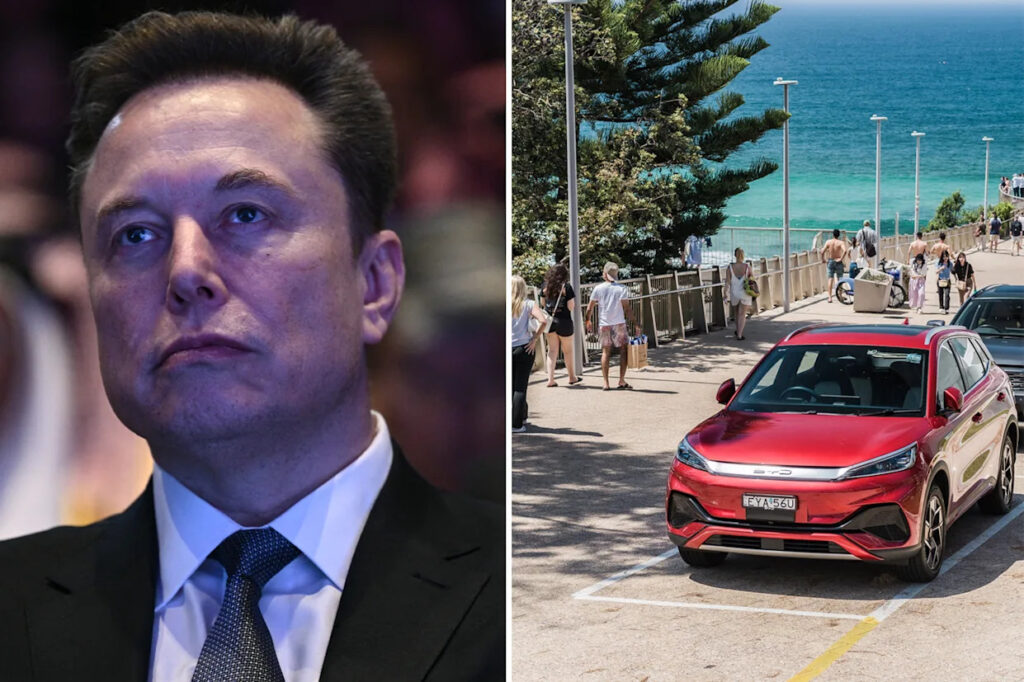
Chinese automaker BYD has surpassed Tesla for the first time, marking a significant shift in the global electric vehicle (EV) market. This development comes as BYD reported a remarkable increase in sales, positioning it as the largest seller of battery-powered cars worldwide. The milestone is seen as a pivotal moment, particularly for consumers in Australia looking for more affordable EV options.
Wang Chuanfu, the founder of BYD, initially faced skepticism nearly two decades ago when he claimed the company would become the world’s biggest car manufacturer by 2025. Fast forward to this week, and BYD’s sales figures confirm his ambitious vision. The company sold 2.26 million units in 2025, a nearly 28 percent increase from the previous year. In contrast, Tesla delivered 1.64 million vehicles, representing an 8 percent decline and marking the second consecutive annual drop for the company.
Changing Dynamics in the EV Market
The shift in leadership within the EV market reflects broader changes in consumer preferences, particularly in Australia. Hussein Dia, a Professor of Future Urban Mobility at Swinburne University, noted that the recent developments suggest buyers are moving away from “personality-driven” brands like Tesla, which has been closely associated with its founder, Elon Musk.
Dia explained that while Tesla initially thrived on innovation and brand loyalty, the market’s maturation has shifted focus toward cost, reliability, and overall value. “Musk’s public profile may have deterred some buyers, but intense competition and pricing pressures are more significant challenges for Tesla,” he stated.
The evolving landscape indicates that affordability is becoming a crucial factor for consumers. The entry-level BYD Atto 1, a compact electric hatchback, starts at $23,990 plus on-road costs, while the cheapest new Tesla available in Australia, the Tesla Model 3 Rear-Wheel Drive (RWD), has a starting price of approximately $54,900 plus on-road costs.
BYD’s Strategic Expansion
In a bid to establish itself globally, BYD has made headlines with its innovative logistics strategies, including the launch of super-sized car carriers, which are the largest of their kind, measuring around 220 meters in length. This approach has enabled the company to expand its international footprint rapidly and effectively.
Dia pointed out that discussions around purchasing vehicles are now increasingly centered on the choice between petrol and electric vehicles, rather than between brands. “This shift benefits manufacturers like BYD, which are producing EVs at scale, similar to how Toyota once dominated the petrol car market,” he said.
For many households, the decision to switch to electric is becoming easier with the availability of cheaper EV options. “Tesla helped normalize EVs, but BYD is working to normalize EV pricing,” Dia added, emphasizing that this new price competitiveness is essential in influencing consumer behavior.
While Tesla faces substantial competition, its engineering prowess and established customer loyalty suggest it will continue to play a significant role in the EV sector. Dia anticipates that Tesla will likely focus on reducing costs, introducing lower-priced models, and expanding its energy and software services.
“The era of Tesla being the only obvious EV choice is over, but that doesn’t mean it’s irrelevant,” Dia concluded, suggesting that the company still has the potential to adapt and remain a key player in the evolving market.
As the electric vehicle landscape continues to change, consumers are presented with greater choices than ever before, ultimately leading to a more competitive and diverse market.