



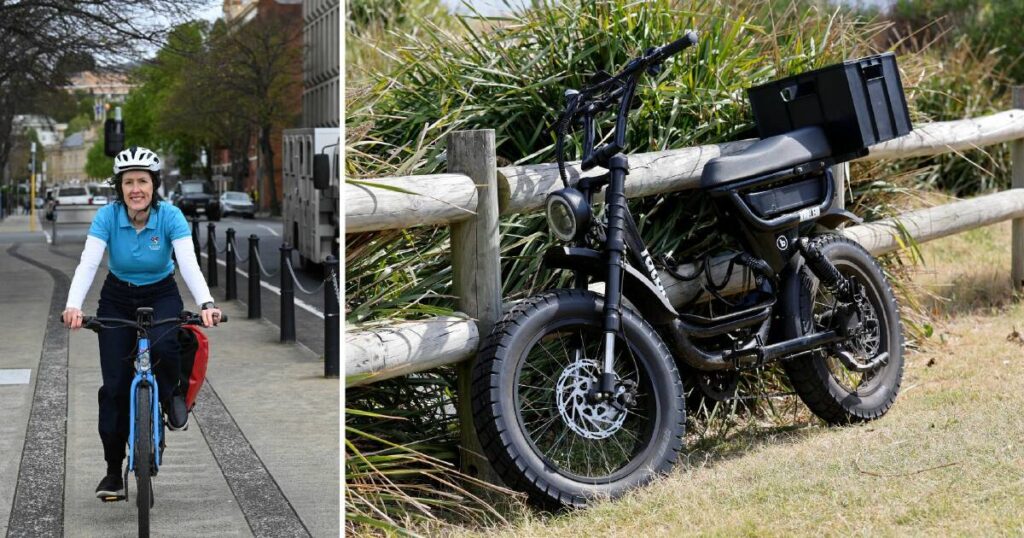
Bicycle user groups have raised alarms about the sale of non-compliant e-bikes, which some retailers promote as suitable for “off-road” or “private land” use. This has led to many riders unknowingly using these bikes on public roads and footpaths, raising safety concerns. According to Alison Hetherington, Public Affairs Manager at the Tasmania Bicycle Network, clearer selling practices from e-bike retailers are a positive step, but much more needs to be done to ensure consumers understand their legal responsibilities.
Retailers often sidestep legal obligations by advising customers to “check local laws before riding.” This framing can obscure the legal ramifications of using modified bicycles. An anonymous retailer from Launceston expressed concerns that non-compliant bikes are being grouped with legitimate e-bikes, creating confusion for buyers. These modifications, often achieved with conversion kits available online for as little as $335, can transform standard bicycles into motor-powered vehicles capable of reaching speeds up to 100 km/hr.
The conversion kits typically contain a battery, motor, and controllers, which can be retrofitted onto traditional bicycles. In many cases, the crank shafts are removed, eliminating the need for pedaling. The retailer noted that while some conversion kits are compliant with Australian road regulations, there has been a marked increase in the use of kits that do not meet these standards. “Generally speaking, they look pretty rough, home-made,” the retailer commented, highlighting the difference in construction quality between compliant and illegal modifications.
Ms. Hetherington emphasized the risks posed by these conversion kits. “There are people who buy good quality conversion kits that are speed limited and comply with Australian road rules. However, we have seen more and more teenagers, but also some adults, using those conversion kits that are bought internationally and don’t meet Australian road rules,” she said. This situation effectively creates unregistered and unroadworthy vehicles, increasing the danger for all road users.
In December 2022, the Australian federal government committed to reinstating the European standard EN-15194, which defines e-bikes as having a 250-watt motor that cuts out at a speed of 25 km/hr. This standard ensures that the motor only assists when the rider pedals. Geoff Rose, a professor at the Institute of Transport Studies at Monash University, explained that the European standard was designed to provide assistance without significantly increasing speed compared to conventional bicycles.
“The logic of the European standard was it provided help to a rider, but didn’t mean that somebody on an e-bike was going to be riding in a substantially different speed envelope to somebody on a conventional bike,” he stated. A fit cyclist can exceed 25 km/hr on a lightweight bike, and compliant e-bikes allow for similar speeds as long as the rider is pedaling.
Recognizing the need for updated regulations, the Tasmanian Government announced in 2023 a review of e-bike laws, with public consultation scheduled to close in November 2024. This topic was also addressed at a recent transport ministers’ meeting involving all states, territories, and the federal government. Kerry Vincent, Minister for Infrastructure and Transport, underscored the necessity for a nationally consistent approach to e-bike regulations and plans to continue this initiative with state and territory counterparts in 2026.
Professor Rose cautioned against losing the benefits of e-bikes due to the actions of a few irresponsible individuals. “E-bikes and e-scooters present great opportunities for a whole range of people in the community. We don’t want to see those people denied the benefits because of the irresponsible behaviour of some people,” he concluded.
As the dialogue around e-bike regulations continues, the focus remains on ensuring safety and compliance while promoting the positive aspects of these vehicles for transportation.