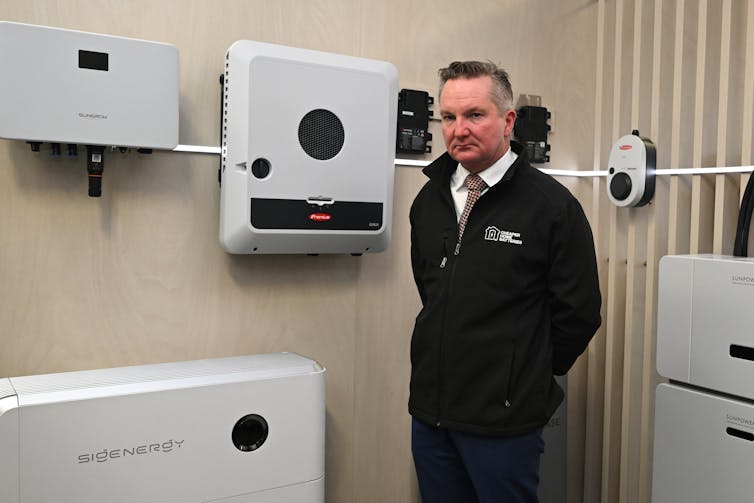
The federal government of Australia has announced a significant increase to its home battery subsidy program, adding an additional A$5 billion to the existing A$2.3 billion initiative. This move aims to enhance access to energy storage for households while addressing concerns regarding the program’s current inefficiencies.
Minister for Climate Change and Energy, Chris Bowen, emphasized the importance of these changes, stating, “We want more Aussie households to have access to batteries that are good for bills and good for the grid.” The adjustments to the Cheaper Home Batteries Program also include modifications to the financial support for various battery sizes, responding to reports that the program has been subsidizing excessively large batteries, leading to increased costs.
Program Highlights and Adjustments
Launched in July 2023, the Cheaper Home Batteries Program has provided discounts averaging 30% off the upfront cost of batteries. The government had anticipated that this initiative would lead to the installation of one million batteries by 2030. In less than six months, over 155,000 homes and small businesses have already participated in the program, contributing to reduced electricity prices on the grid.
Despite this initial success, concerns have arisen regarding the allocation of funds. Recent analyses revealed that approximately one-third of the program’s budget has been consumed within the first five months, primarily due to the funding of oversized battery systems. The average size of batteries installed has exceeded 22 kilowatt-hours, while the government suggests that typical household requirements range from 4-14 kWh.
Beginning May 1, 2024, the program’s funding will expand to A$7.2 billion, nearly tripling the original budget. This change is expected to facilitate the installation of more than two million batteries by 2030. However, the subsidy will decline more rapidly than initially planned, with support for larger battery systems being reduced significantly. For systems between 14 kWh and 28 kWh, the subsidy will decrease to 60% of the current rate, and for those between 28 kWh and 50 kWh, it will fall to 15%.
Addressing Inequities and Future Considerations
While the program’s adjustments are seen as a positive step towards fairness, numerous challenges remain. Wealthier households are more likely to benefit from larger subsidies due to their ability to invest in bigger systems. The revised funding structure aims to address this imbalance by scaling back benefits for larger batteries, yet disparities may persist.
There is a risk that the program will continue to incentivize installations that would have occurred without the subsidy. This raises questions about the effectiveness of the financial support and suggests the need for a more targeted approach. Future funding could be directed towards lower-income households who may be deterred by the costs of battery systems, ensuring that those who would not typically invest in this technology receive the necessary support.
The potential for inequity is further highlighted by the fact that wealthier households with larger batteries can profit more from selling excess electricity in the wholesale market. The new subsidy structure could help bridge this gap, aligning benefits more closely with the needs of all participants in the program.
Uncertainty also lingers regarding the implications of the accelerated pace of subsidy reductions. Households that require time to save for a battery installation may find themselves at a disadvantage compared to those who can afford to invest immediately. Additionally, while the faster subsidy decline could be justified if battery prices decrease, historical data on price trends remains inconsistent, warranting ongoing evaluation of the scheme.
The adjustments to the Cheaper Home Batteries Program reflect the government’s commitment to promoting renewable energy solutions while addressing existing challenges. As the initiative evolves, continued monitoring and revisions will be essential to ensure equitable access and efficacy for all Australians.