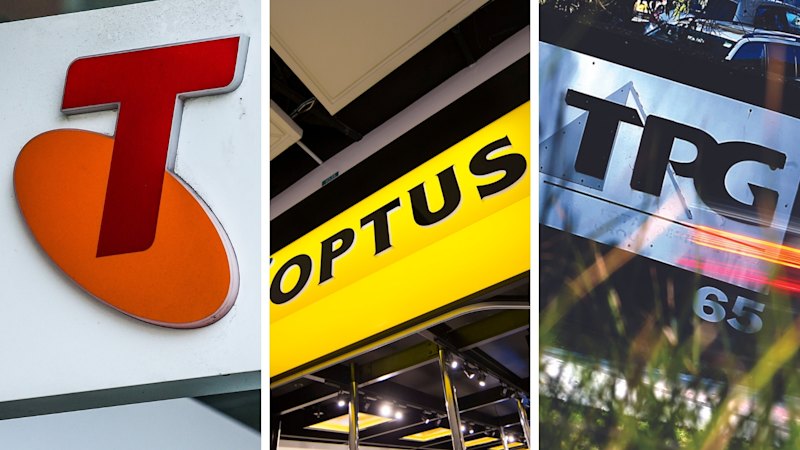
The Organisation for Economic Co-operation and Development (OECD) has called on the Australian government to promote competition in the mobile telecommunications sector by reserving radio spectrum for a fourth operator. This move, according to the OECD, could lead to lower prices for mobile phone services for Australian consumers.
The three dominant players in the market—Telstra, Optus, and TPG Telecom—are preparing for a significant contest over spectrum allocation this year. The electromagnetic frequencies, essential for transmitting mobile phone calls, are awarded to operators by the Australian Communications and Media Authority (ACMA).
In a newly released economic survey, the OECD emphasized that a “pro-competitive spectrum allocation” strategy could lower barriers for new entrants aiming to compete against the established giants. The organization pointed to the example of France, where mobile service prices dropped following the introduction of a fourth operator, the Iliad Group’s Free Mobile, after the government set aside spectrum blocks for new businesses in 2012.
Despite these examples, Australia faces challenges due to its low population density, which the OECD attributes to the high retail prices and limited improvements in service quality. Currently, Telstra, Optus, and TPG Telecom control approximately 87 percent of the market. According to the Australian Competition and Consumer Commission (ACCC), these companies raised their entry-level post-paid mobile plan prices by 7.7 percent, 5.8 percent, and 8.1 percent respectively for the 2024-25 period.
Calls for Regulatory Change
Carol Bennett, chief executive of the Australian Communications Consumer Action Network, emphasized the need for proactive government and regulatory measures. She stated, “Spectrum has an incredibly valuable role for protecting consumer interests. It is something that we should be using as a mechanism to drive quality, reduce prices, and ensure we have a thriving competitive market.”
Bennett warned that without active encouragement for competition, potential new entrants may be deterred from entering a market that is perceived as tightly controlled. Australia previously had four mobile operators before TPG Telecom and Vodafone merged in 2020.
The ACMA has proposed renewing expiring spectrum licenses without conducting competitive auctions or imposing conditions such as broader coverage in regional areas. Current fee proposals for spectrum licenses are higher than those previously set by the ACMA, though they remain below the $8.2 billion that licenses cost in earlier years.
Senator Sarah Hanson-Young of the Greens has voiced concerns over the pricing of spectrum licenses, stating that companies are receiving “cut-price access” to a finite resource. Meanwhile, telecommunications companies are contesting the proposed fees, warning that increased costs would likely be passed on to consumers through higher phone bills.
A spokeswoman for Communications Minister Anika Wells confirmed that a decision regarding the future of the spectrum licenses is still pending, noting that ACMA’s consultation process is ongoing. The ACMA has maintained that its “rigorous market analysis” has not identified credible new entrants to the market. A spokesperson for the ACMA stated, “The ACCC has agreed with the ACMA’s assessment that renewing the existing licenses at a fair price is the best approach to promote competition.”
The OECD has also suggested that the ACCC could require local telco operators to share network infrastructure and phone towers in regional areas to help lower prices and attract new competitors. As discussions continue, the future of Australia’s mobile telecommunications landscape remains uncertain, with potential implications for consumers across the nation.