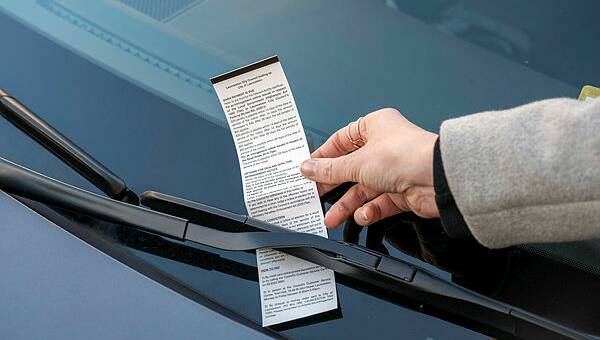
Orange City Council has reported the issuance of more than 1,000 parking fines following the installation of new monitoring technology across the city. From July 1 to September 30, 2025, a total of 1,095 fines were issued, with only four deemed invalid. This surge in fines coincides with the introduction of license plate recognition technology aimed at improving compliance with parking regulations.
The latest statistics from NSW Revenue indicate that Orange collected over $770,000 from parking fines in a previous year, which included 3,875 fines. While attempts to obtain precise figures regarding the recent revenue from these fines were unsuccessful, estimates suggest that the council could see approximately $613,200 in revenue based on the average fine of $140.
Parking fines in New South Wales can vary significantly, ranging from $112 for minor violations to $644 for serious offenses, such as parking in a disabled spot without a valid permit. As part of a new state mandate, from September 2025, all councils in New South Wales will be required to publish quarterly breakdowns of fines issued.
Implementation of License Plate Recognition Technology
The ongoing implementation of license plate recognition technology, which is set to become fully operational in October 2025, aims to enhance the efficiency of parking enforcement. This technology was previously trialed on several streets, including Summer Street, Anson Street, Byng Street, Lords Place, and Kite Street, to monitor compliance with parking time limits.
Orange City Council employs parking officers who patrol the streets to enforce local regulations. Additionally, they collaborate with Revenue NSW, the state government agency, to manage fine payments and disputes. According to the council, the primary goal of these regulations is to ensure fair access to parking spaces for all drivers, particularly in retail and business areas.
Community Perspectives on Parking Regulations
Cr Mel McDonell, chairperson of the planning and development policy committee, has noted that local businesses have expressed concerns about motorists failing to adhere to parking time limits. She acknowledged the unpopularity of parking tickets but emphasized their importance in maintaining equitable access to business areas in the central business district (CBD).
“No one likes parking time limits, and they like parking tickets even less,” McDonell stated. “But they play an important role in making the CBD work and ensuring equitable access to businesses.”
She highlighted that while parking fines may be perceived as a revenue-generating measure, the council would prefer to see a decrease in fines if it meant compliance with parking regulations improved.
In an effort to encourage compliance, the council is currently offering free parking at the Ophir car park until Christmas, providing an opportunity for residents and visitors to enjoy the area without the burden of parking fees.