



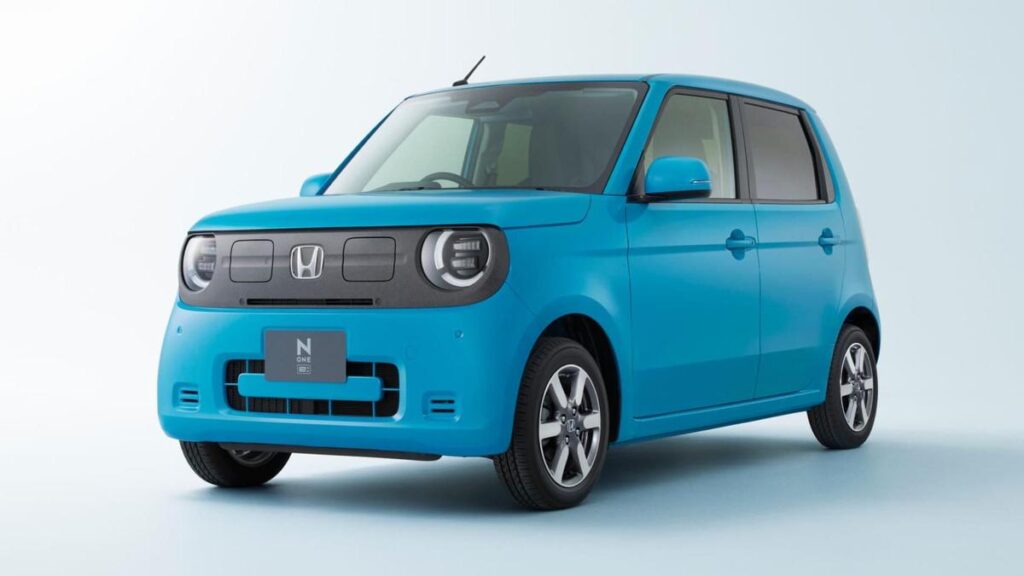
In a surprising turn of events, US President Donald Trump announced his administration’s consideration of allowing small, fuel-efficient Japanese Kei cars into the United States. This statement marks a shift in policy as the Trump administration aims to unwind emissions regulations previously established under President Joe Biden. The unexpected endorsement of these compact vehicles, which are popular in Japan, has drawn both interest and skepticism from various quarters.
Trump’s Comments Spark Interest
Speaking to reporters outside the White House, President Trump described Kei cars as “very small” and “really cute,” questioning their potential appeal in the US market. “How would that do in this country?” he asked. Trump also indicated support for domestic manufacturing of these vehicles, stating, “But we’re not allowed to make them in this country, and I think you’re going to do very well with those cars, so we’re going to approve those cars.”
Despite the enthusiasm for Kei cars, their sale is currently banned in several states, including Iowa, Maryland, Nevada, New Mexico, Oregon, and Vermont. This regulatory landscape presents challenges for their introduction into the US market. Sean Duffy, the US Transportation Secretary, expressed surprise at the President’s comments but noted that Kei cars may not be practical for American highways, stating, “Are they going to work on the freeways? Probably not.”
Contrasting Market Preferences
The contrast between Kei cars and typical US vehicles is stark. Kei cars are compact, low-powered city vehicles with engine sizes limited to 660cc. They cater specifically to Japan’s narrow city lanes and come with tax benefits due to their size and output restrictions. In contrast, American consumers tend to favor larger vehicles, such as pickups like the Ford F-150 and Chevrolet Silverado.
Internationally, the automotive landscape is evolving. Chinese automaker BYD recently announced plans to produce a battery-electric Kei car named the Racco for the Japanese market. Meanwhile, Honda has confirmed it will introduce the Super-One electric Kei car in Australia in the second half of 2025.
Trump’s recent remarks came just hours before a meeting with US automakers regarding plans to roll back emissions standards. The US Department of Transportation announced a proposal to relax the Corporate Average Fuel Economy (CAFE) standards. Under the revised guidelines, automakers would be required to meet an average of 34.5 mpg (approximately 6.82 L/100 km) by 2031, a significant drop from the previous target of 50.4 mpg (around 4.7 L/100 km). This change is estimated to cost US motorists $23 million in savings initially projected under the stricter standards.
As discussions regarding the import tariffs on Japanese goods continue, President Trump has indicated a potential 15 percent tariff on Kei cars unless special exemptions are granted. The Japan Times reported that US affiliates of nine Japanese companies plan to challenge these tariffs in court, seeking refunds for those already paid.
As the automotive industry navigates these shifting policies, the future of Kei cars in the US remains uncertain. The balance between regulatory changes and market demand will undoubtedly shape their potential entry into a market known for its preference for larger vehicles.