




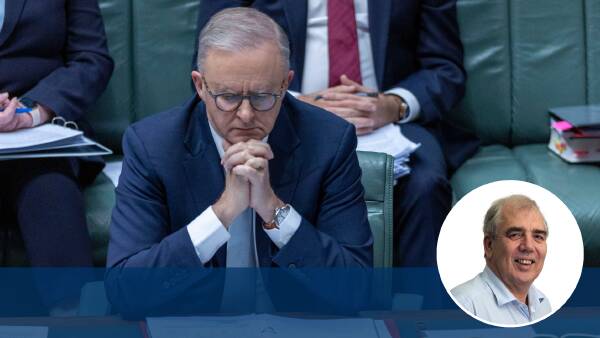
Prime Minister Anthony Albanese is under increasing pressure to call a federal royal commission into the Bondi massacre, an event that has raised serious concerns regarding national security and government accountability. Critics argue that his reluctance to initiate such an inquiry may stem from a desire to avoid personal blame and political fallout, a strategy that many believe could backfire.
The Bondi massacre, which occurred in October 2023, has ignited heated discussions about the efficacy of Australia’s security agencies and the government’s response to rising anti-Semitic sentiments. Albanese’s critics, including members of the Jewish community and opposition leaders, have accused him of failing to act decisively in the wake of the tragedy.
Importance of a Royal Commission
Royal commissions serve multiple purposes, primarily to investigate and clarify what transpired during significant incidents. They are designed to provide transparency and restore public trust. In this instance, the primary audience for such a commission would be the Australian public, particularly those directly affected by the massacre, including the Jewish and Islamic communities.
The inquiry would also benefit security agencies like the Australian Security Intelligence Organisation (ASIO) and the Australian Federal Police (AFP), which are under scrutiny for their roles in preventing such acts of violence. A commission would evaluate the adequacy of their responses and the information-sharing mechanisms between federal and state agencies.
Critics assert that the current inquiry led by Dennis Richardson lacks the necessary authority to address these critical matters. While Richardson is an experienced figure in Australia’s intelligence community, his inquiry is limited in scope compared to a royal commission. It cannot provide a comprehensive examination of the actions taken by various agencies or the adequacy of their responses to warnings about potential threats.
Public Demand for Accountability
Albanese’s decision to resist calls for a royal commission has not assuaged public anxiety. Instead, it has intensified scrutiny of his leadership and decision-making. The government’s approach is viewed as an attempt to control the narrative and avoid revealing potential failures in intelligence operations. As a result, many in the community feel deprived of their right to know the full story surrounding the tragedy.
A royal commission would allow victims, witnesses, and experts to share their experiences and interpretations of events without restrictions. This unfiltered testimony is crucial for understanding the broader implications of the massacre and the societal tensions that have emerged in its aftermath.
The public’s desire for clarity extends beyond simply assigning blame. Australians are increasingly focused on ensuring future safety and security, demanding that any vulnerabilities in the current system be addressed. A transparent inquiry could pave the way for much-needed reforms in national security protocols.
As criticisms mount, Albanese faces a delicate balancing act. While he may hope that the controversy will diminish over time, the ongoing pressure from various stakeholders, including Jewish organizations and political opponents, suggests that this issue is far from resolved.
In the face of escalating calls for accountability, Albanese’s strategy may need reevaluation. Avoiding a royal commission could lead to perceptions of secrecy and negligence, potentially undermining public confidence in the government’s ability to protect its citizens.
The ongoing discourse surrounding the Bondi massacre is emblematic of broader issues faced by the Australian government, including the need for effective communication and accountability in national security matters. Ultimately, the demand for an open and thorough inquiry reflects a collective desire for transparency and justice, underscoring the importance of addressing these urgent concerns.