




BREAKING: Archaeologists have made a groundbreaking discovery in Malawi, revealing the world’s oldest confirmed evidence of an adult cremation, dating back an astonishing 9,500 years. This urgent finding was made at the HOR-1 archaeological site, where researchers uncovered charred remains of a woman, estimated to have been between 18 and 60 years old at the time of her death.
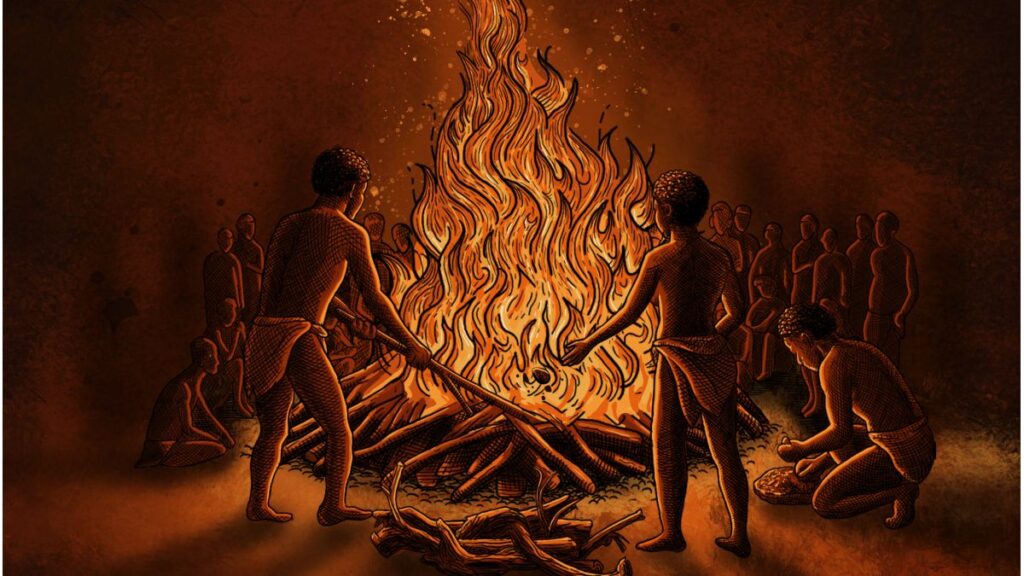
This remarkable discovery not only highlights the complexity of ancient funerary practices but also reshapes our understanding of hunter-gatherer cultures. The remains were meticulously prepared for cremation on a large pyre, which burned for several hours, showcasing the significant resources and effort invested in this deliberate ritual.
Led by anthropologist Jessica Cerezo-Román from the University of Oklahoma, the research emphasizes that this is “the earliest evidence for intentional cremation in Africa and the oldest in situ adult pyre in the world.” The findings, published in Science Advances, indicate that the site has served as a location for death rites for at least 8,000 years, suggesting a deep-rooted cultural significance.
The evidence points to a well-planned ceremony involving the construction of the pyre, which required substantial amounts of wood—estimated at over 30 kilograms (66 pounds)—to sustain the fire. Researchers believe that this indicates a shared social memory and hints at forms of ancestor veneration that were previously thought to be minimal among mobile foragers.
This discovery challenges long-held assumptions about the simplicity of hunter-gatherer funerals, showing that their rites could be far more intricate and significant than previously understood. The burning and cracking of bones found at the site indicate exposure to high temperatures, while cut marks on the remains suggest that parts of the body were disarticulated before cremation.
Moreover, the absence of the woman’s skull and teeth raises intriguing questions about ancient mortuary practices, likely tied to remembrance and ancestral connections. The ash deposits, layered over the remains, further suggest that the site was utilized for burning events long after the cremation, emphasizing its role as a “persistent place” in the cultural landscape of the region.
In a statement, Cerezo-Román noted, “These practices emphasize complex mortuary and ritual activities with origins predating the advent of food production.” The implications of this discovery resonate through our understanding of early human societies, highlighting the importance of memory-making and communal ties in ancient cultures.
As archaeologists continue to analyze the site, the world watches with anticipation for further insights into human history and the evolution of funerary practices. The significance of this find extends beyond academic circles, prompting discussions about cultural heritage and the emotional connections humans have maintained through millennia in facing death.
For those interested in archaeology and human history, this discovery marks a pivotal moment in understanding how our ancestors honored the dead, offering a more nuanced view of the rituals that shaped their societies. Stay tuned for more updates as researchers delve deeper into this extraordinary site in Malawi.
