




Concerns about societal cohesion in Australia have reached critical levels as the country grapples with what some are calling a model of “managed fragmentation.” This approach, which has developed since the events of September 11, 2001, promotes demographic diversity without clear integration or shared civic obligations. The result is a society struggling with ideological divisions, where the government often avoids naming the sources of violence.
A cohesive society relies on a common framework of moral and legal standards, expecting newcomers to assimilate into these norms. Unfortunately, Australia has failed to establish such a foundation. Instead, the nation has seen an increase in social differences, while the expectation of assimilation has gradually diminished. In response to rising tensions, the government has relied on language management and bureaucratic control to suppress conflict, but this has not proven effective.
When incidents of ideological violence occur, the state often refrains from clear identification of the perpetrators. For instance, Prime Minister’s description of Islamist violence as a “radical perversion” of a belief system fell short of offering a true explanation. Critics argue this approach serves to maintain political comfort while obscuring the reality of a fragmented civic core. As a result, when discussions involve belief systems, the language often shifts towards vague reassurances rather than addressing the underlying issues.
This pattern has become increasingly evident. Public celebrations such as Christmas and New Year’s Eve have been quietly cancelled, not due to overt threats, but because the prevailing uncertainty has become sufficient justification. In this climate, normal public life is treated as a liability instead of a cherished good.
The government’s response includes crackdowns on “hate,” “antisemitism,” and “harmful speech,” yet these measures often lack clear legal definitions. Online platforms face scrutiny without a transparent framework for intent or proportionality. Although these actions appear protective, they frequently serve as tools of discretion rather than genuine safeguards.
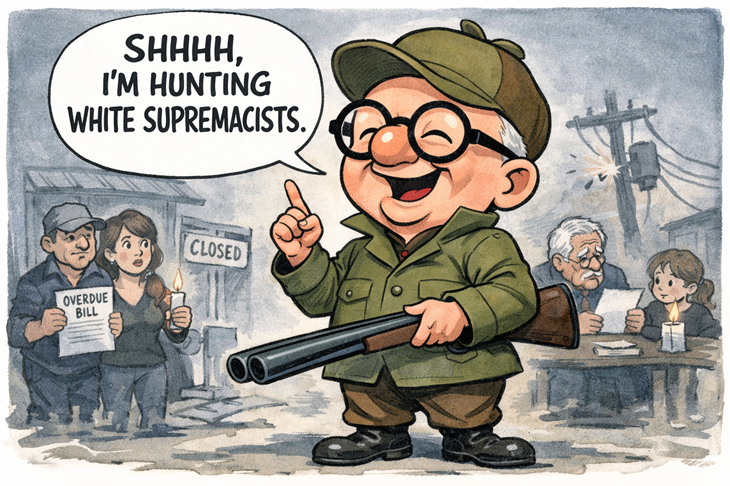
With speech being punished while ideological expressions remain sanitized, a concerning inversion of priorities emerges. In the United Kingdom, similar trends have been noted among managerial classes, and Australia is not immune to such influences. The same moral grammar seen in other nations is apparent in Australia’s administrative and managerial circles, particularly when dissenting voices are labeled as racists without a substantive confrontation of ideological violence.
Labor Party member Andrew Leigh recently announced plans to tighten laws regarding online hate and antisemitism. Such initiatives raise alarms, suggesting that “hate speech” could be defined more broadly by those in power, potentially stifling genuine discourse. This shift threatens to redefine the relationship between authority and ordinary citizens, where dissent is increasingly viewed as problematic.
Australia lacks mechanisms such as recall elections and binding petitions that allow for direct democratic correction. Consequently, individuals are left with one recourse: persistent dissent through communication with representatives and public broadcasters. While this often feels futile, silence carries its own risks, as it may be interpreted as consent to the status quo.
It is crucial that Australians do not accept censorship under the guise of comfort or ambiguity. A society that fails to identify its threats risks redefining its citizens as the source of those threats. This moment demands clarity, restraint, and a reassertion of a shared civic framework. The time for action is now, not later.
As Australia navigates these complex challenges, the need for open dialogue and a commitment to a cohesive civic identity has never been more urgent. The future of the nation hinges on the ability to confront these issues head-on.