




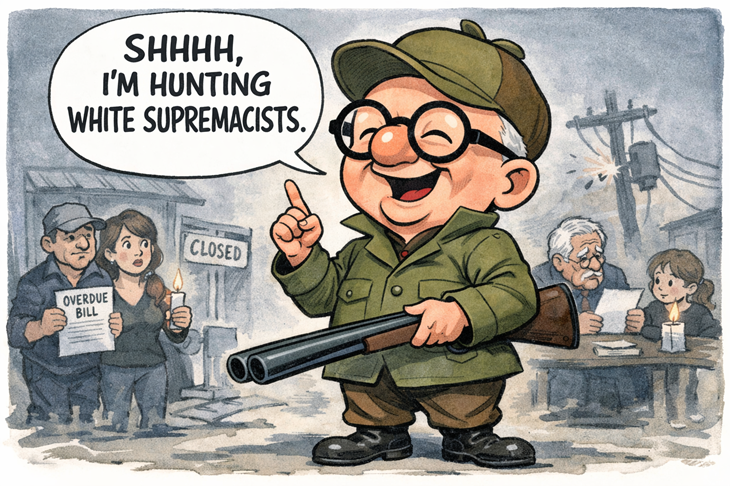
URGENT UPDATE: Australia is grappling with a profound civic crisis as authorities ramp up crackdowns on speech amid rising tensions related to ideological violence. Just announced, Labor MP Andrew Leigh revealed plans to tighten laws targeting ‘hate’ and ‘antisemitism’ online, raising alarms among citizens about the implications for free speech.
The government’s approach, termed “managed fragmentation,” has been criticized for fostering demographic expansion without fostering integration. This model, established post-9/11, has led to a society that emphasizes differences while neglecting a cohesive civic identity. Experts warn that this could lead to an environment where dissent is stifled and public life is curtailed due to unfounded fears.
Official sources indicate that public celebrations and events are already being canceled or scaled back—not due to explicit threats, but because uncertainty has become justification enough for significant restrictions on normal life. This shift is alarming, as it signals a retreat from protecting public gatherings and civic engagement, essential components of a vibrant society.
Recent developments highlight the urgency of the situation. The Prime Minister’s comments labeling Islamist violence as a “radical perversion” of a belief system have drawn criticism for evading the core issue. Critics argue that failing to clearly identify the root of ideological violence only exacerbates societal divisions. The language of reassurance is increasingly hollow, and many feel it masks a growing internal threat.
As public officials announce crackdowns, the definitions of ‘hate speech’ remain vague, leading to concerns about potential misuse of authority. The lack of clear legal frameworks invites the risk of speech being categorized as ‘hate’ simply because it disrupts the prevailing narrative. This could have chilling effects on public discourse and dissent.
Authorities must recognize the dangers of neglecting to address the ideological roots of violence. By not naming the source of conflict, they risk creating an environment where citizens themselves are viewed as the problem. This process has already begun, with public dissent increasingly categorized as a liability.
The Australian public is urged to remain vigilant. The absence of mechanisms like recall elections or binding petitions means that ordinary citizens’ only recourse lies in persistent dissent. Writing to representatives and engaging with public broadcasters are crucial steps toward holding authorities accountable.
As tensions mount, it is essential for Australians to voice their concerns. Silence will only be interpreted as consent to censorship and ambiguity. The stakes are high; a society that fails to confront its threats risks redefining its citizens as the very threats it seeks to manage.
Australia stands at a critical juncture. The time for clarity, restraint, and a commitment to a shared civic framework is now. As these developments unfold, the implications for freedom and civic life in Australia are profound and immediate. Citizens are encouraged to share their views widely, fostering an open dialogue about the future of their democracy.
