



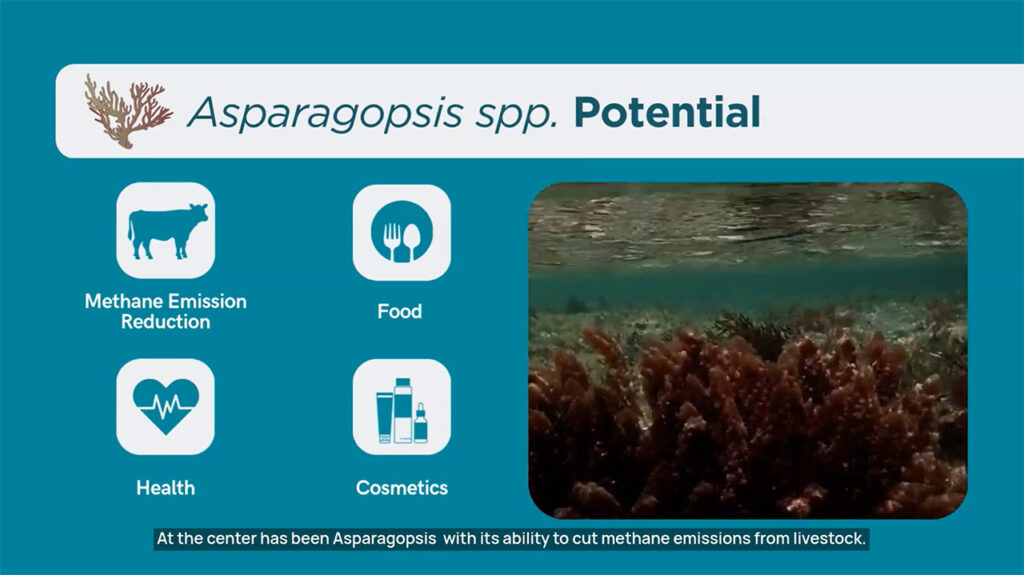
UPDATE: Australia has just launched an urgent $8 million grant program aimed at scaling up the production of Asparagopsis, a red seaweed known for its remarkable ability to reduce methane emissions when fed to livestock. This significant initiative is spearheaded by the Australian Sustainable Seaweed Alliance (ASSA) in collaboration with the Department of Agriculture, Fisheries and Forestry (DAFF) and the Fisheries Research and Development Corporation (FRDC).
This development is critical as Australia faces mounting pressure to cut greenhouse gas emissions. Enteric emissions from livestock contribute to 71 percent of the nation’s agricultural emissions and 13 percent of overall emissions, according to the National Inventory Report. Making Asparagopsis supplements accessible and affordable for farmers is essential for Australia’s environmental goals.
Professor Catriona Macleod, Chair of ASSA, expressed gratitude for the support from DAFF and FRDC, stating, “ASSA deeply appreciates the R&D support received… the achievements accomplished by our team in such a brief period are a source of great pride.” The funding has enabled the completion of 15 key projects over the past two years, focusing on scalable seaweed cultivation and environmental benefits.
A notable outcome of this initiative is the launch of Seaweed Central, an online portal that simplifies access to licensing and regulatory information for seaweed farmers and investors. This platform serves as a comprehensive resource, featuring sections on the importance of seaweed and educational materials aimed at inspiring future generations of farmers.
“This portal has gained global attention, and we’re excited about its potential to grow as a networking and knowledge-sharing platform both locally and internationally,” Macleod added. The portal aims to engage the wider community, especially young people, in understanding the pivotal role of seaweed in farming and environmental sustainability.
As the seaweed industry evolves, ASSA has developed a model to assess the product potential and economic viability of Asparagopsis in biorefineries, providing a roadmap for new investors. The initial focus on Asparagopsis is crucial due to its strong ties to terrestrial farming, enhancing its relevance in discussions on sustainability and food security.
Looking ahead, ASSA plans to present additional findings in early 2026, highlighting the benefits of biostimulants made from seaweed. This research aims to strengthen collaboration between seaweed growers and land-based farmers, paving the way for greater sustainability and food security in Australia.
The urgency of this initiative cannot be overstated. With the global community increasingly focused on reducing carbon footprints, the development and widespread use of Asparagopsis could play a vital role in Australia’s efforts to combat climate change.
Stay tuned for further updates on this groundbreaking grant program and its impact on Australia’s agricultural landscape.