


URGENT UPDATE: The Australian housing crisis is escalating as new reports confirm the Albanese government is now over 70,000 homes behind its goal of constructing 1.2 million new residences by 2029. This alarming shortfall occurs even as the total value of Australian homes skyrockets to a staggering $12 trillion, driven by soaring prices.
In a significant downturn, approvals for new dwellings plummeted by 6.4% in October, according to the latest data from the Australian Bureau of Statistics. The property sector warns that this decline, particularly a 13.1% drop in unit approvals, threatens efforts to meet the government’s ambitious housing targets. Only 192,000 new homes were constructed in the past year, falling dramatically short of the 255,000 needed annually to achieve the target.
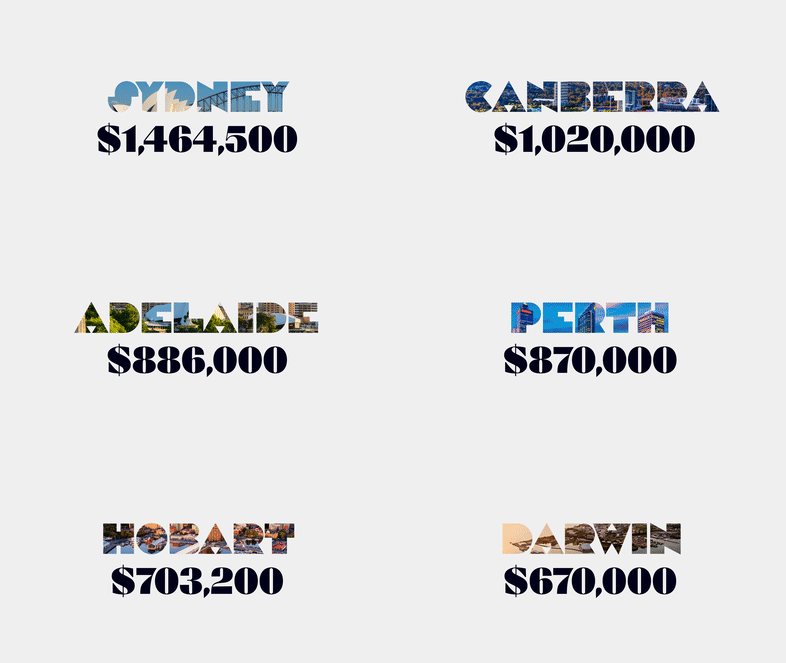
Master Builders Australia’s chief economist, Shane Garrett, emphasized the critical situation: “Housing affordability has recently deteriorated to its worst on record. Our failure to build enough new homes will exacerbate this situation further.” With prices escalating, the median cost of a house in Sydney has reached $1.46 million, while Brisbane and Canberra have both crossed the $1 million mark.
The urgency of the situation is underscored by separate ABS figures showing residential property values surged by $317 billion just in the September quarter, equating to over $3.4 billion a day. Over the past year, property values increased by an astonishing $875 billion, adding to the financial strain for potential homebuyers.
In Victoria, the state has demonstrated the fastest growth in residential property supply, adding 153,100 new homes in three years. However, the overall supply remains insufficient to meet demand across the country. “Today’s data shows complex and rigid planning systems continue to hold us back,” said Matthew Kandelaars, a senior official at the Property Council. He stressed the need for comprehensive reforms in planning processes to advance housing approvals.
In response to the crisis, the government has set a target to expedite environmental approvals for 26,000 homes by July next year, with progress reportedly on track. Environment Minister Murray Watt stated, “We are rocketing toward our goal of fast-tracking the assessment of the 26,000 housing projects in the pipeline.” However, rising interest rates, anticipated by the Reserve Bank, could hinder future approvals.
Analysts at ANZ predict potential interest rate cuts in the first half of next year, depending on inflation trends. “If underlying inflation remains persistently high and unemployment remains stable, the Reserve would have to lift interest rates,” said Adam Boyton, head of Australian economics at ANZ.
As the government gears up for the release of the September quarter national accounts on Wednesday, expected growth of around 0.7% could provide a much-needed boost. However, it remains to be seen whether this will translate into tangible solutions for Australia’s housing affordability crisis.
This developing story highlights the urgent need for action as millions of Australians grapple with the escalating challenges of home ownership and affordability. Stay tuned for further updates on this critical issue.