



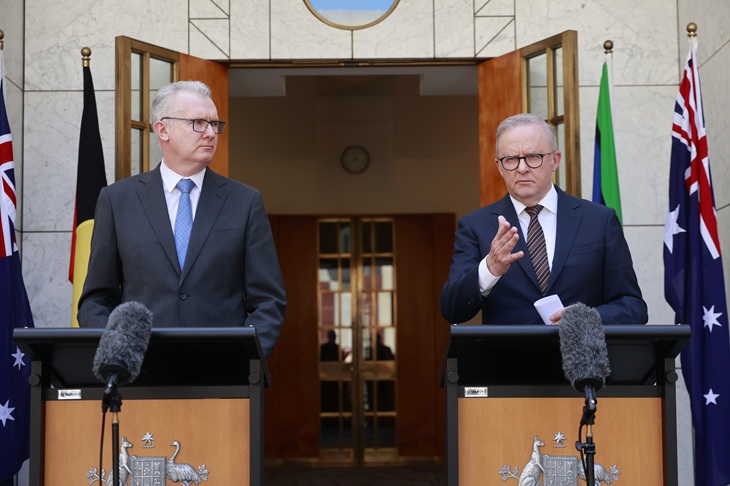
CANBERRA, AUSTRALIA - DECEMBER 19: Minister for Home Affairs Tony Burke (L) and Australian Prime Minister Anthony Albanese (R) speak to the media at Parliament House on December 19, 2025 in Canberra, Australia. Albanese held the press conference as the government comes under pressure over the recent Bondi mass shooting, promising to tighten gun laws across the country. (Photo by Hilary Wardhaugh/Getty Images)
UPDATE: Australia is grappling with a leadership crisis as Prime Minister Anthony Albanese faces intense backlash following the devastating terrorist attack at Bondi Beach on December 14, 2025. The Prime Minister’s response has left many questioning his commitment to national safety and social cohesion.
In the wake of the attack, Albanese has proposed a limited departmental inquiry instead of a comprehensive Royal Commission, prompting widespread criticism from political leaders, business executives, and the public. An open letter published on January 2, 2026, calls for urgent answers and asserts, “This is a national crisis that requires a national response.”
Despite escalating antisemitism across Australia since the horrifying Hamas attack on Israel on October 7, 2023, the government’s delayed actions have raised alarms. Communities have reported increased fear and unrest, with police and security forces on high alert. Local protests and acts of violence have heightened tension, leaving many Australians feeling vulnerable.
The Albanese government, while claiming to prioritize “unity and social cohesion,” is perceived as failing to adequately address these growing concerns. Critics argue that the Prime Minister’s refusal to launch a full Royal Commission is a blatant avoidance of accountability, particularly as calls for thorough investigations intensify.
With the next federal election looming by May 20, 2028, and the earliest possible date set for August 7, 2027, Albanese’s leadership is under scrutiny. Numerous senior ministers, including Penny Wong and Richard Marles, have been notably absent since the attack, raising questions about the government’s response strategy during this critical time.
Many fear that the Labor Party’s approach is driven more by political survival than by genuine concern for public safety. Observers suggest that the government’s hesitance to pursue a Royal Commission stems from anxiety over scrutinizing its handling of antisemitism and security issues over the past two years.
As the public’s frustration grows, the Labor Party is facing a potential backlash that could impact its electoral standing. Albanese, who once appeared confident following his election win in May 2025, is now viewed as a leader struggling to navigate an escalating crisis.
The pressing question remains: will Albanese act decisively to establish a Royal Commission, or will he continue to resist calls for accountability, risking further alienation from a concerned electorate? The clock is ticking, and with each passing day, the pressure mounts.
As Australia seeks answers and stability following this tragic event, the Prime Minister’s ability to respond effectively will determine not only his political future but also the safety and unity of the nation. The coming weeks will be critical as the government grapples with its choices in the face of mounting public pressure.
Stay tuned for updates as this urgent situation unfolds.